مقدمة
Plastic pollution has become a critical environmental issue, with single-use plastics contributing significantly to global waste. In response, alternatives such as biodegradable plastic straws و upcycled coffee grounds straws have emerged. This blog explores their benefits, limitations, environmental impact, and best practices for businesses and consumers looking to adopt sustainable solutions.
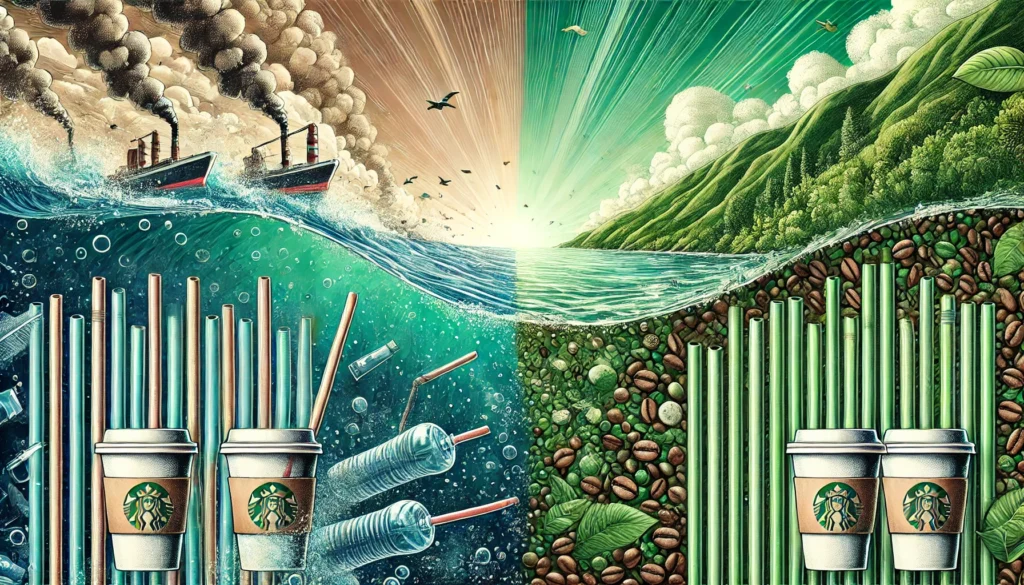
Understanding Biodegradable Plastic Straws
What Are Biodegradable Plastic Straws?
Biodegradable plastic straws are designed to break down more quickly than traditional plastic straws. They are typically made from:
- حمض البوليلاكتيك (PLA) – Derived from corn starch or sugarcane but requires industrial composting.
- Polyhydroxyalkanoates (PHA) – A plant-based alternative that decomposes in natural environments, including marine ecosystems.
- PBAT (Polybutylene Adipate Terephthalate) – A biodegradable polymer that enhances compostability.
How Do They Decompose?
While biodegradable plastic straws degrade faster than conventional plastics, they require specific conditions to break down efficiently:
- Industrial Composting: High temperatures and controlled microbial environments are needed for complete degradation.
- Landfills & Oceans: In non-optimal conditions, some biodegradable plastics may degrade slowly, leaving microplastics behind.
التحديات & Misconceptions
- Greenwashing Concerns: Many products labeled “biodegradable” do not break down in natural environments without proper processing.
- Limited Recycling & Composting Facilities: Many cities lack the infrastructure to compost PLA or PHA straws properly.
- Microplastic Risks: Some biodegradable plastics may only fragment rather than fully degrade.

Upcycled Coffee Grounds Straws: A Game-Changer?
What Are Coffee Grounds Straws?
Upcycled coffee grounds straws are made by repurposing used coffee grounds into durable, compostable drinking straws. This innovation supports the الاقتصاد الدائري, reducing organic waste while offering an eco-friendly alternative.
الفوائد الرئيسية
- Zero Waste: Uses discarded coffee grounds that would otherwise end up in landfills.
- متانة: Unlike paper straws, they maintain structural integrity in hot and cold beverages.
- القابلية للتسميد: Naturally breaks down in home composting conditions without requiring industrial facilities.
- Flavor Neutral: Unlike some plant-based straws, coffee grounds straws do not alter the taste of drinks.
القيود & اعتبارات
- إنتاج & Scalability: Adoption is still growing, and large-scale manufacturing remains limited.
- Storage Sensitivity: Must be stored in dry conditions to maintain longevity.
- Higher Production Costs: Compared to traditional plastic or paper straws, production costs may be slightly higher.

Comparison of Sustainable Straw Alternatives
| نوع القش | أفضل ل | متانة | Disposal Method | Key Benefit |
|---|---|---|---|---|
| Upcycled Coffee Grounds | Coffee shops, eco-conscious consumers | عالي | المنزل سماد | Waste reduction |
| Biodegradable Plastic (PLA/PHA) | Restaurants, fast food | معتدل | Industrial composting required | Familiar texture |
| ورق | Quick-service restaurants | Low (soggy) | قابلة لإعادة التدوير/قابلة للتحلل | Cost-effective |
| الخيزران | Premium cafes, home use | عالي | سماد | مادة طبيعية |
| Metal/Glass | Personal use, long-term | عالية جدا | Wash & reuse | مستمر |
تأثير بيئي & التدقيق المطلوب
Do These Straws Truly Reduce Waste?
- Countries that have القش البلاستيكي المحظور, such as the EU, Canada, and certain U.S. states, have reported reductions in single-use plastic consumption.
- أ life cycle assessment (LCA) comparing different materials shows that upcycled coffee grounds and PHA straws have a انخفاض البصمة الكربونية than conventional PLA-based straws.
المشهد التنظيمي
- EU Single-Use Plastics Directive (2021) – Bans conventional plastic straws, pushing for compostable or reusable alternatives.
- U.S. State Bans (California, New York, Washington, etc.) – Restrict plastic straw distribution, encouraging biodegradable options.
- China’s Plastic Reduction Policy – Aims to eliminate single-use plastics by 2025, promoting sustainable alternatives.

Best Practices for Businesses & المستهلكين
How to Choose the Right Sustainable Straw
- Check Certifications: بحث BPI, TÜV OK Compost, and USDA BioPreferred labels.
- Understand Disposal Requirements: Ensure access to composting facilities for biodegradable plastics.
- Educate Consumers: Provide signage or messaging about proper straw disposal.
Sustainability Practices for Restaurants & المقاهي
- Offer Straw Alternatives Only Upon Request – Reduces unnecessary waste.
- Provide Proper Disposal Bins – Encourage composting rather than landfilling.
- الانتقال التدريجي – Start by introducing eco-friendly straws for dine-in customers, then phase out single-use plastics.
الأسئلة المتداولة (الأسئلة الشائعة)
1. Are biodegradable plastic straws really better than traditional plastic?
✅ Yes, but only when disposed of correctly. They require التسميد الصناعي to fully degrade, unlike traditional plastic, which lingers in the environment for centuries.
2. Do biodegradable plastic straws break down in the ocean?
🚫 Most do not. Many biodegradable plastics require high temperatures to break down, which are not present in marine environments. However, PHA-based straws are more likely to degrade naturally in water.
3. Are upcycled coffee grounds straws safe for food use?
✅ نعم. They meet معايير سلامة الغذاء and do not release harmful chemicals into beverages.
4. What’s the best straw alternative for businesses?
🏢 It depends on the business type:
- مطاعم & fast food chains: Prefer biodegradable plastic straws for their durability and familiar texture.
- Coffee shops & eco-conscious brands: Benefit from using upcycled coffee grounds straws, which align with their sustainability goals.
5. Do biodegradable plastics contribute to microplastic pollution?
⚠️ Some do, especially if they are not composted under the right conditions. Incomplete decomposition in landfills or oceans may result in microplastic fragments.
6. How can consumers dispose of biodegradable and upcycled straws properly?
♻ Proper disposal methods:
- القش البلاستيكية القابلة للتحلل → Industrial composting facilities are required for full degradation.
- Upcycled coffee grounds straws → Can be سماد في المنزل or disposed of with organic waste.
7. How much more expensive are sustainable straws?
💰 Cost comparison of eco-friendly straws:
- القش الورقية: 2–3x the price of plastic.
- القش البلاستيكية القابلة للتحلل: 3–5x costlier than traditional plastic.
- Upcycled coffee grounds straws: Slightly higher, but offset by branding and sustainability advantages.
8. Which countries have banned plastic straws?
🌍 Global plastic straw bans:
- Europe: EU-wide ban on single-use plastics.
- USA: California, New York, Washington, and several other states have restricted plastic straw usage.
- الصين: Phasing out plastic straws by 2025 under its national plastic reduction policy.
خاتمة
Both biodegradable plastic straws و upcycled coffee grounds straws offer sustainable alternatives to traditional plastics. However, the effectiveness of these solutions depends on proper disposal, business adoption, and consumer education. Businesses should evaluate their needs and choose the most practical solution based on cost, sustainability, and regulatory compliance.
دعوة للعمل
Are you looking for a sustainable straw solution? Consider switching to biodegradable plastic أو upcycled coffee grounds straws and educate your customers about proper disposal.