أنا. مقدمة
Picture this: You’re at a trendy café, feeling eco-conscious as you sip your iced latte through a “green” straw. But is it truly biodegradable? Or compostable? And wait – aren’t those the same thing? If you’re puzzled, you’re not alone.
في عام 2023، اعتقدت نسبة مذهلة بلغت 76% من المستهلكين خطأً أن جميع الشفاطات القابلة للتحلل بيولوجيًا قابلة للتحلل (تقرير Global Packaging Insights Report، 2024). لا يقتصر هذا الارتباك على الدلالات فحسب، بل إنه يؤدي إلى ملايين من الشفاطات في مدافن النفايات التي لن تنهار كما هو متوقع.
اليوم، نحن نقطع الطريق أمام التسويق المغسول باللون الأخضر لكشف الحقيقة حول المصاصات القابلة للتحلل والقابلة للتحلل. في النهاية، ستكون جاهزًا لاتخاذ خيارات صديقة للبيئة حقًا، وربما حتى تقوم بتعليم صانع القهوة المحلي لديك.

II. Defining Key Terms
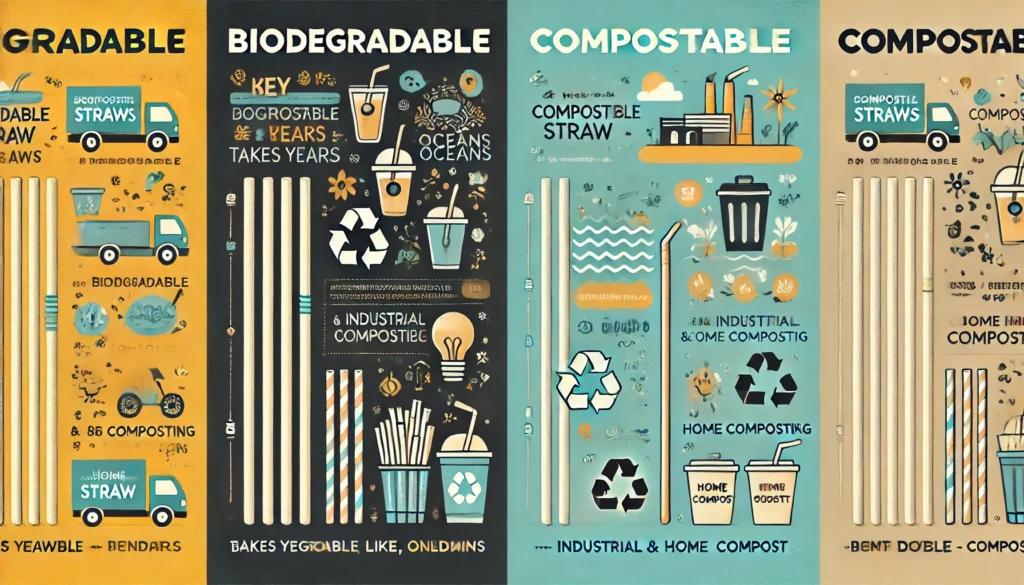
قابلة للتحلل: إعادة التدوير الطبيعية (بطيئة جدًا).
تعريف: المواد التي يمكن تفكيكها بواسطة الكائنات الحية الدقيقة (البكتيريا أو الفطريات) إلى الماء وثاني أكسيد الكربون والكتلة الحيوية.
الصيد: لا يوجد إطار زمني محدد. يمكن أن تستغرق القشة "القابلة للتحلل" من 3 أشهر إلى أكثر من 100 عام لتتحلل.
قابلة للتحلل: المسار السريع للطبيعة الأم
تعريف: المواد التي تتحلل إلى مكونات غير سامة (الماء، ثاني أكسيد الكربون، الكتلة الحيوية) في حوالي 90 يومًا في ظل ظروف التسميد التجارية.
الفرق الرئيسي: دائمًا ما تكون العناصر القابلة للتحلل قابلة للتحلل بيولوجيًا، لكن العناصر القابلة للتحلل ليست دائمًا قابلة للتحلل.
مسائل الشهادة
- بحث:
- شعار معهد المنتجات القابلة للتحلل الحيوي (BPI).
- ملصقات TÜV Austria "OK compost HOME" أو "OK compost INDUSTRIAL".
رؤية الخبراء: Dr. Jane Foster, Environmental Scientist at Stanford, warns: “Many ‘biodegradable’ labels are essentially greenwashing. Without specific certifications, these claims are often meaningless in practical terms.”

III. Decomposition Processes: A Tale of Two Straws
| حالة | Biodegradable Straw | Certified Compostable Straw |
|---|---|---|
| مكب النفايات | 100+ years | 100+ years |
| Backyard Compost | 1-5 years | 6-12 months (if home compostable certified) |
| السماد الصناعي | 6 months – 5 years | 90 days or less |
| Ocean | 2-5 years | 6 months – 2 years |
دراسة الحالة: The Ocean Conservancy’s 2024 report found “biodegradable” plastic straws intact after 3 years in marine environments, while certified compostable options showed significant degradation within 18 months.

IV. Real-World Performance and Certification
The PLA Problem
Polylactic Acid (PLA) straws are often labeled “biodegradable,” leading to confusion:
- Reality Check: PLA requires industrial composting facilities (reaching 140°F/60°C) to break down in a reasonable timeframe.
- Availability Issue: Only 27% of US households have access to industrial composting (US Composting Council, 2024).
Sugarcane Success Story
Sugarcane-based straws from reputable manufacturers often carry both home and industrial composting certifications:
- Green Sip Co. Example: Their straws decompose in 90 days in industrial facilities and 180 days in home compost bins.
- Third-Party Verified: TÜV Austria certification ensures real-world performance matches claims.
V. Consumer Implications: Making Informed Choices
How to Spot Truly Eco-Friendly Straws:
- Look for Certifications: BPI, TÜV Austria, or other recognized third-party verifications.
- Check Decomposition Conditions: Does it require industrial facilities, or will it break down in a home compost bin?
- Consider Local Infrastructure: If your area lacks industrial composting, opt for home compostable options.
- Beware Vague Claims: “Eco-friendly” and “Green” are marketing terms, not standards.
تأثير بيئي
- Biodegradable (Uncertified): Often end up in landfills, potentially releasing methane as they slowly break down.
- Certified Compostable: Can be processed into nutrient-rich soil when properly disposed of, closing the loop on waste.
VI. Conclusion: Sipping Towards Sustainability
The bottom line? "قابل للتحلل" و"قابل للتحلل" ليسا مصطلحين قابلين للتبديل. توفر الشفاطات القابلة للتحلل حقًا، والمدعومة بالشهادات المناسبة، حلاً نهائيًا أسرع بكثير وأكثر صداقة للبيئة.
الوجبات السريعة الرئيسية:
- ابحث دائمًا عن شهادات التسميد المحددة.
- فكر في خيارات إدارة النفايات المحلية عند اختيار الشفاطات.
- تذكر: القشة الأكثر صداقة للبيئة هي تلك التي تعيد استخدامها أو لا تستخدمها على الإطلاق.
مهمتك الخضراء: في المرة القادمة التي يُعرض عليك فيها شفاطة "قابلة للتحلل"، اسأل عن شهاداتها. شارك ما تعلمته - لأن المستهلك المستنير هو أفضل سلاح ضد الغسل الأخضر.
انضم إلى المحادثة: هل واجهت ملصقات القش المضللة؟ شارك تجاربك في التعليقات أدناه!
أسئلة مكررة
- What’s the difference between industrial and home composting?
- Industrial composting occurs in controlled environments with high heat and oxygen levels, breaking down compostable materials within 90 days. Home composting is a slower process that depends on local conditions and may not effectively degrade certain compostable plastics.
- How do sugarcane straws compare to other eco-friendly options?
- Sugarcane straws are durable, naturally biodegradable, and compostable in both home and industrial settings. Unlike paper straws, they last longer in liquids, and unlike PLA, they don’t require specialized composting facilities.
- Are PLA straws really better for the environment than regular plastic?
- في حين أن قش PLA يأتي من مصادر نباتية، إلا أنه لا يزال يحتاج إلى سماد صناعي ليتحلل بشكل صحيح. وإذا تم التخلص منها في مدافن النفايات أو المحيطات، فإنها يمكن أن تستمر لسنوات، مما يجعلها ليست أفضل من البلاستيك التقليدي.
- كيف يمكنني تسميد القش في المنزل؟
- فقط القش المعتمد القابل للتحلل في المنزل سوف يتحلل في صناديق السماد في الفناء الخلفي. قم بتقطيعها إلى قطع أصغر وتأكد من توازن التهوية والرطوبة المناسب في كومة السماد من أجل التحلل الفعال.
- ماذا يحدث للقش القابل للتحلل في المحيط؟
- تتطلب القش القابلة للتحلل ظروفًا خاضعة للرقابة. وفي البيئات البحرية، تتحلل بشكل أبطأ بكثير، ومن المحتمل أن تستمر لسنوات وما زالت تشكل مخاطر على الحياة البحرية.
- Which restaurants are leading the way in truly compostable straw use?
- Many eco-conscious restaurants and coffee chains have switched to certified compostable straws. Brands like Starbucks, Pret A Manger, and local sustainability-focused cafés are making the shift.
- How do I read and understand composting certifications?
- Look for certifications like BPI (Biodegradable Products Institute) for industrial compostability and TÜV Austria’s OK Compost HOME for home compostability. These indicate the straws meet strict degradation criteria.
- What’s the carbon footprint comparison between biodegradable and compostable straws?
- Compostable straws made from natural materials like sugarcane have a lower carbon footprint compared to PLA or biodegradable plastics, as they rely on renewable resources and decompose naturally.
مصادر:
- Global Packaging Insights Report, 2024
- US Composting Council, 2024
- Ocean Conservancy Annual Report, 2024
- Biodegradable Products Institute (BPI) Standards, 2023
- TÜV Austria Certification Guidelines, 2024