Miljøpåvirkningen af engangsplastik er en voksende bekymring, og sugerør er en væsentlig bidragyder til dette problem. Plastsugerør tegner sig for cirka 4 % af de næsten otte millioner tons plastaffald, der produceres årligt. Disse tilsyneladende små genstande udgør en betydelig trussel mod vores planet og ender på lossepladser og have, hvor de skader dyrelivet og forurener økosystemerne. Denne guide giver et omfattende overblik over bæredygtige halmmuligheder, og hjælper dig med at træffe informerede beslutninger, der stemmer overens med dine værdier og bidrager til en sundere planet.

Hvorfor vælge bæredygtige sugerør?
Problemet med plastiksugerør
Traditional plastic straws present several environmental challenges. They are difficult to recycle due to their small size and shape, often clogging sorting machinery. As a result, they primarily end up in landfills or as marine debris, where they can take hundreds of years to decompose. Additionally, plastic straws are made from petroleum, a non-renewable resource, and their production contributes to greenhouse gas emissions. Ophobningen af plastikaffald i vandveje og lossepladser udgør en direkte trussel mod dyrelivet, da dyr kan indtage eller blive viklet ind i affaldet.
Fordele ved biologisk nedbrydelige og komposterbare sugerør
I modsætning hertil tilbyder bionedbrydelige og komposterbare sugerør et mere bæredygtigt alternativ. Disse strå nedbrydes naturligt, hvilket reducerer affald på lossepladser og oceaner. De er ofte lavet af vedvarende ressourcer, hvilket mindsker afhængigheden af begrænsede fossile brændstoffer. Mange biologisk nedbrydelige sugerør er lavet af plantebaserede materialer, hvilket gør dem til en sikrere mulighed end plastiksugerør, der kan indeholde skadelige tilsætningsstoffer. Desuden danner de ikke skadelig mikroplast under nedbrydning, hvilket reducerer deres langsigtede indvirkning på økosystemer og menneskers sundhed. Ved at vælge bæredygtige sugerør kan vi reducere drivhusgasemissionerne og fremme en mere miljøvenlig tilgang.
Typer af bæredygtige sugerør: En detaljeret sammenligning
The market offers a variety of sustainable straw options, each with its unique properties. Dette afsnit giver en dybdegående sammenligning for at hjælpe dig med at vælge det bedste alternativ til dine specifikke behov.
Plantebaserede muligheder
- PHA (Polyhydroxyalkanoater) sugerør: PHA er et biobaseret stof afledt af vedvarende ressourcer som majsstivelse, sukkerrør og rapsolie. Disse sugerør er biologisk nedbrydelige i forskellige miljøer, herunder hjemme- og industriel kompostering, såvel som marine miljøer. PHA-sugerør ser ud og fungerer på samme måde som traditionelle plastiksugerør og er FDA-godkendt til madservice. Selvom de er alsidige og holdbare, har de en tendens til at være dyrere med et begrænset udbud.
- PLA (polylactic Acid) sugerør: PLA is a bioplastic made from plant-based sources such as cornstarch or sugarcane. PLA straws are biodegradable but require industrial composting facilities to break down efficiently. While they are a durable and sustainable option, they will not break down in landfills, and may lose their structural integrity in hot liquids.
- Agave sugerør: Agave straws are made from the waste fibers of the agave plant, a byproduct of tequila and mezcal production. These straws are durable, similar to plastic straws, and break down quickly in landfills. They are non-toxic and biodegradable, offering a sustainable alternative to bioplastics. However, the supply of agave straws is currently limited, and there are not many options for colors and styles.
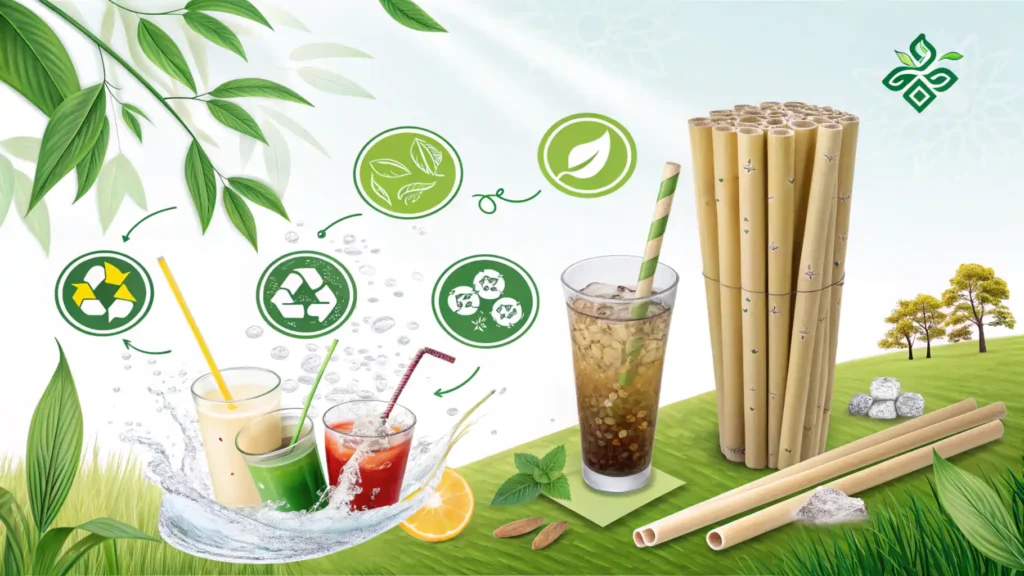
- Bambus sugerør: Bamboo is a fast-growing, renewable resource that is used to create durable and lightweight straws. Bamboo straws are biodegradable and compostable, and they do not conduct heat or cold. They are a cost-effective option, but they may have a plant-like taste or smell, absorb liquid, and may not come in various colors.
- Græsstrå: Grass straws are made from various natural grasses, such as wheatgrass or hay. They are biodegradable and compostable, undergoing minimal processing. Grass straws are a cost-effective option, but they have limited availability, a shorter shelf life, and are less durable.
- Sukkerrør sugerør: Sukkerrørsstrå er lavet af bagasse, et biprodukt fra sukkerrørsbehandling. Disse sugerør er stærke, holdbare, vandafvisende og fuldt hjemmekomposterbare. De er velegnede til kolde drikke, men har begrænset tilgængelighed og er uegnede til varme drikke.
- Hvede- og rørstrå: Hvede- og rørstrå er lavet af stængler af fornybar hvede og siv. Disse sugerør fungerer godt i både varme og kolde drikke og ændrer ikke smagen af drikken. De kan gå i stykker, hvis de bliver klemt, og de har muligvis ikke en ensartet diameter fra batch til batch.
Papirsugerør
Paper straws are made from wood pulp, which can contribute to deforestation. Some paper straws contain PFAS (per- and polyfluoroalkyl substances), chemicals that pose health risks and do not break down in the environment or body. While paper straws degrade faster than plastic straws and are relatively inexpensive, they tend to become soggy and may not be recyclable if contaminated with food.
Andre materialer
- Sulapac Straws: Sulapac straws are made from a combination of wood and biodegradable biopolymers. They are non-soggy, industrially compostable, bio-based, and do not create microplastics.
- AirCarbon Straws: AirCarbon straws are made from a biodegradable polymer produced by bacteria from greenhouse gases. The resulting product is carbon-negative.
- Cellulose Acetate: Cellulose acetate is a robust, biodegradable substance made from plant fibers that can be broken down in industrial composting facilities.
Table Summary
| halm type | Holdbarhed | Kompostabilitet | Koste | Miljømæssig påvirkning |
|---|---|---|---|---|
| PHA | Høj | Home, Industrial, Marine | Høj | Lav |
| PLA | Høj | Industriel | Moderat | Moderat |
| Agave | Høj | Losseplads | Moderat | Lav |
| Bambus | Moderat | Hjem | Lav | Lav |
| Græs | Lav | Hjem | Lav | Lav |
| Sukkerrør | Høj | Hjem | Moderat | Lav |
| Wheat/Reed | Moderat | Hjem | Moderat | Lav |
| Papir | Lav | Home (if uncoated) | Lav | Moderat |
| Sulapac | Høj | Industriel | Høj | Lav |
| AirCarbon | Høj | Industrial, Natural Environment | Høj | Meget lav |
| Cellulose Acetate | Høj | Industriel | Moderat | Lav |
Forståelse af bortskaffelsesmetoder
It is crucial to understand the differences between biodegradable, compostable, and marine-degradable materials to ensure proper disposal.
Biodegradable vs. Compostable vs. Marine-Degradable
- Bionedbrydeligt straws break down naturally into simpler compounds over time when exposed to environmental conditions.
- Komposterbar straws are designed to degrade in composting facilities under controlled conditions.
- Marinenedbrydeligt straws can break down in marine environments, disintegrating into harmless substances without harming marine life.
Home Compostable vs. Industrial Compostable
- Home-compostable straws can break down in home composting systems under normal conditions.
- Industrial-compostable straws require higher temperatures and microbial activity in industrial composting facilities to decompose fully within a shorter time frame.
Practical Advice for Disposal
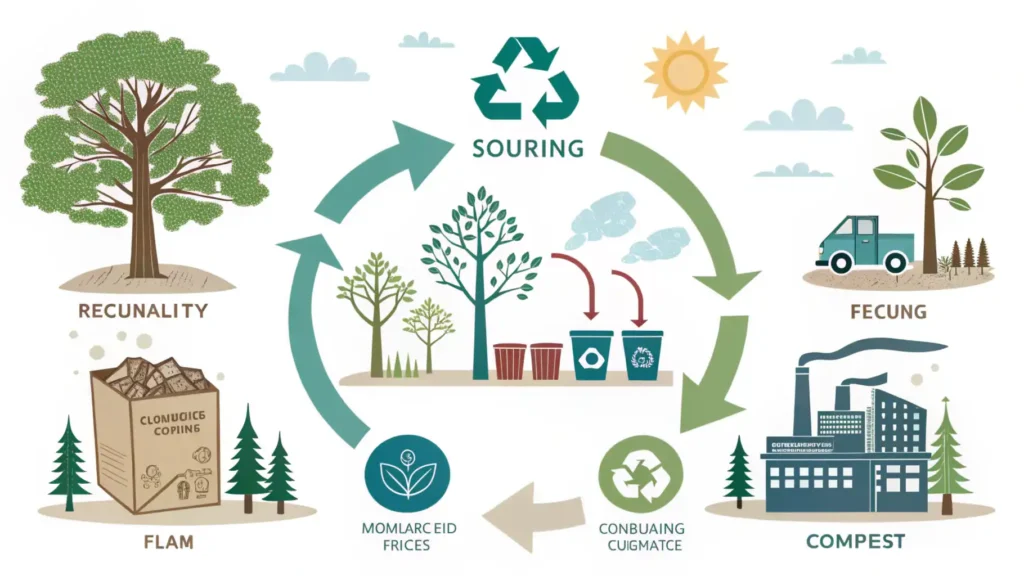
Dispose of straws according to their material. Paper and agave straws are generally biodegradable in landfills, while bioplastics like PHA and PLA require industrial composting. Some straws, like Nodax PHA, are marine biodegradable. Understanding these differences can help you make appropriate disposal decisions.
At vælge det rigtige sugerør til dine behov
Selecting the appropriate sustainable straw involves considering various factors, including your specific needs.
For virksomheder
- Restaurants and Cafes: Prioritize durable straws that meet customer preferences. Consider PHA or Sulapac straws for their robust nature and customer appeal.
- Bars: Focus on straws that look good in cocktails, such as plant-based straws or bamboo.
- Fast Casual and Takeout: Choose options that balance convenience with proper disposal. PHA or cellulose acetate straws offer a good balance of sustainability and performance.
For forbrugere
- Everyday Use: Opt for reusable options, like metal or silicone, or eco-friendly disposables such as PHA or agave straws.
- Special Needs: Choose bendable straws that are suitable for individuals with disabilities, such as those made from PHA.
Faktorer at overveje
When choosing a straw, consider:
- Cost-effectiveness: Some options are more expensive, but long-term savings may be possible.
- Holdbarhed: Choose straws that can withstand intended use.
- Aesthetics: Select straws that align with your brand or personal preferences.
- End-of-life: Ensure proper disposal is feasible, according to the straw’s compostability.
- Availability: Consider the supply and scalability of the chosen material.
- Certificeringer: Look for certifications from organizations such as BPI, CMA, or TUV Austria to ensure the product meets industry standards for compostability.
Håndtering af almindelige bekymringer
Several concerns often arise when switching to sustainable straws.
- Sogginess: Paper straws are known to get soggy quickly. PHA, Sulapac, agave, and bamboo straws are more resistant to sogginess.
- Koste: Sustainable alternatives may initially cost more than plastic straws, but prices are becoming more competitive.
- Taste/Odor: Some plant-based straws may have a plant-like taste or smell.
- Availability and Scalability: Some straw options have limited suppliers or are difficult to scale up for mass production.
Beyond Straws: Reducer affald holistisk
In addition to choosing sustainable straws, consider other ways to reduce waste:
- Encourage “Strawless” Options: Promote drinking directly from the cup and use lids designed for straw-free drinking.
- Incentivize Reusable Straws: Offer discounts to customers who bring their own straws.
- Focus on other Single-Use Items: Use compostable cups, containers, and cutlery.
- Promote Responsible Consumption: Reduce unnecessary straw use by asking guests about their preferences and using straws only when necessary.
Fremtiden for bæredygtige sugerør
Technological innovations will continue to bring new materials and manufacturing processes to the market. Single-use plastic bans and policies are also influencing the industry, encouraging businesses and individuals to switch to sustainable options.
Ofte stillede spørgsmål (FAQ)
● What are the main types of biodegradable straws?
○The main types include PHA, PLA, paper, agave, bamboo, grass, sugarcane, plant-based, and cellulose acetate straws2.
●How do biodegradable straws differ from compostable straws?
○Bionedbrydeligt straws break down naturally but at different rates and conditions, while komposterbar straws require specific composting facilities to degrade4.
●Are PHA straws marine degradable?
○Ja, PHA-strå er ofte havnedbrydelige, hvilket betyder, at de kan nedbrydes i marine miljøer uden at skade dyrelivet24.
●Nedbrydes PLA-strå i hjemmekompostbeholdere?
○Nej, PLA-strå kræver industrielle komposteringsfaciliteter for at nedbrydes effektivt2.
●Er papirsugerør en bæredygtig mulighed?
○Papirsugerør er omkostningseffektive, men de bliver ofte bløde, mangler holdbarhed og kan indeholde skadelige PFAS-kemikalier2.
●Hvor kan jeg finde agave sugerør?
○Agave sugerør kan findes på Greenprint2.
●Hvad er fordelene ved at bruge sugerør af sukkerrør?
○Sukkerrørsstrå er vandafvisende og hjemmekomposterbare, men ikke egnede til varme drikke2.
●Hvordan kan jeg se, om et halm er industrielt komposterbart?
○Se efter certificeringer, der indikerer industriel komposterbarhed. Typisk vil emballagen eller produktinformationen specificere dette3.
●Hvilke mærker laver bæredygtige sugerør?
○Phade er et populært mærke af PHA sugerør, og Sulapac tilbyder et unikt materiale til sugerør23.
●Hvorfor er plastiksugerør dårlige for miljøet?
○Plaststrå er svære at genbruge, bidrager til forurening, skader dyrelivet og er lavet af uholdbar råolie1.
Konklusion
At vælge bæredygtige sugerør er et kritisk skridt i at reducere plastikaffald og fremme miljøforvaltning. Ved at forstå de forskellige tilgængelige materialer, tage hensyn til virksomheders og forbrugeres specifikke behov og sikre korrekt bortskaffelsespraksis, kan vi skabe en mere bæredygtig fremtid. Både forbrugere og virksomheder kan træffe informerede valg og gå ind for politikker, der understøtter en sundere planet.
