Indledning
In recent years, there has been growing concern about the environmental impact of single-use plastics. Eco-friendly boba straws have emerged as a sustainable alternative, offering businesses and consumers an opportunity to make more environmentally responsible choices. At NatureBioeco, we specialize in high-quality, biodegradable boba straws made from innovative materials like sugarcane fiber and coffee grounds.
What Are Eco-Friendly Boba Straws?
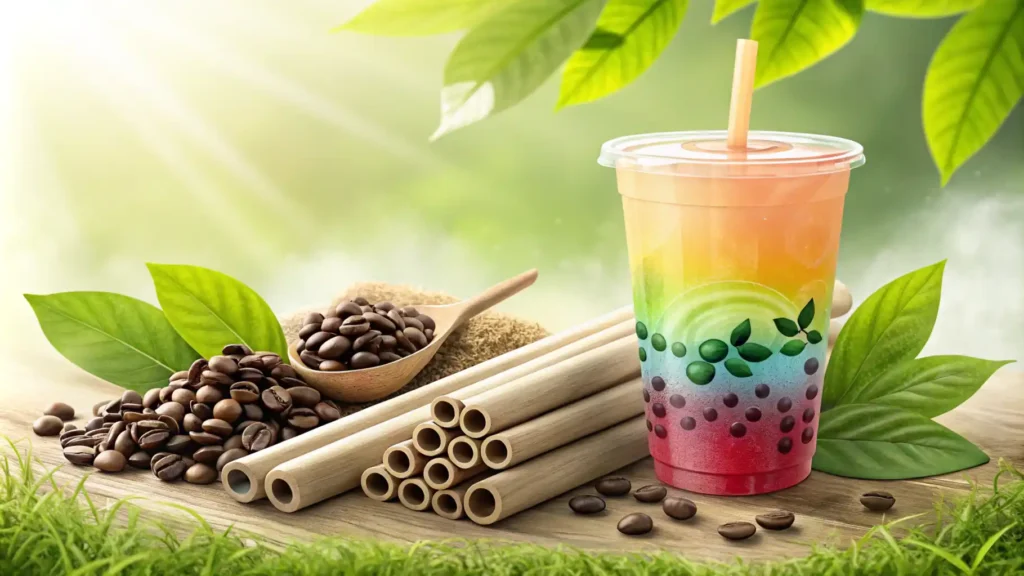
Eco-friendly boba straws are designed to replicate the function of traditional straws while significantly reducing environmental harm. Unlike plastic, which can take hundreds of years to degrade, NatureBioEco’s sugarcane and coffee ground straws naturally break down within 12–16 months, aligning with sustainable practices.
Learn more about our flagship sugerør af sukkerrør and their unique benefits for boba tea businesses.
The Advantages of NatureBioEco’s Boba Straws
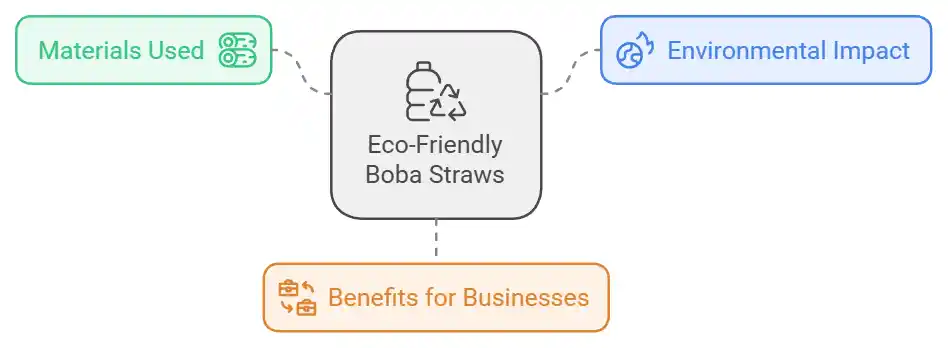
1. Sustainability and Biodegradability
- Crafted from renewable resources like agricultural by-products and repurposed coffee grounds.
- Compostable in both home and industrial composting systems.
2. Holdbarhed og funktionalitet
- Designed for thick beverages like bubble tea, milkshakes, and smoothies.
- Retain structural integrity without becoming soggy, unlike paper straws.
Explore how NatureBioEco’s straws are helping the foodservice industry adopt greener alternatives.
Types of Eco-Friendly Boba Straws
Sukkerrørfiberstrå
- Kilde: Made from sugarcane bagasse, a natural by-product of sugar production.
- Vigtige fordele: High durability, heat resistance, and natural compostability.
Kaffemalede sugerør
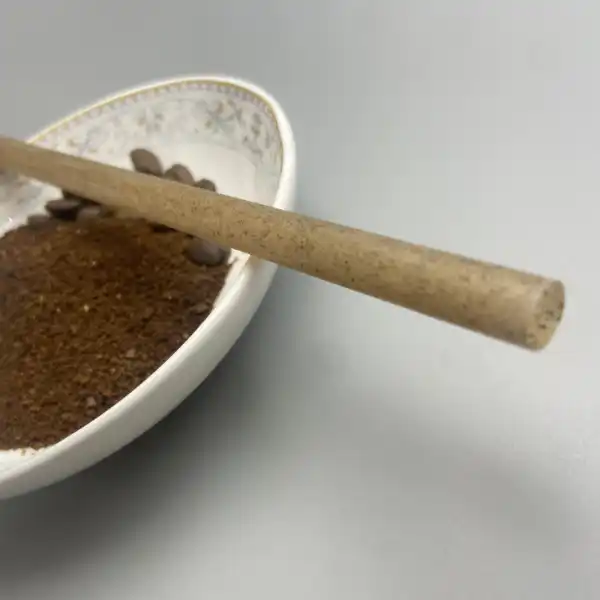
- Kilde: Produced using spent coffee grounds, reducing organic waste.
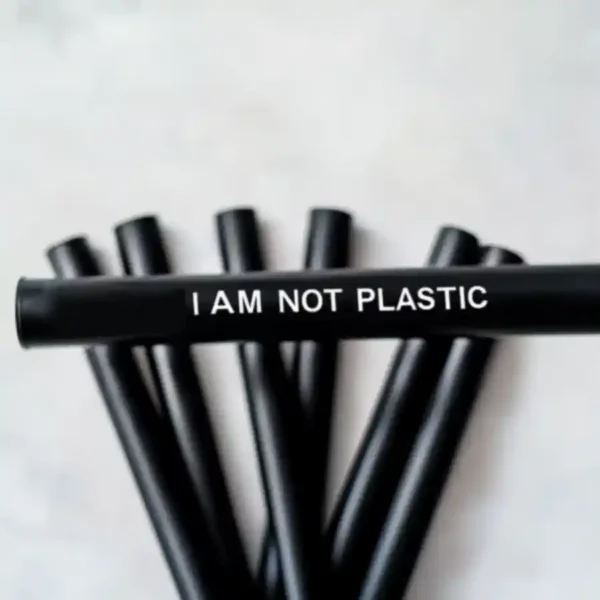
- Vigtige fordele: Sleek, dark appearance and a pleasant coffee aroma.
Compare these innovative options on our coffee ground straws page.
Environmental Impact of Switching to Eco-Friendly Straws
Reduceret plastikforurening
Plastic straws are one of the top 10 items found in ocean cleanups. Switching to biodegradable straws like ours can drastically reduce this waste.
Lifecycle Analysis
Our sugarcane and coffee ground straws emit significantly less CO2 during production and require less energy to degrade. For a deeper dive into this topic, check out Greenpeace’s study on single-use plastics (external link: www.greenpeace.org).
Supporting Circular Economies
By transforming agricultural waste into functional products, NatureBioEco contributes to a circular economy model.
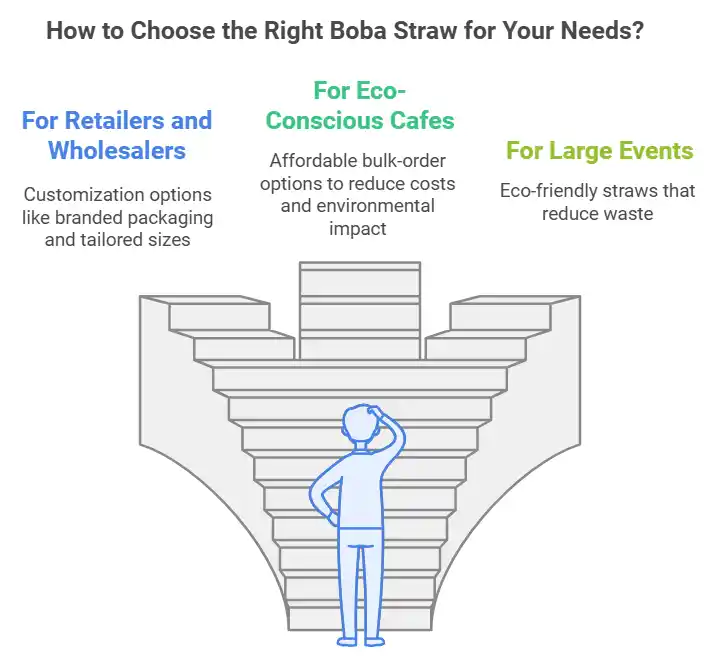
How to Choose the Right Boba Straw for Your Needs
For Retailers and Wholesalers
NatureBioEco offers customization options, including branded packaging, various lengths, and diameters tailored to your business needs.
For Eco-Conscious Cafes
Cafes looking to elevate their sustainability credentials can benefit from our affordable bulk-order options, reducing costs while minimizing their environmental footprint.
For Large Events
Learn how our eco-friendly straws have made an impact in events and catering, where reducing waste is a growing priority.
Ofte stillede spørgsmål
How long do these straws take to biodegrade?
Our sugarcane and coffee ground straws biodegrade naturally within 12–16 months in compostable conditions.
Are your straws safe for both hot and cold drinks?
Yes, NatureBioEco’s straws are designed to handle temperatures for both hot and cold beverages, ensuring a versatile experience for users.
Can I order custom sizes and designs?
Absolutely! Visit our customized straw solutions page for more details on tailoring your order.

Konklusion
Miljøvenlige boba-sugerør er mere end en erstatning for plastik - de er en forpligtelse til bæredygtighed og miljøansvar. NatureBioEco er stolte af at tilbyde innovative løsninger, der stemmer overens med dine forretningsværdier og samtidig opfylder kundernes forventninger til grønnere produkter.
Klar til at skifte? Kontakt os i dag eller udforsk vores produktlinje for at se, hvordan NatureBioEco kan understøtte din bæredygtighedsrejse.
Ekstern ressource: Lær mere om den globale bevægelse for at reducere plastikaffald på World Resources Institute (www.wri.org).