Indledning
The global sustainability movement has catapulted biodegradable straws into the spotlight as a crucial alternative to plastic. However, navigating the export landscape for these eco-friendly innovations is fraught with complexities. This guide delves deep into the multifaceted challenges of exporting biodegradable straws, offering invaluable insights gleaned from industry trailblazers and cutting-edge market analysis.
Challenges of Exporting Biodegradable Straws
Regulativ overholdelse
International Standards: Biodegradable straws must meet rigorous global benchmarks, such as the EU’s EN 13432 for compostable packaging. The intricacy of these standards, coupled with their constant evolution, demands unwavering vigilance from exporters Kilde.
Local Regulations: The regulatory mosaic across different markets adds layers of complexity. For instance, Australia’s AS 5810-2010 standard for home compostable plastics diverges significantly from European norms, necessitating a nimble, market-specific approach Kilde.
Part 2: Ensuring Quality and Transparency in Biodegradable Products
Quality Assurance in Biodegradable Products
Ensuring the highest standards of quality is essential in the biodegradable products industry. Here’s how companies are addressing these challenges:
Kvalitetssikring
Consistency: Maintaining uniform quality is paramount. A groundbreaking study by the University of Plymouth revealed that some biodegradable products failed to decompose as advertised, underscoring the critical need for stringent quality control measures Kilde.
Durability: The challenge lies in creating straws that withstand use while maintaining their biodegradable integrity. Industry leader NatureBioEco has pioneered advanced manufacturing techniques to strike this delicate balance.
Advancing Supply Chain Transparency
Transparency in the supply chain is crucial for sustainability and consumer trust. Here’s how transparency is being enhanced:
Gennemsigtighed i forsyningskæden
Raw Material Sourcing: The diverse materials used in biodegradable straws, from PLA to agricultural byproducts, necessitate a transparent, traceable supply chain. The Ellen MacArthur Foundation’s 2021 report emphasizes traceability as a cornerstone of circular economy initiatives Kilde.
Certifications: Obtaining certifications like the Biodegradable Products Institute (BPI) seal is a resource-intensive process that significantly enhances product credibility and market access.
Advanced Strategies in Sustainable Packaging and Consumer Education
Logistics and Storage
In the realm of eco-friendly products, understanding the nuances of logistics and storage is paramount. Here we explore how innovative packaging solutions and precise environmental controls play a critical role in sustainability.
Packaging Innovation
Emballageinnovation: Biologisk nedbrydelige sugerør kræver specialiseret emballage for at bevare integriteten under transporten. PackagingInsights rapporterede, at banebrydende, fugtbestandig emballage kan forlænge biologisk nedbrydeligt produkts holdbarhed med op til 18 måneder Kilde. Dette fremskridt inden for emballageteknologi forbedrer ikke kun produktets holdbarhed, men understøtter også den globale reduktion af madspild, i overensstemmelse med bæredygtighedsmålene.
Miljøkontrol
Miljøkontrol: Præcis klimakontrol under opbevaring er afgørende. Forskning i Journal of Polymers and the Environment viser, at miljøudsving kan dramatisk påvirke bioplastisk nedbrydningshastighed Kilde. By maintaining optimal conditions, businesses can ensure the functional longevity of biodegradable materials, thereby contributing to environmental conservation.
Market Education and Brand Alignment
As consumer preferences shift towards sustainable products, effective market education and strategic brand alignment become essential. Below, we discuss how increasing consumer awareness and forming strategic partnerships are pivotal for success in the green market.
Forbrugerbevidsthed
Consumer Awareness: A 2022 GlobalData survey revealed that 71% of global consumers prioritize sustainability in purchasing decisions, highlighting the need for clear, accurate product information Kilde. This statistic underscores the importance of transparent communication in fostering a sustainable consumer base and driving eco-friendly initiatives forward.
Strategiske partnerskaber
Strategic Partnerships: Collaborations with eco-conscious brands can accelerate market penetration. Starbucks’ partnership with Ahlstrom-Munksjö to develop fiber-based straws exemplifies the power of strategic alliances in promoting sustainable products Kilde. Such partnerships not only enhance brand image but also contribute significantly to environmental sustainability, creating a positive impact on global ecosystems.
Exploring Recycling and Sustainability Challenges
Understanding the Recycling Infrastructure
Recycling Infrastructure Challenges
Composting Facilities: The scarcity of industrial composting facilities capable of processing biodegradable straws remains a significant hurdle. The US Composting Council reports that only 5% of food waste in the US is currently composted, indicating a broader infrastructure deficit Kilde.
Case Study: NatureBioEco – Pioneering Sustainable Solutions
Company Profile:
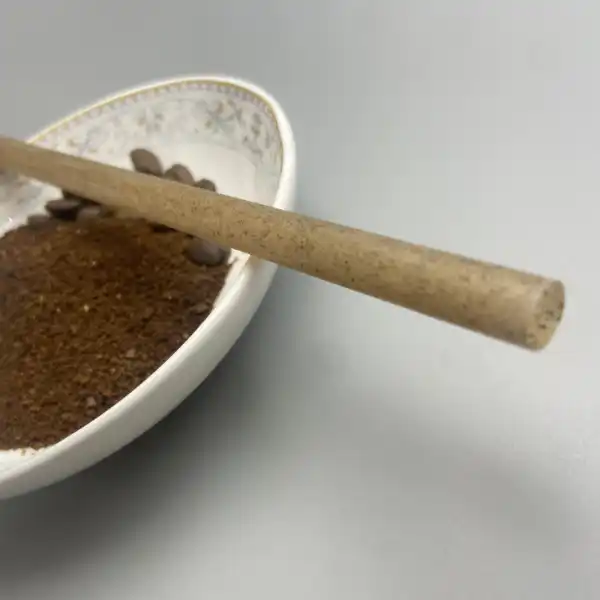
individuelt indpakket boba kaffegrums halm 12mm 210mm
Founded in 2004 in Shanghai, NatureBioEco has emerged as a vanguard in the biodegradable straw industry. Their relentless pursuit of innovation and sustainability has cemented their position as market leaders in eco-friendly dining solutions.
Key Innovations:
BioCycle™ Technology: This groundbreaking proprietary technology ensures rapid straw decomposition within six months, setting a new industry standard.
Strategic Partnerships: NatureBioEco’s collaborations with major restaurant chains have catalyzed widespread adoption of biodegradable straws, demonstrating the scalability and market viability of their solutions.
Exploring the Future of Biodegradable Straws
Konklusion
The path to exporting biodegradable straws is laden with challenges, from navigating complex regulatory landscapes to overcoming infrastructure limitations. However, these obstacles are not insurmountable. Companies like NatureBioEco are spearheading innovative solutions that directly address these challenges. By prioritizing quality control, supply chain transparency, and strategic partnerships, businesses can successfully navigate the intricacies of exporting sustainable products, playing a pivotal role in shaping a more environmentally responsible global economy.
Kontaktoplysninger:
For expert guidance on overcoming biodegradable straw export challenges, contact Max Jiang at max@naturebioeco.com or via WhatsApp at +86 13524105790.
Additional Resources:
Livscyklusvurdering af bionedbrydelige sugerør: En omfattende LCA-undersøgelse, der sammenligner forskellige bionedbrydelige halmmaterialer, giver kritisk indsigt i miljøpåvirkninger og informerer om produktudviklingsstrategier Kilde.
Globale markedstendenser: Dybdegående analyse af import-eksportdata og markedsprognoser gør det muligt for virksomheder at identificere nye muligheder og potentielle udfordringer på det dynamiske bionedbrydelige halmmarked Kilde.
By addressing these challenges through innovation, collaboration, and an unwavering commitment to sustainability, businesses can not only thrive in the biodegradable straw market but also make significant contributions to global environmental conservation efforts. The journey towards a sustainable future is complex, but with the right strategies and partnerships, it is undoubtedly achievable.
Ofte stillede spørgsmål om biologisk nedbrydelige sugerør
Hvad er biologisk nedbrydelige sugerør lavet af?
Are biodegradable straws better for the environment?
Hvor lang tid tager bionedbrydelige sugerør at nedbrydes?
Kan bionedbrydelige sugerør genbruges?
What are the economic benefits of switching to biodegradable straws?
How do regulations impact the use of biodegradable straws?
Where can I find more information about starting a biodegradable straw business?
What challenges might I face in the biodegradable straw market?
Final Thoughts on Biodegradable Straws
As we continue to advance towards sustainability, the adoption of biodegradable straws represents a significant step forward in reducing environmental impact. Embracing these eco-friendly alternatives not only helps protect our planet but also aligns with global efforts to promote responsible consumption and production patterns.
Ready to Make a Difference?
Hvis du er inspireret til at starte din rejse mod bæredygtig forretningspraksis med bionedbrydelige sugerør, så kontakt os i dag for at lære mere om, hvordan du kan have en positiv indvirkning på miljøet og din bundlinje.