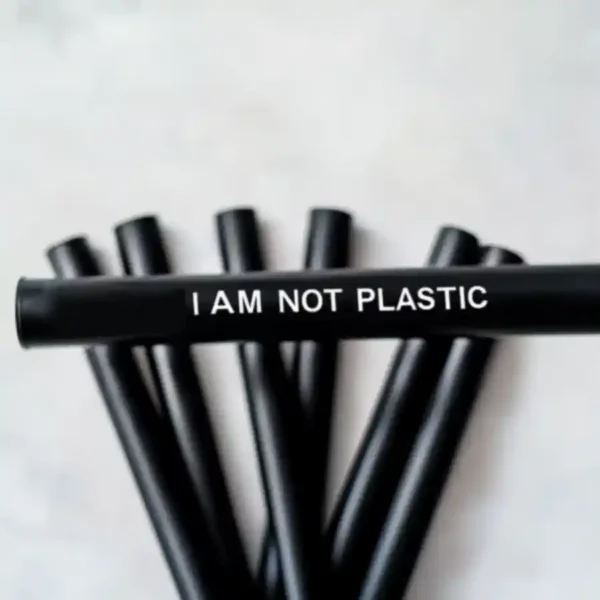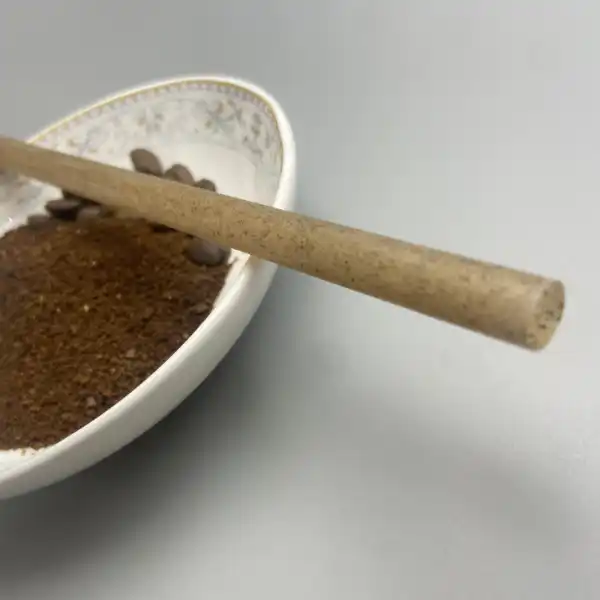
The imperative for sustainable alternatives to traditional plastics has never been more critical. In this context, sugarcane and bamboo emerge as highly promising eco-friendly materials, celebrated for their natural and biodegradable attributes. This post aims to provide an in-depth analysis of these two materials, exploring their differences, advantages, and practical applications.
The Differences Between Sugarcane and Bamboo
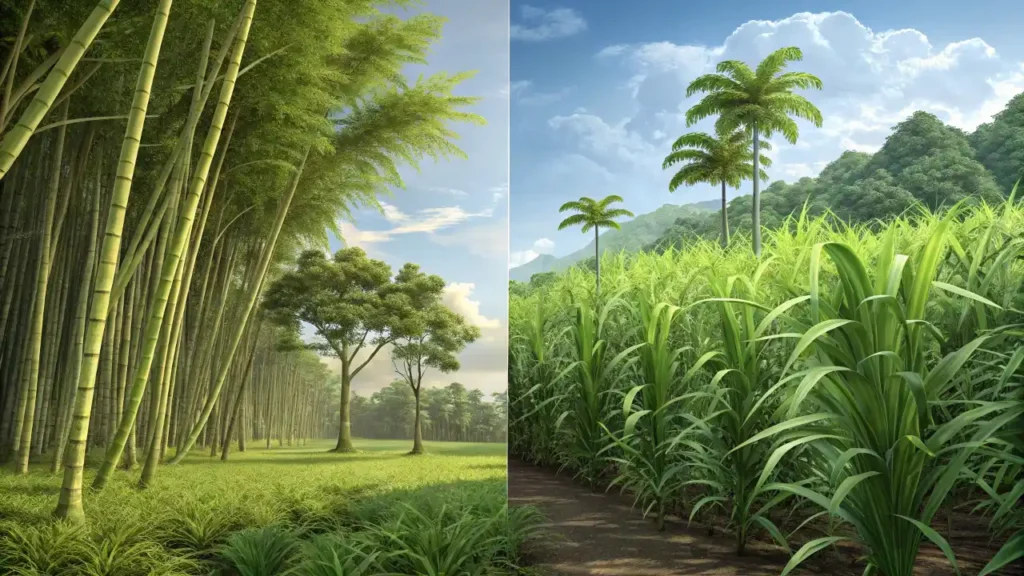
- Growth Characteristics: Sugarcane typically reaches a height of 3 to 4 meters and matures for harvest in 12 to 18 months. Bamboo, on the other hand, can grow to heights ranging from 10 to 40 meters, requiring 2 to 3 years to reach maturity for use in construction and paper production. Sugarcane stems are solid with high water content, whereas bamboo stems are hollow and flexible.
- Strength and Flexibility: Bamboo exhibits superior tensile strength, even surpassing that of low-carbon steel. In contrast, sugarcane, while less robust, is easier to process, requiring less energy for juice extraction.
- Growing Conditions: Sukkerrør trives i tropiske og subtropiske områder og kræver rigeligt vand for optimal vækst. Bambus har en bredere vifte af tilpasningsevne, vokser i forskellige klimaer, med en præference for varme, regnfulde forhold og veldrænet jord.
- Geografisk fordeling: Sukkerrør dyrkes primært i tropiske lande, hvor Brasilien er en stor producent og eksportør. Bambus findes på tværs af Asien og Stillehavsområdet, Amerika og Afrika, hvor Asien og Stillehavsområdet tegner sig for over 50% af den globale produktion.
Sukkerrør: Et nærmere kig
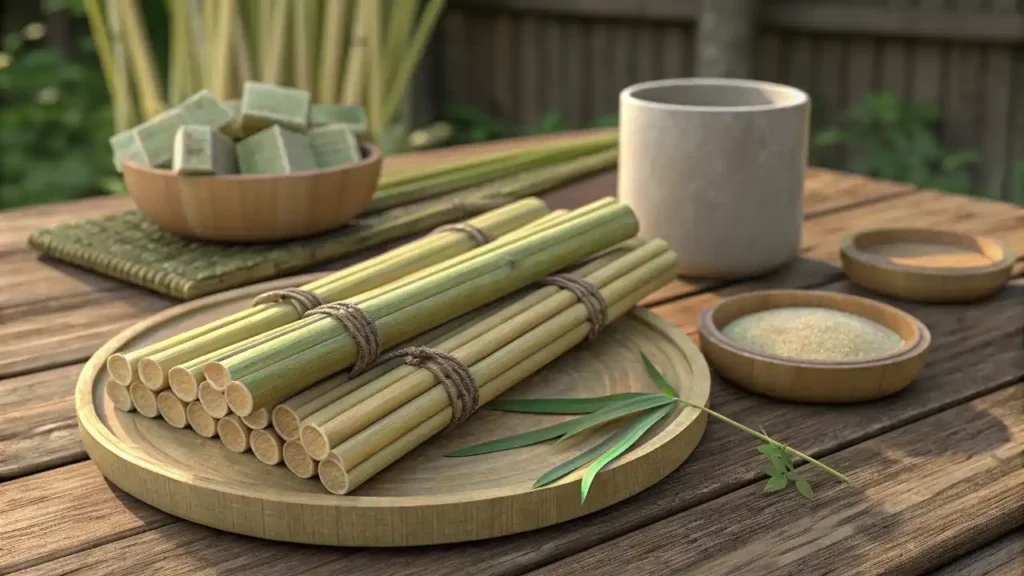
- Klassifikation: Sukkerrør er en enkimbladet C4-plante, der tilhører Poaceae-familien. Dens C4-klassificering betyder, at den har en meget effektiv fotosynteseproces. Denne proces sætter den i stand til at binde kuldioxid til et molekyle med fire kulstof, hvilket øger dets vækst under tørre forhold.
- Traditionelle anvendelser: Sukkerrør har en lang historie med at være en primær kilde til sukker. Derudover bruges bagasse, det fibrøse materiale, der er tilbage efter saftekstraktion, som kedelbrændstof og til kompostering.
- Moderne applikationer: Sukkerrør bruges i bio-ethanolproduktion, især i Brasilien, og sukkerrørsfibre bruges som erstatning for plastik i emballage, sugerør og service. Disse anvendelser forstærkes af materialets komposterbarhed, hvilket fremmer en cirkulær økonomi.
- Best Practices for Sustainable Sourcing: Sustainable sugarcane cultivation involves water conservation, effective soil management, and avoiding deforestation.
- Expert Insight on Material Properties: As a C4 plant, sugarcane is more efficient in photosynthesis than C3 plants like bamboo. This characteristic enhances carbon sequestration, particularly when sustainable farming methods are used.
Bamboo: A Closer Look
- Klassifikation: Bamboo is a C3 plant, also within the Poaceae family. As a C3 plant, bamboo is less drought-tolerant than sugarcane.
- Traditionelle anvendelser: Bamboo has been traditionally used as a building material, in household items, and in paper manufacturing.
- Moderne applikationer: Bamboo is now utilized in furniture, paper, and packaging. Bamboo fibers serve as a plastic substitute in items like straws and tableware and also in construction, as a reinforcement in concrete.
- Expert Insight on Material Properties: The cell structure of bamboo provides it with high tensile strength, making it suitable for building materials.
- Best Practices for Sustainable Sourcing: To ensure sustainable harvesting, look for certifications such as the Forest Stewardship Council (FSC).
Advantages and Benefits of Sugarcane and Bamboo
- Holdbarhed: Bamboo is naturally more durable, but sugarcane fibers can be processed to attain comparable toughness. Bamboo is often carbonized for enhanced durability. Sugarcane fibers can be adjusted in thickness to meet specific product requirements.
- Carbon Emission Reduction: Sugarcane, as a C4 plant, is more efficient at absorbing carbon dioxide than bamboo, which is a C3 plant. Both are superior options to petroleum-based plastics in terms of carbon emissions.
- Biodegradability and Compostability: Sugarcane products are highly compostable, making them suitable for a circular economy. While bamboo products can decompose, carbonization slows this process down.
- Product Applicability: Sugarcane has versatile applications across various industries including packaging, tableware, and as a substitute for plastics. Bamboo’s primary applications are in everyday life, including furniture, tableware, and building materials.
Specific Product Deep Dive: Sugarcane Straws
Sugarcane straws are an effective substitute for plastic straws. They are made from the fibrous byproduct of sugarcane processing. They maintain their structural integrity in use and are biodegradable and compostable. When purchasing sugarcane straws, ensure they are produced from sustainably sourced sugarcane and are free from harmful additives.
Sugarcane and Bamboo Fiber Uses
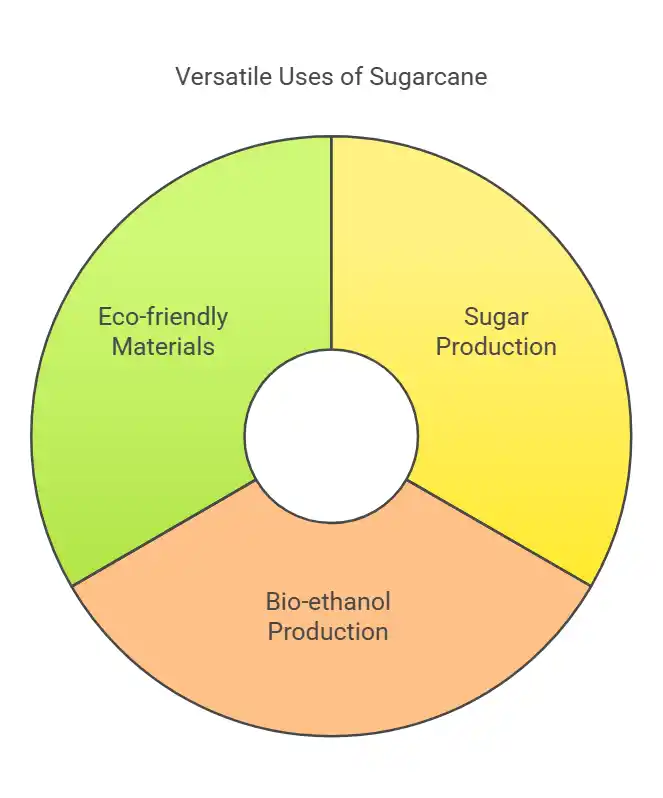
- Sukkerrør:
- Sugar Production: Sugarcane juice is concentrated and crystallized to produce sugar.
- Bio-ethanol Production: Sugarcane can be fermented and distilled to produce aqueous alcohol, which can be used as fuel. Bagasse can also be used for bio-ethanol production.
- Eco-friendly Materials: Sugarcane fibers are used in food packaging and tableware.
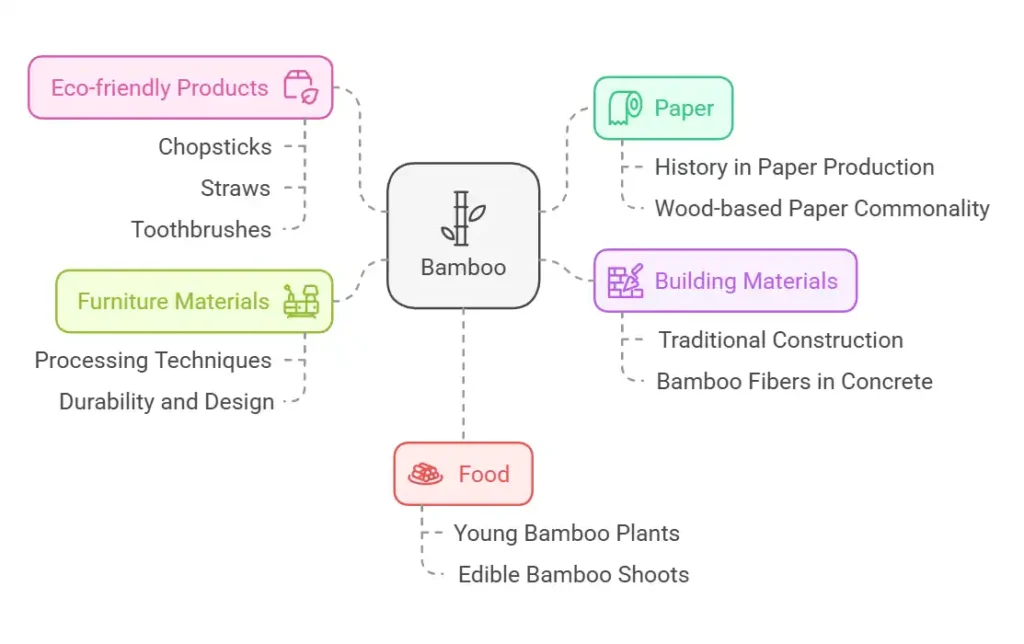
- Bambus:
- Paper: Bamboo has a history of use in paper production, but wood-based paper is now more common.
- Building Materials: Bamboo is used in traditional construction, and processed bamboo fibers can be used in concrete.
- Furniture Materials: Bamboo can be processed into durable furniture.
- Eco-friendly Products: Bamboo is used in chopsticks, straws, and toothbrushes.
- Food: Young bamboo plants, known as bamboo shoots, are edible.
Sugarcane Fiber Cutlery vs. Bamboo Fiber Cutlery: Making the Right Choice
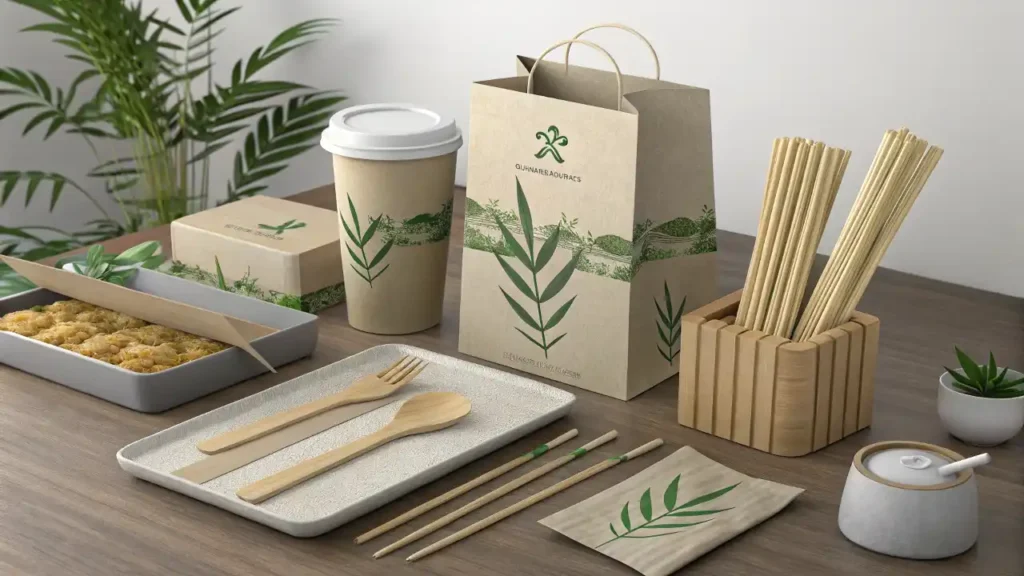
Sugarcane fiber tableware is more suitable for single-use or short-term applications because of its superior compostability. Bamboo tableware, while more durable, is more difficult to compost. Sugarcane fiber tableware is thus a better choice for applications where low usage or composting is essential.
Addressing Potential Drawbacks and Trade-offs
It’s important to consider potential land-use changes and deforestation associated with expanded production of both sugarcane and bamboo. The impact of intensive agriculture on soil and water resources should also be addressed.
Consumer and Business Guidance
- Consumer Tips: When purchasing sugarcane and bamboo products, prioritize those from sustainably managed sources. Proper reuse and composting can minimize environmental impact.
- Business Guidance: When transitioning to sustainable materials, prioritize sourcing products with recognized sustainability certifications. Communicating these benefits effectively to consumers can enhance your market position.
Future Trends and Innovations
Future trends include exploring new product applications, enhancing processing technologies for both materials, and maximizing resource efficiency in production.
Konklusion
Both sugarcane and bamboo offer compelling sustainable alternatives to traditional plastics. By making informed choices and supporting the transition to a circular economy, we can promote a more sustainable future.
Ofte stillede spørgsmål (FAQ)
- What are the main differences between sugarcane and bamboo?
- Sugarcane is shorter and has a solid stem, while bamboo is taller with a hollow stem. Sugarcane is harvested in 12-18 months, whereas bamboo takes 2-3 years to be harvested. Sugarcane is more suited for sugar production, and bamboo is better as a building material.
- Is sugarcane or bamboo more environmentally friendly?
- Sugarcane, as a C4 plant, is more efficient at absorbing carbon dioxide. Both are more environmentally friendly than plastic.
- How long does it take for sugarcane and bamboo products to decompose?
- Sugarcane products are highly compostable and degrade relatively quickly. Carbonized bamboo decomposes more slowly.
- Can sugarcane and bamboo products be composted at home?
- Yes, sugarcane products can be composted at home. Bamboo may require more specific conditions to decompose effectively.
- Are sugarcane and bamboo products as durable as plastic?
- Bamboo is naturally more durable. Sugarcane can be processed to attain a similar level of toughness.
- What products are made from sugarcane and bamboo?
- Sugarcane is used in sugar, bio-ethanol, and food packaging. Bamboo is used in building materials, furniture, paper, and eco-friendly products.
- Are there any certifications to look for when buying these products?
- Yes, look for certifications like the Forest Stewardship Council (FSC) for bamboo and ensure that sugarcane is sourced sustainably.
- What can I do to help promote the use of these sustainable materials?
- Choose products made from sugarcane and bamboo, promote their benefits, and support businesses committed to sustainability.
Citater:
- https://firststopsuppliesdorset.co.uk/first-stop-news.php?newsID=83&article=Bamboo-vs.-Sugarcane.-Why-sugarcane-is-the-more-conscientious-choice
- https://foogogreen.com/blog/the-benefits-of-sugarcane-bagasse-food-packaging/
- https://renouvo.net/biomass-materials/sugarcane-vs-bamboo/
- https://vocal.media/education/sugar-cane-vs-bamboo-differences-benefits-and-products
- https://www.polytheneuk.co.uk/news/environment/sugar-cane-sustainable
- https://thesugarcanestraw.com/bamboo-vs-sugarcane-straws/
- https://www.tiboo.co.uk/blog/sugarcane-vs-bamboo-toilet-paper/
- https://greg.app/sugar-cane-benefits/
- https://ibambo.com/blog/bamboo-vs-bagasse/
- https://www.worldwildlife.org/projects/the-journey-to-sustainable-sugar-begins-here
- https://www.worldwildlife.org/industries/sugarcane