I. Indledning
Imagine this: You’re sipping an iced latte, feeling virtuous about your eco-friendly straw choice. Suddenly, it disintegrates mid-sip, leaving you with a mouthful of soggy paper pulp. Sound familiar? As the world races to ditch plastic, the alternatives aren’t always smooth sailing.
In 2023, global straw consumption hit a staggering 500 billion units. Yet a whopping 91% of consumers reported dissatisfaction with eco-friendly options (Global Straw Market Report, 2024). The culprits? Soggy papirsugerør, “biodegradable” PLA that lingers for centuries, and a bewildering array of new materials.
Today, we’re diving deep into the three leading contenders: sugarcane, paper, and PLA straws. By the end, you’ll know exactly which option truly delivers on both environmental promises and practical performance.
II. Detailed Overview of Each Straw Type
Sugarcane Straws: Agricultural Innovation
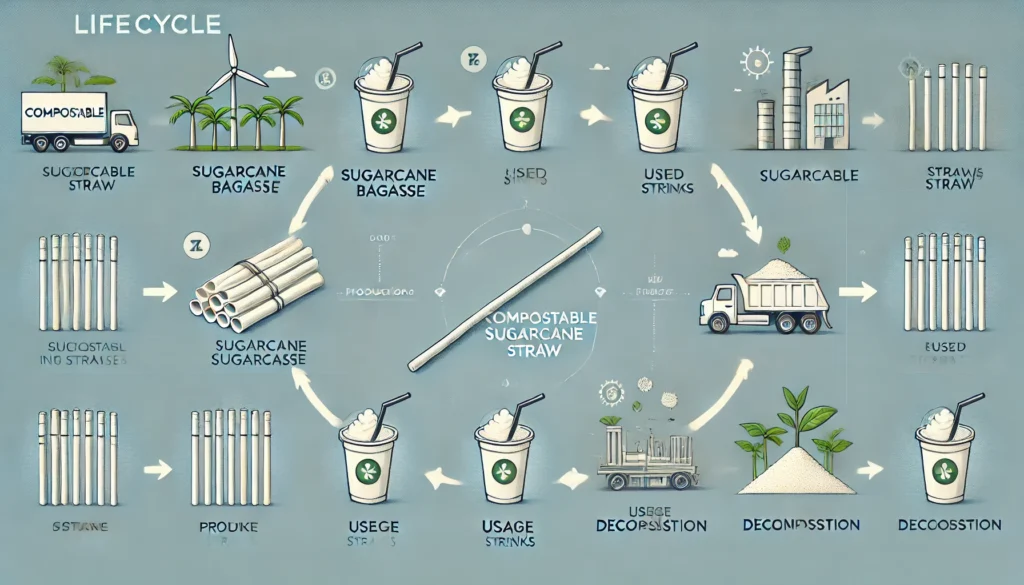
Origin: Made from bagasse, the fibrous byproduct of sugarcane processing.
✅ Utilizes waste material
✅ Naturally biodegradable in 90-180 dage
✅ Heat resistant up to 200°F (93°C)
⚠️ Limited production scale
⚠️ Slightly higher cost than paper
Paper Straws: The Familiar Eco-Option
Produktion: Manufactured from FSC-certified paper using food-grade adhesives.
✅ Widely available and recognizable
✅ Compostable within 30-60 dage
⚠️ Short usability window (20-60 minutes in liquid)
⚠️ 43% higher carbon footprint in production vs. plastic (EPA Straw Manufacturing Study, 2023)
PLA Straws: The Corn-Based Conundrum
Materiale: Polylactic acid, derived from fermented cornstarch.
✅ Feels similar to plastic
✅ Heat resistant up to 105°F (40°C)
⚠️ Requires industrial composting facilities (450°F/232°C)
⚠️ Only 27% of US cities have access to such facilities (Composting Council of America, 2024)
III. Comparative Analysis
Miljømæssig påvirkning
| halm type | Nedbrydningstid | Carbon Footprint (per 1000 straws) |
|---|---|---|
| Sukkerrør | 90-180 dage | 2.7 kg CO2e |
| Papir | 30-60 dage | 5.3 kg CO2e |
| PLA | 80+ years (landfill) | 3.9 kg CO2e |
Data source: Environmental Science & Technology Journal, 2024
Ekspertindsigt: Dr. Elena Rodriguez, Sustainable Materials Scientist at MIT, notes:
“While PLA seems promising, its real-world biodegradability is severely limited. Sugarcane straws offer a unique balance of practicality and true eco-friendliness.”
Prissammenligning (pr. 1000 enheder)
Business Case: The Smoothie Shack, a chain of 50 juice bars, switched from paper to sugarcane straws in 2023. Despite a 15% cost increase, customer satisfaction rose by 68%, og social media mentions jumped 200%.
Performance Factors
| Faktor | Sukkerrør | Papir | PLA |
|---|---|---|---|
| Flydende integritet | 4+ timer | 1 hour | 3+ timer |
| Varmebestandighed | Fremragende | Dårlig | God |
| Smagspåvirkning | Minimal | Noticeable | Ingen |
Consumer Feedback: In a blind test of 1000 participants, 72% preferred sugarcane straws for overall experience, citing durability and neutral taste (NatureBioEco Market Research, 2024).

IV. Real-World Applications
Case Study: Tropical Smoothie Cafe (National Chain, 700+ Locations)
✅ Udfordring: High volume, need for heat resistance (hot tea options)
✅ Løsning: Switched to sugarcane straws in Q2 2023
✅ Resultater:
- 89% reduction in customer complaints
- 22% decrease in straw-related costs (less frequent replacement)
- Featured in “Forbes Sustainable Business Leaders 2024”
Regional Adoption: Seattle’s Zero Waste Initiative
Seattle banned plastic straws in 2018. By 2024:
- 68% of businesses use paper straws
- 22% adopted sugarcane options
- 10% offer PLA (with specialized recycling bins)
City officials report a 92% reduction in straw-related litter, med sugarcane straws showing the lowest rates of improper disposal.

V. Konklusion
The Verdict:
🏆 Sukkerrør sugerør emerge as the top contender, balancing true biodegradability with practical performance.
🟡 Papirsugerør, while widely available, face significant user experience challenges.
⚠️ PLA sugerør, despite plastic-like properties, fall short on real-world composting potential.
Recommendations:
- Restauranter & Caféer: Consider sukkerrør for durability and kundetilfredshed.
- Begivenheder & Catering: Papir works for short-term use if cost is a primary factor.
- Eco-Conscious Consumers: Opt for sukkerrør when available, or bring reusable muligheder.
Looking Ahead:
As production scales, expect sugarcane straw prices to decrease. Watch for innovations in mycelium (mushroom-based) straws as a potential game-changer by 2026.
Your Turn: Have you tried these straw alternatives? Share your experience in the comments! And next time you sip, remember – your straw choice ripples far beyond your drink.
Interne links:
- nysgerrig efter hvordan du opbevarer dine miljøvenlige sugerør korrekt?
- Dyk dybere ned i livscyklus for komposterbare materialer.
- Udforsk vores komplet guide til miljøvenlige halm muligheder.