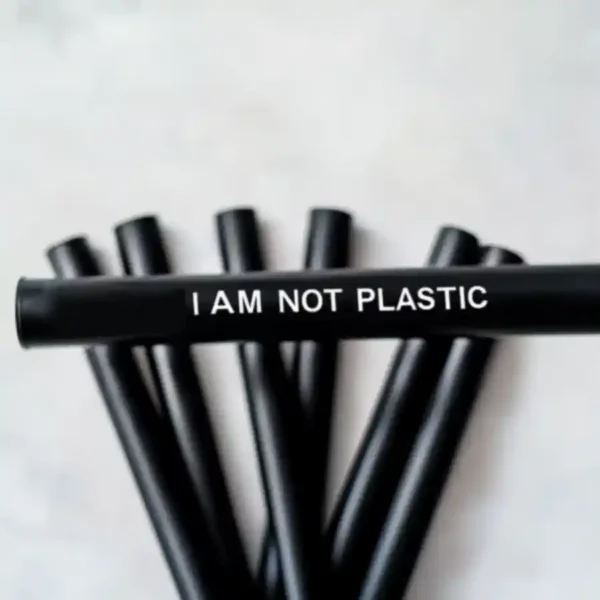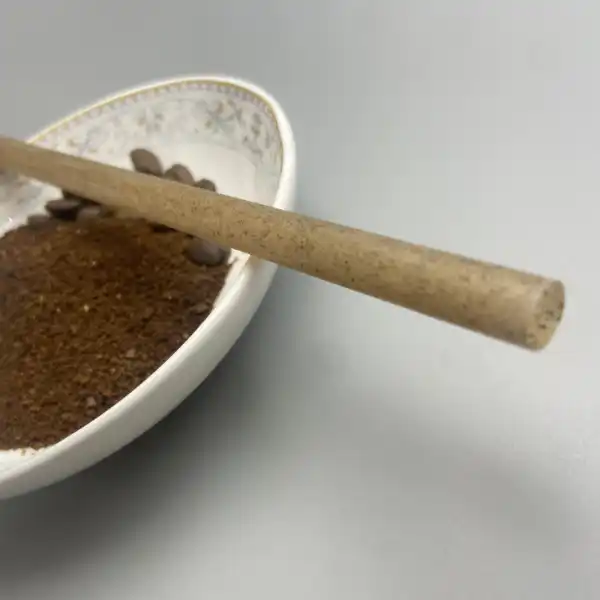

I lyset af eskalerende miljøbekymringer har verden set en stigning i reglerne rettet mod plastik-boba-sugerør, som er en væsentlig bidragyder til plastikforureningskrisen. Dette blogindlæg har til formål at kaste lys over den nuværende situation, regeringsbestemmelser og deres implikationer for virksomheder med hensyn til overholdelse, bæredygtighed og fremtidige tendenser.
Indledning

Nuværende scenarie for plastikforurening
Plastforurening er et alvorligt miljøproblem, hvor engangsplastik, herunder boba-sugerør, forårsager betydelige økologiske skader. I USA kasseres 500 millioner plastiksugerør dagligt, hvilket bidrager massivt til havforurening[1][5]. Disse strå ender ofte på lossepladser eller oceaner, hvilket udgør en alvorlig trussel mod livet i havet.
Regeringens regler om Boba-sugerør af plast
Globale regeringer har implementeret regler for at reducere brugen af plastik boba sugerør. For eksempel har Storbritannien forbudt distribution af plastiksugerør siden juli 2021 med nogle undtagelser[4].
Compliance og bæredygtighed for virksomheder

Overholdelse af disse regler er ikke kun et lovkrav, men en forretningsmæssig nødvendighed. B2B-købere og bæredygtighedsfokuserede virksomheder skal tilpasse sig disse ændringer for at bevare deres omdømme og markedsposition.
Baggrund
Forskrifterne om plaststrås historie
Reglerne mod plastiksugerør er steget gennem årene. I USA pålagde Save Our Seas 2.0-loven, der blev vedtaget i december 2020, EPA at udvikle en national strategi til at håndtere plastikforurening, herunder at reducere brugen af plasthalm[3].
Problem med plast Boba sugerør

Plast boba sugerør, på grund af deres omfattende brug i fødevare- og drikkevareindustrien, bidrager væsentligt til mikroplastik forurening. Disse sugerørs ikke-biologisk nedbrydelighed betyder, at de bliver hængende i miljøet i hundreder af år og frigiver skadelig mikroplast, efterhånden som de nedbrydes.
Current Government Regulations on Plastic Boba Straws
Governments across the world have implemented regulations to curb the use of plastic boba straws. These regulations are pushing businesses, particularly those in the food and beverage industry, to adopt sustainable alternatives. Below is an overview of key regulations in several countries:
European Union (EU)
In 2021, the European Union enforced the Single-Use Plastics Directive (SUPD), which prohibits the use of single-use plastic straws, whether they are labeled as “bio-sourced” or “home compostable.” This ban applies to all EU member states and aims to reduce plastic waste and its environmental impact.
United Kingdom (UK)
Since juli 2021, the UK has implemented a ban on the distribution of plastic straws. Businesses are prohibited from selling plastic straws as a standard offering and must instead provide alternatives such as paper or bamboo. However, there are exemptions:
- Plastic straws may be kept out of sight and provided only upon customer request.
- Businesses cannot offer plastic straws verbally or in writing.
Australia (New South Wales)
Starting January 1, 2025, businesses in New South Wales will no longer be allowed to include banned plastic items in packaged food and drinks. This includes plastic straws sealed within packaging or attached to beverage containers via machine automation.
Implications for Businesses
Compliance Requirements
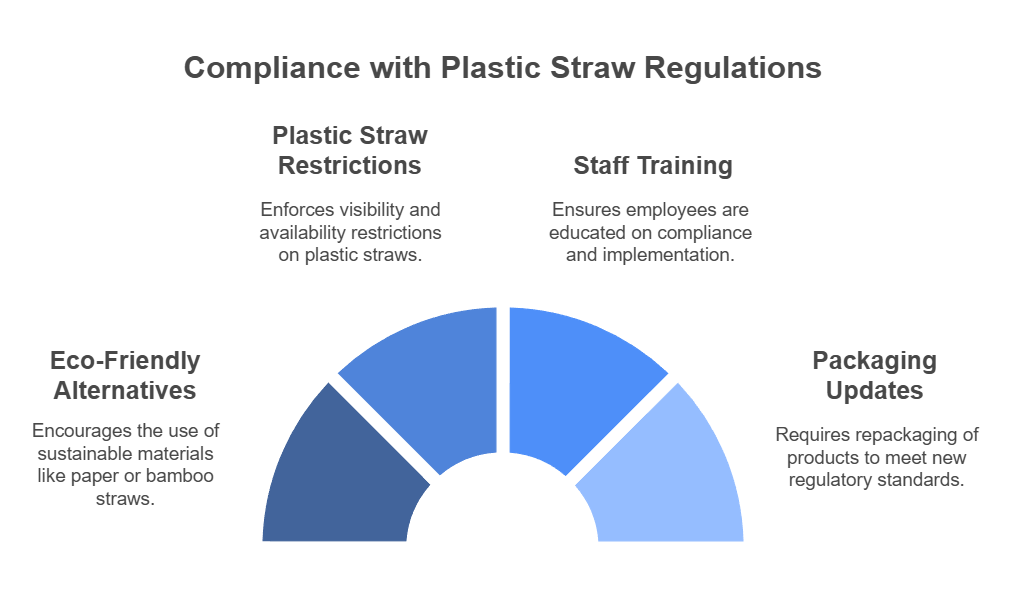
To comply with these regulations, businesses must make adjustments to their operations:
- Offer Alternatives: Businesses must provide eco-friendly alternatives such as paper or bamboo straws.
- Plastic Straw Restrictions: Where permitted, businesses must keep plastic straws out of sight and offer them only upon request.
- Personaleuddannelse: Businesses need to ensure that employees are informed about the new regulations and understand how to implement them.
- Packaging Updates: Products with integrated straws must be repackaged to comply with the new regulations.
Sustainability Challenges
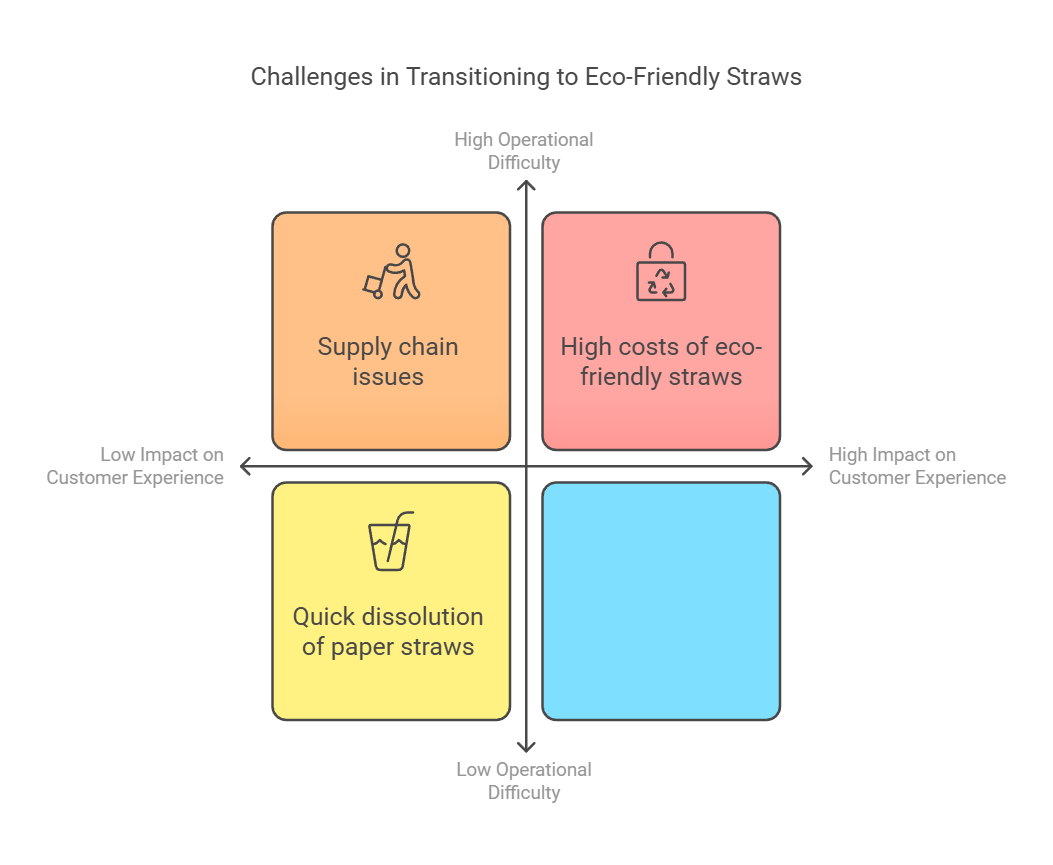
While transitioning away from plastic straws, businesses face several challenges:
- Quality of Alternatives: Many paper straws dissolve quickly in liquids, potentially affecting the customer experience, especially in beverages like bubble tea.
- Higher Costs: Eco-friendly alternatives often come with a higher price point compared to plastic straws.
- Supply Chain Issues: Businesses must source reliable suppliers for sustainable straws, which can sometimes be challenging and costly.

Future Trends
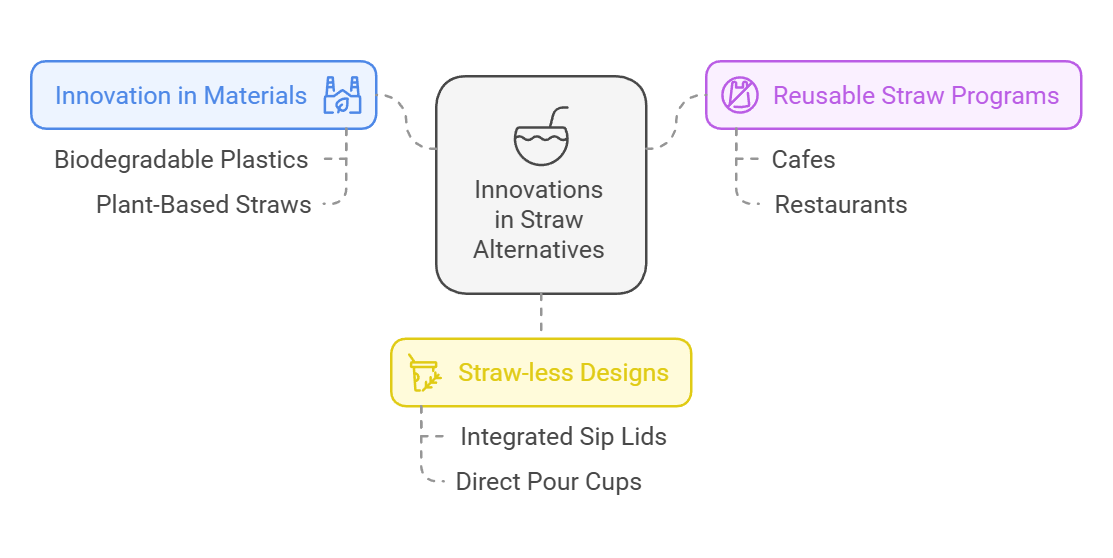
As the market adapts to these regulations, businesses are looking towards innovations that can address both environmental concerns and customer needs:
- Innovation in Materials: New, more durable, and eco-friendly materials are being developed to replace plastic straws.
- Reusable Straw Programs: Cafes and restaurants are introducing reusable straw programs to further reduce waste and enhance sustainability.
- Straw-less Designs: Some businesses are exploring cup designs that eliminate the need for straws altogether, further contributing to sustainability efforts.
Konklusion
The shift towards banning plastic straws is not just a regulatory requirement but a business opportunity. By staying informed about government regulations and adopting sustainable practices, businesses, especially in the bubble tea industry, can avoid penalties, enhance their brand image, and attract environmentally conscious customers. Embracing eco-friendly alternatives can improve sustainability efforts, reduce costs, and ultimately build customer loyalty.
Citater:
- Taipec – Plastic Straws: What Are the Rules Bubble Tea Shop Owners Should Know?
- Drinking Straw – What is Bio-Sourced Bioplastic Straw?
- EPA – New South Wales Plastics Ban Guidance
- Drinking Straw – Which Alternatives to Plastic Straws?
- Renouvo – Plastic Straws Ban in the US and Europe
- Instagram – Advancing Justice