Umweltfreundliche Cocktail-Strohhalme für Getränke: B2B Bulk Solutions

The Plastic Ban Revolution: Why Cocktail Straws Matter More Than Ever
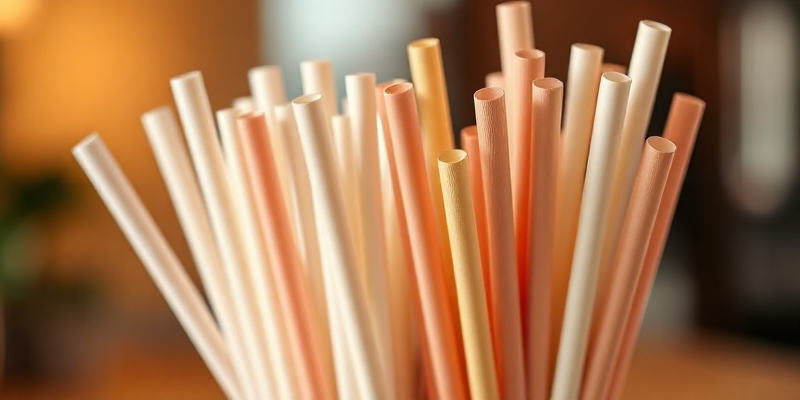
Stellen Sie sich Folgendes vor: Es ist Freitagabend in Ihrer gehobenen Bar oder Ihrem Restaurant. Das Ambiente ist perfekt, die Musik stimmt und links und rechts bestellen Kunden Signature-Cocktails. Dann kommt dieser Moment: Ein Gast wirft einen Blick auf den Plastikstrohhalm in seinem Moscow Mule und runzelt die Stirn. „Haben Sie umweltfreundliche Alternativen?“ sie fragen. Dieses Szenario spielt sich im Gastgewerbe immer häufiger ab und es geht nicht mehr nur um die Vorlieben eines einzelnen Kunden.
Cocktailstrohhalme aus Kunststoff sind zum Aushängeschild für unnötigen Einwegplastikmüll geworden. Ihre kurze Nutzungsdauer – typischerweise weniger als 30 Minuten – steht in scharfem Kontrast zu ihrer Umweltbeständigkeit von bis zu 200 Jahren. Diese große Ungleichheit hat über 60 Länder weltweit dazu veranlasst, eine Form der Einschränkung von Einwegplastik einzuführen, wobei Cocktailstrohhalme häufig zu den ersten Artikeln gehören, die ins Visier genommen werden.
The numbers paint a sobering picture: Americans alone use an estimated 500 million plastic straws daily—enough to circle the Earth 2.5 times. For bars and restaurants, this translates to thousands of straws per week, contributing significantly to operational waste. Beyond the environmental toll, there’s the growing financial risk of non-compliance with plastic bans, which can result in penalties ranging from $100 to $1,000 per violation in various jurisdictions.
But here’s the good news: the cocktail experience doesn’t have to suffer in pursuit of sustainability. Eco-friendly cocktail straws for drinks haben sich in den letzten Jahren dramatisch weiterentwickelt und bieten elegante, funktionale Alternativen, die den Premium-Getränkeservice eher verbessern als beeinträchtigen.
Bei der Umstellung auf nachhaltige Cocktailstrohhalme geht es nicht nur darum, Bußgelder zu vermeiden oder umweltbewusste Kunden zu besänftigen – obwohl dies durchaus berechtigte Überlegungen sind. Es geht zunehmend darum, die Marke an modernen Werten auszurichten und die Erwartungen des Marktes zu erfüllen. Wenn 78 % der Verbraucher sagen, dass sie eher bei Unternehmen kaufen würden, die Verantwortung für die Umwelt übernehmen, wird der Austausch von Plastikstrohhalmen gegen umweltfreundliche Alternativen zu einer sichtbaren und greifbaren Möglichkeit, das Engagement Ihres Unternehmens für Nachhaltigkeit zu demonstrieren.
Einhaltung gesetzlicher Vorschriften: FDA & LFGB Certifications for Cocktail Straws for Drinks

Für B2B-Käufer in der Lebensmittel- und Getränkeindustrie ist die Einhaltung gesetzlicher Vorschriften nicht optional – sie ist unerlässlich. Bei der Beschaffung umweltfreundlicher Cocktailstrohhalme schützt das Verständnis der Zertifizierungsanforderungen sowohl Ihr Unternehmen als auch Ihre Kunden.
Die FDA-Zertifizierung (Food and Drug Administration) stellt sicher, dass Materialien, die mit Lebensmitteln und Getränken in Kontakt kommen, strengen Sicherheitsstandards entsprechen. Laut der Richtlinien der FDA für Lebensmittelkontaktmaterialien{rel=“nofollow“}, alle Komponenten müssen nachweislich ungiftig sein und bei Kontakt mit Verbrauchsartikeln nicht auslaugen. Dies ist besonders wichtig für Cocktailstrohhalme, die häufig mit sauren Mixern, Alkohol und längeren Kontaktzeiten mit Getränken in Berührung kommen.
Similarly, the LFGB (Lebensmittel- und Futtermittelgesetzbuch) certification from Germany represents one of the most rigorous food contact material standards globally. LFGB-certified products undergo additional testing beyond FDA requirements, including analysis for harmful substances that might migrate into beverages under various conditions.
What many businesses don’t realize is that non-compliant straws can trigger legal liability issues. In 2022, a major hotel chain faced a clas-action lawsuit when their “eco-friendly” straws were discovered to contain PFAS (per- and polyfluoroalkyl substances)—highlighting the importance of proper certification.
Unsere umweltfreundlichen Zuckerrohrstrohhalme sind sowohl FDA- als auch LFGB-zertifiziert und bieten so einen zweischichtigen Schutz für Ihr Unternehmen. Diese Zertifizierungen bestätigen, dass unsere Produkte:
- Enthält keine schädlichen Chemikalien oder Zusatzstoffe
- Bewahren Sie die strukturelle Integrität, ohne Substanzen auszulaugen
- Arbeiten Sie sicher über typische Getränketemperaturbereiche hinweg
- Erfüllen Sie internationale Sicherheitsstandards für Lebensmittelkontaktmaterialien
Über die gesetzlichen Anforderungen hinaus bieten ordnungsgemäß zertifizierte Cocktailstrohhalme praktische Geschäftsvorteile. Sie beseitigen Bedenken hinsichtlich Geschmacksveränderungen bei Premium-Cocktails und sorgen für ein beruhigendes Gefühl hinsichtlich der Kundensicherheit – besonders wichtig für Betriebe, die eine gesundheitsbewusste Kundschaft bedienen.
According to recent industry data, 63% of food and beverage businesses reported increased scrutiny from health inspectors specifically regarding food-contact materials in 2023, making proper certification more important than ever.
How Cocktail Straws for Drinks Compares to Other Eco Alternatives

When evaluating sustainable options for your bar or restaurant, understanding the practical differences between available alternatives is essential. Each material offers distinct advantages and considerations worth weighing against your specific busines needs.
Sustainable cocktail straws come in several varieties, each with unique characteristics:
| Material | Haltbarkeit in Getränken | Anpassungsoptionen | Kompostabilität | Cost Range (per 1000) | Am besten für |
|---|---|---|---|---|---|
| ———-- | ———————- | ———————- | —————- | —————————— | ———-- |
| Zuckerrohr | 3-4 hours in cold drinks | Logo printing, custom colors | Home compostable (30-90 days) | $35-$50 | Premium cocktails, extended-use drinks |
| PLA-Biokunststoff | 2-3 Stunden | Begrenzte Farboptionen | Nur industriell kompostierbar | $30-$45 | Standard service, cost-conscious operations |
| Paper/Cardboard | 1-2 hours (coated), 20-30 min (uncoated) | Extensive design options | Home compostable (2-6 weeks) | 25-40 $ | Quick-consumption drinks, branded experiences |
| Bambus | Unbestimmt | Limited (natural variations) | Home compostable (6-12 months) | $70-$100 | Ultra-premium venues, reusable applications |
| Weizen | 1-2 Stunden | Natural color only | Home compostable (1-3 months) | $40-$55 | Organic-focused establishments |
A recent industry survey revealed that 47% of beverage directors cite straw performance in drinks as their primary concern when switching to eco-friendly alternatives. This is where kompostierbare Strohhalme für Eisgetränke make a critical difference.
What sets premium sugarcane cocktail straws apart is their remarkable resistance to softening—even in spirits with high alcohol content or acidic cocktails like Mojitos and Margaritas. Unlike paper alternatives that can begin deteriorating quickly, quality sugarcane straws maintain their structural integrity for the entire cocktail experience.
Color stability also matters in upscale settings. While some eco-alternatives may discolor when exposed to intensely colored ingredients like cranberry juice or blue curaçao, proper sugarcane straws maintain their appearance throughout service.
For businesses focusing on Instagram-worthy presentation, the ability to customize straws with logos or match brand colors becomes a significant advantage that sugarcane and cardboard options uniquely provide. This transforms a necessary utensil into a marketing opportunity and brand extension.
Top Busines Benefits of Switching to Cocktail Straws for Drinks
Making the transition to eco-friendly cocktail straws delivers multiple benefits beyond simply complying with plastic bans. Smart businesses are discovering that this switch can actually enhance their bottom line while strengthening brand positioning.
### Enhanced Customer Perception
According to a recent Nielsen survey, 73% of millennials and Gen Z consumers—key demographics for bars and restaurants—are willing to pay more for sustainable products and experiences. Custom cocktail straws can transform an ordinary drinking experience into a memorable brand statement. When customers see your logo or custom design on an eco-friendly straw, it communicates attention to detail and environmental consciousnes in one subtle touch.
### Cost Neutralization Through Premium Positioning
While eco-friendly straws typically cost more than conventional plastic (approximately 2-3 cents more per unit), savvy businesses offset this difference through strategic implementation. Many establishments have found succes by:
- Adopting a “straws upon request” policy, reducing overall consumption by 30-40%
- Slightly increasing cocktail prices (25-50 cents) while promoting sustainability commitment
- Incorporating the eco-friendly straws into marketing materials as a selling point
Restaurants implementing these strategies report negligible impact on profitability while gaining positive customer feedback. One national restaurant chain documented a 4.7% increase in bar revenue after prominently featuring their switch to sustainable straws in promotional materials.
### Supply Chain Risk Reduction
With plastic straw bans expanding globally, businesses relying on conventional plastic straws face increasing supply uncertainty. By transitioning to affordable compostable straw wholesale options now, companies protect themselves from future disruption and potential compliance costs.
### Staff Engagement and Retention
Often overlooked is the impact on employee satisfaction. Hospitality workers—particularly younger staff—report greater workplace pride when their employers demonstrate environmental responsibility. In an industry with high turnover rates (averaging 73% annually), this additional engagement factor can translate to real retention value.
Data from the National Restaurant Association indicates that establishments with visible sustainability programs experience 18% lower staff turnover rates compared to industry averages—a significant operational cost savings given that replacing a single employee can cost between $2,000-$5,000.
Environmental Impact: Why Cocktail Straws for Drinks Wins
The environmental advantages of switching to eco-friendly cocktail straws extend far beyond simply removing plastic from landfills. When properly sourced and disposed of, sustainable cocktail straws create a cascading positive effect throughout their lifecycle.
Sugarcane-based straws offer particularly impressive environmental credentials. Made from bagasse—the fibrous byproduct remaining after sugar extraction—these straws repurpose agricultural waste that would otherwise be burned, contributing to air pollution. According to the Umweltprogramm der Vereinten Nationen{rel=”nofollow”}, agricultural waste upcycling represents one of the most promising circular economy opportunities in sustainable materials.
Carbon footprint analysis reveals that kompostierbare Strohhalme für die öffentliche Beschaffung and commercial use can reduce greenhouse gas emissions by up to 80% compared to conventional plastic alternatives when accounting for full lifecycle impacts. For a mid-sized bar serving 2,000 cocktails weekly, this translates to approximately 1.2 metric tons of CO2 equivalent saved annually—comparable to planting 20 trees each year.
Water consumption in manufacturing presents another crucial environmental factor. Production of plastic straws typically requires 4.5 gallons of water per pound of finished product, while sugarcane straws utilize significantly les at approximately 1.8 gallons per pound. This water efficiency becomes especially relevant as water scarcity affects more regions globally.
Perhaps most significantly, home-compostable cocktail straws break down within 90 days in appropriate conditions, returning to soil without leaving microplastics behind. This complete biodegradation stands in stark contrast to so-called “biodegradable” plastics that often require industrial processing facilities and still leave microscopic fragments in the environment.
Case Study: Cocktail Straws for Drinks Succes in Action
When Ocean View Resorts, a luxury hotel chain with 42 properties acros North America and the Caribbean, decided to eliminate plastic straws acros all their bars and restaurants, they faced a significant challenge. Their signature tropical cocktails—often elaborate creations with multiple garnishes—required sturdy, reliable straws that wouldn’t compromise the guest experience.
After testing multiple alternatives, they partnered with NatureBioEco to implement custom-branded sugarcane cocktail straws acros their properties. The initial concerns about durability quickly dissipated as bartenders reported the straws maintained integrity even in frozen drinks and cocktails with high alcohol content.
“We were spending approximately $24,000 annually on plastic cocktail straws,” explains Maria Sanchez, Ocean View’s Director of Food and Beverage Operations. “The sustainable alternatives increased our costs by about 40%, but we implemented a partial offset by moving to a ‘by request’ model for certain beverages, reducing overall usage by 35%.”
Die Auswirkungen auf die Umwelt erwiesen sich als erheblich. Allein im ersten Jahr hat Ocean View über 1,8 Millionen Plastikstrohhalme aus seinem Abfallstrom entfernt und so verhindert, dass etwa 4.000 Pfund Plastik auf Mülldeponien und in Wasserstraßen gelangen.
Was das Management überraschte, war der unerwartete Marketingvorteil. Indem sie ihr nachhaltiges Cocktailprogramm prominent in der Gästekommunikation präsentierten, verzeichneten sie einen messbaren Anstieg der Bareinnahmen – 7,3 % im Jahresvergleich, verglichen mit 2,1 % in Betrieben, die das Programm noch nicht implementiert hatten.
„Gäste kommentieren regelmäßig die Strohhalme“, bemerkt Sanchez. „Es ist für unsere Barkeeper zu einem Gesprächsstarter geworden, unsere umfassenderen Nachhaltigkeitsinitiativen zu besprechen, was eine Verbindung aufbaut und oft zu zusätzlichen Käufen führt.“
Das Programm wurde nun um gebrandete Rührstäbchen und Plektren erweitert und schafft so ein zusammenhängendes, nachhaltiges Barprogramm, das die Markenidentität stärkt und gleichzeitig die Umweltbelastung reduziert.
Häufig gestellte Fragen
- Wie wirken sich umweltfreundliche Cocktailstrohhalme auf den Geschmack hochwertiger Cocktails aus?
- Quality sustainable cocktail straws are taste-neutral, ensuring they don’t interfere with carefully crafted flavor profiles. Unlike lower-quality paper alternatives that can impart a cardboard taste, premium sugarcane and other plant-based options maintain beverage integrity. Bartenders particularly appreciate this quality when serving high-margin specialty cocktails where flavor nuances matter most.
- What’s the minimum order quantity for custom-branded cocktail straws?
- Custom-branded orders typically start at 10,000 units for printed designs and 50,000 units for custom colors. However, we understand businesses have varying needs, so we offer flexible solutions including split runs (multiple designs within one order) and graduated ordering programs for seasonal businesses.
- How long do sustainable cocktail straws last in storage?
- When stored properly in a cool, dry environment, eco-friendly cocktail straws maintain their quality for 12-18 months. We recommend using breathable packaging rather than airtight containers to prevent moisture buildup. For optimal inventory management, following standard FIFO (first in, first out) practices ensures consistent product quality.
- Can eco-friendly cocktail straws handle hot drinks?
- While primarily designed for cold cocktails, our premium sugarcane straws perform adequately in warm (not hot) beverages up to 140°F. For true hot beverages like coffee cocktails or hot toddies, we recommend our specialized heat-resistant options specifically engineered for high-temperature applications.
- How should businesses dispose of compostable cocktail straws?
- Our cocktail straws are home compostable, breaking down in 30-90 days in proper composting conditions. For businesses with composting programs, they can be included with food waste. Without composting acces, they’re still preferable to plastic as they’ll biodegrade much faster than conventional plastics if they end up in landfills or the environment.
- Are sustainable cocktail straws more expensive than plastic?
- Die Stückkosten sind höher – typischerweise 2–4 Cent mehr pro Strohhalm, abhängig von den Spezifikationen. Die meisten Unternehmen kompensieren dies jedoch durch eine reduzierte Nutzung (Umsetzung von Richtlinien auf Anfrage), leichte Anpassungen der Menüpreise oder die Vermarktung des Upgrades als Teil ihres Nachhaltigkeitsengagements. Viele berichten, dass der Markennutzen die zusätzlichen Kosten überwiegt.
- Wie stelle ich sicher, dass meine umweltfreundlichen Strohhalme tatsächlich nachhaltig sind?
- Suchen Sie nach spezifischen Zertifizierungen statt nach vagen Marketingbegriffen. Wirklich nachhaltige Strohhalme sollten eine Zertifizierungsdokumentation einschließlich Kompostierbarkeitsnachweis (BPI, TÜV Austria oder ähnliches), Lebensmittelsicherheitskonformität (FDA/LFGB) und klare Informationen über die Rohstoffbeschaffung bieten. Fordern Sie Mustertests in Ihren spezifischen Anwendungen an, bevor Sie sich zu Großaufträgen verpflichten.