Hospitality application guide
Kurze Antwort: hotels use straws across room service, breakfast buffets, pool bars, restaurants, minibars and events, and the sourcing decision is a menu-mapping exercise, not a single purchase. Map each drink outlet and format, choose individually wrapped straws for guest-facing service, connect the choice to your sustainability program and local rules, and verify the specification, food-contact documents and claims per SKU before approving samples.
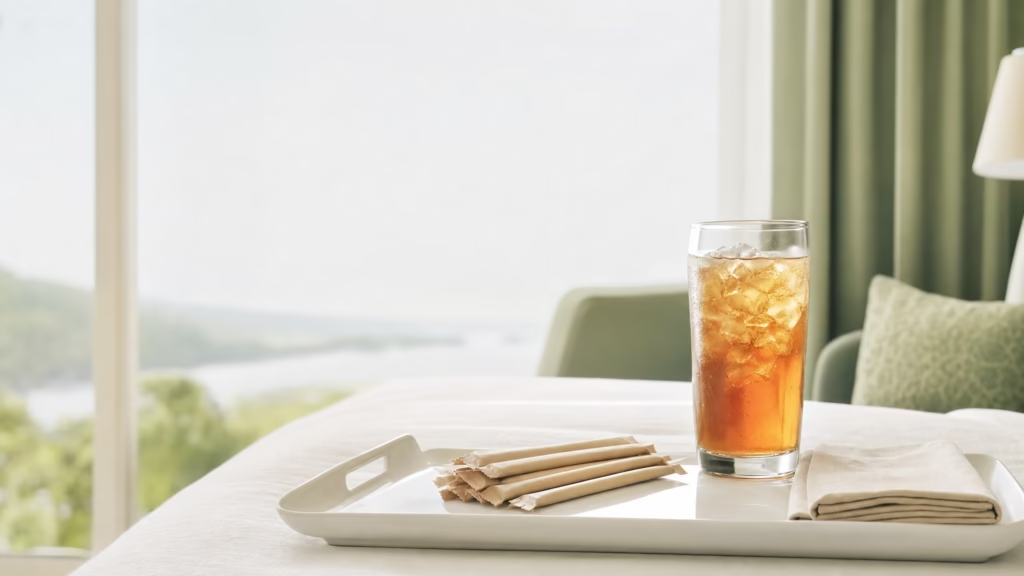
Die Strohbeschaffung im Hotel sieht anders aus als eine Café-Bestellung. Das gleiche Anwesen bietet ein Frühstücksbuffet, Zimmerservice-Tabletts, eine Poolbar, ein Restaurant, Veranstaltungen und manchmal eine Minibar, jeweils mit unterschiedlichen Tassen, Deckeln, Getränken und den Erwartungen der Gäste. Fügen Sie Nachhaltigkeitsverpflichtungen, Plastikreduktionsziele und örtliche Einwegregeln hinzu, und die Strohhalmentscheidung wird Teil der Betriebsstandards der Unterkunft und nicht nur ein Einzelposten.
In diesem Leitfaden erfahren Sie, wo Strohhalme verwendet werden, wie Größen und Formate zugeordnet werden, wie verpackt und unverpackt in die Gastronomie passen, wie Nachhaltigkeitsprogramme und -regeln die Wahl beeinflussen und was in die Beschaffungsakte aufgenommen werden muss.
Where hotels actually use straws
Mit Blick auf den Gast
Tabletts mit eingewickelten Strohhalmen, wenn möglich mit Logo versehen, geschützt vor der Handhabung zwischen Küche und Raum.
Selbstbedienung
Verpackte Strohhalme an Getränkestationen oder Einzelstrohhalmspendern; Tassen und Deckel variieren je nach Auslass.
Vom Personal bedient
Das Personal fügt den Getränken Strohhalme hinzu oder stellt sie mit Gedecken bereit; Ereignismenüs führen zu Lautstärkespitzen.
Beginnen Sie damit, jede Verkaufsstelle und jedes Getränk aufzulisten, das einen Strohhalm benötigt. Ein Hotel braucht selten eine Einheitsgröße; Es ist ein kleiner Satz von Formaten erforderlich, die den tatsächlichen Menüpunkten, Tassen und Deckeln zugeordnet sind.
| Menübereich | Typische Getränke | Startformat |
|---|---|---|
| Zimmerservice | Wasser, Saft, Erfrischungsgetränke, Eistee | 6mm gewickelt, Länge auf Cup abgestimmt |
| Frühstücksbuffet | Saft, Wasser, Smoothie-Bar | 6 mm gewickelt; 8 mm verpackt für Smoothies |
| Poolbar | Eisgekühlte Cocktails, Smoothies, Limonaden | 6 mm/8 mm gewickelt; 12 mm für Einschlüsse |
| Restaurant | Regelmäßige Kaltgetränke, Eiskaffee | 6 mm verpackt zur Selbstbedienung; Ausgepackt für den Personalservice, wo kontrolliert |
| Veranstaltungen und Bankette | Barservice, Mocktails, Markengetränke | Verpackte Formate, optional mit Markenverpackung |
| Minibar und Wellness | Wasser, Saft, Kleinformate | Kurz verpackte Formate, wenn Strohhalme enthalten sind |
Bestätigen Sie Innen- und Außendurchmesser, Länge, Wandstärke und Toleranz mit dem tatsächlichen Becher und Deckel, der in jedem Auslass verwendet wird. Der 6 mm vs. 8 mm vs. 12 mm Größenübersicht deckt die Auswahlmethode und den Zulassungstest ab.
Wrapped vs unwrapped for hospitality
Guest-facing service in hotels is predominantly wrapped: the wrapper is a handling barrier on trays, buffets and event tables, and printed wrappers carry the property’s brand and sustainability message. Unwrapped formats can be efficient in staff-served outlets where straws are placed into drinks under controlled handling, or at a single-straw dispenser.
Der wrapped vs unwrapped packaging guide covers the decision factors, cost questions and specification fields. For hotels, add the tray and storage flow: how many straws travel per room-service tray, how the buffet station restocks, and how events scale.
Nachhaltigkeitsprogramme und Einwegregeln
Major hotel groups have publicly committed to reducing single-use plastic straws, and many jurisdictions restrict or ban plastic straws, with hospitality often a focus. Practical implications for buyers:
- Check the current rules for each destination: the EU Single-Use Plastics framework, national bans and local ordinances can differ by market and straw type.
- Connect straw evidence to your property’s plastic-reduction and ESG reporting: record the straw type, the waste stream and the supporting documents per SKU.
- Move from open self-serve straws to an on-request policy where that fits guest expectations and local rules, with clear staff training and signage.
- Keep the claim file separate: compostability, biodegradable and food-contact wording each need their own evidence. The claim verification guide Und EU importer guide cover the review.
Published examples show hotel groups and resorts replacing plastic straws with paper, plant-based or reusable alternatives and reporting the reduction. None of those examples applies to a specific NatureBioEco SKU; every property should verify its own evidence.
Gut gemachte On-Request-Richtlinien
An on-request policy is a service decision, not just a cost cut. Hotels that implement it well usually combine three things:
- Signage and staff language. Guests learn that straws are available on request, in a positive and clear tone.
- A consistent supply point. Wrapped straws stocked at the same place in each outlet, so staff can find them quickly.
- Guests with specific needs. Accessibility and children’s menus are handled by the same on-request path without friction.
Measure the result: straw usage before and after the policy, guest feedback and waste volume. Keep the data for your sustainability report.
Kosten- und Abfallmessung
Compare straw cost the way a hotel actually buys it: per-1,000-unit pricing for the exact SKU wrapped and unwrapped, including wrapper material, carton economics, freight and disposal. Add the labour and guest-experience cost of each service model rather than comparing a single unit price.
Also track the waste stream. A wrapped straw adds one wrapper per unit; a buffet that switches to single-straw dispensers changes packaging and disposal. The drinking straw RFQ template structures the commercial comparison.
Beschaffungscheckliste für Hotelkäufer
- Auslauf- und Getränkekarte mit Größen, Tassen und Deckeln.
- Entscheidung für verpacktes oder unverpacktes Produkt pro Verkaufsstelle, ggf. mit Spenderhinweisen.
- Materialauswahl: aus Zuckerrohr gewonnen oder aus Kaffee gemahlen, wobei die Fragen zur Zusammensetzung beantwortet werden.
- Spezifikation: Innen-/Außendurchmesser, Länge, Wandstärke, Toleranz, Hüllenmaterial und Aufdruck.
- Dokumente: Spezifikation, Konformitätserklärung oder Äquivalent, Lebensmittelkontaktberichte für den fertigen Strohhalm, Chargenprotokolle, Änderungsmitteilung.
- Nachweis der Aussage: Kompostierbarkeit oder biologisch abbaubare Formulierung, abgestimmt auf die exakte SKU und Umgebung.
- Kommerzieller Vergleich: Preise pro 1.000 Stück, Mindestbestellmenge, Karton, Fracht und Entsorgung pro Format.
- Probenplan: verpackte und unverpackte Proben derselben Charge, getestet in echten Filialen.
Für die Dokumentenprüfung nutzen Sie die Checkliste für Lebensmittelkontaktdokumente; for the material decision, the sugarcane buyer guide, coffee-ground buyer guide Und composition guide.
Hospitality-Formate zum Vergleich
The links below connect this guide to current NatureBioEco wrapped SKUs. They are comparison candidates, not automatic fit declarations – confirm wrapper material, print and current documents with samples before approval.
| Aktuelles Format | Suggested first use |
|---|---|
| 6 mm x 210 mm, einzeln verpackte Strohhalme aus Zuckerrohr | 6mm wrapped – regular drinks, takeaway |
| 8 mm x 210 mm, einzeln verpackte Strohhalme aus Zuckerrohr | 8mm wrapped – smoothies and thicker drinks |
| 12 mm x 210 mm, einzeln verpackte Strohhalme aus Zuckerrohr | 12mm wrapped – cocktails and inclusions |
| 6 mm x 210 mm, einzeln verpackte, mit Kaffee gemahlene Strohhalme | 6mm wrapped coffee-ground – coffee programs |
| 12 mm x 210 mm, einzeln verpackte kaffeegemahlene Strohhalme | 12mm wrapped coffee-ground – boba and events |
Häufig gestellte Fragen
Should hotels use wrapped or unwrapped straws?
Individually wrapped straws are the common choice for guest-facing service: room service trays, breakfast buffets, pool bars, minibars and events, because the wrapper is a handling barrier and carries the hotel brand. Unwrapped straws can work where staff place straws into drinks under controlled handling. The wrapped vs unwrapped guide explains the trade-offs.
Do hotels need different straw sizes?
Yes. Map the menu first: 6mm for regular cold drinks and room-service water/juice, 8mm for smoothies and thicker drinks, 12mm for boba, jellies or drinks with inclusions. Confirm inner and outer diameter, length and tolerance with the actual cup and lid.
How do hotels handle ‘straws on request’ policies?
Many properties move from open self-serve straws to an on-request policy: staff ask guests whether a straw is needed, or straws are placed with drinks only on request. Signage, staff training and a consistent supply point are part of the policy. Check local rules and guest expectations for your market.
What documents should a hotel buyer request for straws?
Request the current specification, a Declaration of Compliance or equivalent statement, food-contact test reports for the finished straw (material, wrapper, ink, coating), batch records and a change-notice process, matched to the exact SKU. The food-contact checklist covers the full review.
Do straw bans apply to hotels?
Many jurisdictions restrict single-use plastic straws, and hospitality is often explicitly covered or a major target. The EU Single-Use Plastics rules and various national and local bans apply to certain straw types and formats. Verify the current rules for each destination and keep the evidence file for each straw SKU.
How should hotels compare straw cost?
Compare per-1,000-unit pricing for the exact SKU wrapped and unwrapped, including wrapper material, carton economics and disposal. Add the labour and guest-experience cost of your service model rather than comparing a single unit price.
Primärquellen
- Hotel industry reporting on plastic-straw phase-outs – Green Lodging News
- Hotel group example of replacing designated plastic amenities and straws – Miyako Hotels SDGs
Fragen, testen und dann standardisieren
Map the outlets, choose formats by menu and service model, connect the evidence to your sustainability program, and freeze the specification, wrapper and documents in the property standard. Hotel straw sourcing is a system decision; the samples, documents and cost comparison are how you make it defensible.
