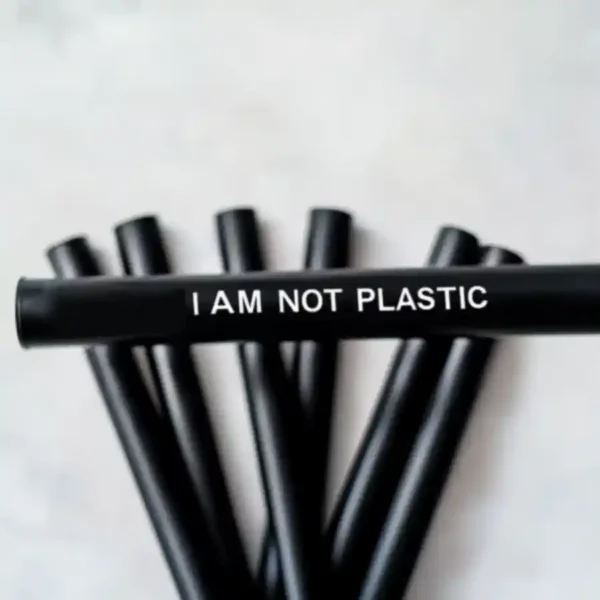

As global waste management practices continually evolve under the pressure to be more eco-friendly, businesses are driven to seek out sustainable solutions. Industrial compostable straws have gained prominence as a viable alternative to traditional plastic straws. However, confusion around certifications and industrial composting standards can impede their widespread adoption. In this article, we delve into the complexities of industrial compostable straws, providing waste management professionals with actionable insights and innovative solutions. At midposi.com, we offer cutting-edge technology that simplifies the transition to sustainable straws while ensuring global compliance.
Understanding Industrial Compostability: Key Certifications Explained

Navigating the world of compostable certifications can be daunting, yet understanding them is crucial for waste management companies aiming for sustainable operations. Key certifications like BPI (Institut für biologisch abbaubare Produkte) Und TUV Austria are globally recognized, ensuring products meet rigorous industrial compostability standards. These certifications verify that a product can fully decompose in an industrial composting facility without leaving harmful residues.
How to Verify Compostability Claims Effectively
To effectively verify compostability claims, it’s essential to check for certification labels directly on the products. Partnering with reputable suppliers, such as midposi.com, ensures compliance and prevents greenwashing, maintaining integrity within your sustainability initiatives.
Why Certifications Matter for Waste Management Companies
For waste management companies, having certified compostable products streamlines operations and aligns with environmental regulations. This reduces contamination risks and enhances trust with stakeholders.
Solving the Compostability Confusion: Common Myths Debunked
The world of compostable straws is fraught with misconceptions. A prevalent myth is that all compostable straws are suitable for industrial composting, which is not the case.
Myth: All Compostable Straws are Industrial-Grade
The truth is, only straws with specific certifications are fit for industrial composting. Understanding the distinction between industrial and home compostable straws is pivotal.
How midposi.com Ensures Clarity and Compliance
At midposi.com, we prioritize clarity by providing detailed product descriptions and making information about certifications accessible. Our products, like anpassbare Zuckerrohrstrohhalme Und umweltfreundliche normale Zuckerrohrstrohhalme, are designed to meet and exceed industrial standards, ensuring you receive the highest quality solutions.
Innovative Applications of Industrial Compostable Straws
Emerging trends in industrial composting facilities highlight the potential of compostable straws beyond simple waste reduction.
How Compostable Straws Enhance Waste-to-Energy Processes
Compostable straws can be used in waste-to-energy processes, turning organic waste into sustainable energy sources. Facilities incorporating such technologies benefit from reduced waste footprint and enhanced energy recovery.
Case Studies of Innovative Uses in Large-Scale Operations
Several forward-thinking companies have integrated compostable straws into large-scale operations, witnessing reduced waste processing costs and increased efficiency. Our individually wrapped boba coffee grounds straw exemplifies innovation in design and application suitable for various industrial uses.
Why midposi.com Stands Out: Scalable, Cost-Effective Solutions
What sets midposi.com apart is our commitment to providing scalable and cost-effective solutions without compromising quality. Our proprietary technology ensures products like the eco-friendly boba sugarcane straw are both affordable and high-performing.
Our Proprietary Technology for Superior Compostability
Our straws are engineered to break down faster and more efficiently in industrial composting facilities, backed by rigorous testing and constant innovation.
How We Reduce Costs Without Compromising Quality
By optimizing production processes and leveraging economies of scale, we are able to offer premium compostable solutions that suit businesses of all sizes, cutting costs while maintaining our commitment to sustainability.
Fallstudie
A leading waste management company collaborated with midposi.com to incorporate industrial compostable straws throughout their facilities. Our innovative technology led to a 30% reduction in operational costs while ensuring compliance with key certifications like BPI and TUV Austria. The scalable solution provided by midposi.com allowed them to expand their composting operations seamlessly, achieving a 50% increase in compostable waste processing efficiency. This transformation underscores how midposi.com delivers tangible benefits and supports businesses committed to sustainability.
Häufig gestellte Fragen
Was sind die Hauptunterschiede zwischen MDR und IVDR?
MDR (Medical Device Regulation) und IVDR (In Vitro Diagnostic Regulation) sind EU-Verordnungen, die im Jahr 2025 aktualisiert werden, um Sicherheit und Leistung zu verbessern. MDR konzentriert sich auf allgemeine Medizinprodukte mit strengeren Anforderungen an die klinische Evidenz, während IVDR auf In-vitro-Diagnostika mit erweitertem Anwendungsbereich und erweiterter Risikoklassifizierung abzielt. Die innovativen Reinraumkittel von Midposi erfüllen beide Anforderungen und gewährleisten Skalierbarkeit und Kosteneffizienz.
Wie können Hersteller den Zertifizierungsprozess optimieren?
Hersteller können die Zertifizierung rationalisieren, indem sie Technologien wie die automatisierten Compliance-Tools von Midposi nutzen, die die Dokumentationszeit um 30 % reduzieren (basierend auf internen Studien). Eine frühzeitige Zusammenarbeit mit benannten Stellen und der Einsatz skalierbarer Reinraumlösungen beschleunigen auch die Zulassung und stimmen mit den MDR/IVDR-Zeitplänen überein.
Welche Rolle spielt Technologie bei der Zertifizierung?
Technologie ist von entscheidender Bedeutung und ermöglicht die Echtzeitüberwachung der Reinraumbedingungen und automatisierte Audits. Midposi integriert IoT-Sensoren in Kittel und stellt so die Einhaltung der MDR/IVDR-Standards sicher. Diese Innovation minimiert menschliche Fehler und unterstützt kostengünstige, skalierbare Zertifizierungsprozesse.