Einführung
The escalating crisis of plastic pollution in our oceans demands immediate and effective solutions. Among the most pervasive pollutants are single-use plastics, with traditional plastic straws being a significant contributor. While many eco-friendly alternatives have emerged, marine biodegradable straws zeichnen sich durch ihre Fähigkeit, sich in der Meeresumwelt abzubauen, als besonders wichtige Innovation aus und bieten somit eine direkte Lösung für die Meeresverschmutzung. Ziel dieses Beitrags ist es, zu klären, was einen Meeresstrohhalm biologisch abbaubar macht, seine Bedeutung für die Gesundheit der Meere hervorzuheben und ihn von anderen „umweltfreundlichen“ Optionen zu unterscheiden.
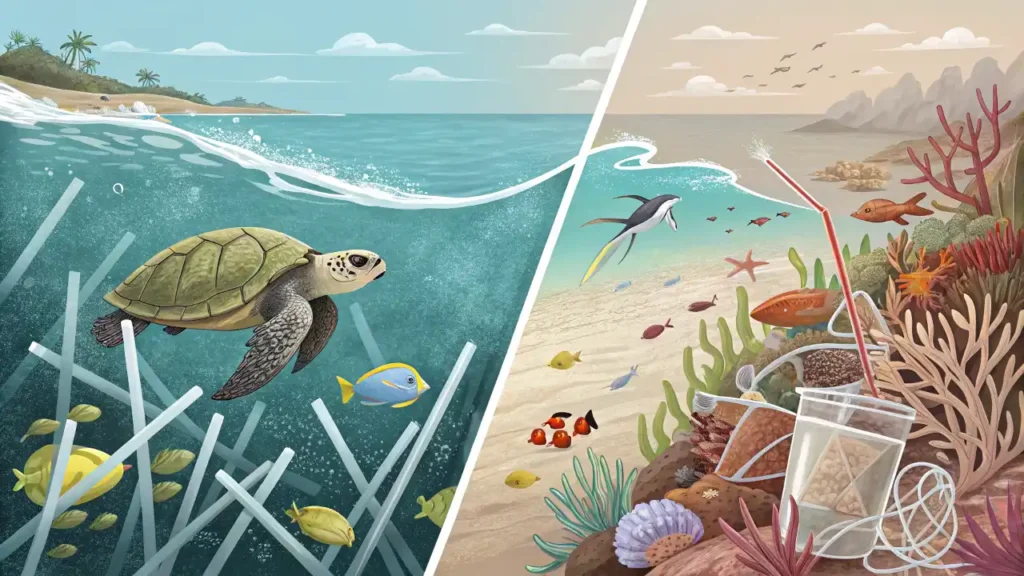
The Problem: Plastic Straws and Marine Pollution
Traditional plastic straws are a significant source of marine debris, contributing to the estimated 8 million metric tons of plastic that enter the oceans annually. These straws persist for hundreds of years, breaking down into harmful microplastics that contaminate ecosystems and enter the food chain. Marine animals often mistake these plastics for food, leading to ingestion, which causes blockages, malnutrition, and death. This poses a dire threat to marine life, including sea turtles, birds, and other organisms. It is therefore imperative to utilize materials that mitigate the environmental damage caused by traditional plastic. For more detailed information on the environmental impact of plastic straws, refer to the ACS report on biodegradable straws.
What Does “Marine Biodegradable” Mean?
The term “marine biodegradable” signifies that a material is designed to decompose naturally in marine environments, breaking down into natural substances within a relatively short period. This decomposition is facilitated by microorganisms, such as bacteria and fungi, which consume the organic materials in the straws. Unlike conventional plastics that can take hundreds of years to degrade, marine biodegradable materials are specifically formulated to break down under the conditions of seawater, therefore reducing their environmental footprint. These materials are often derived from renewable resources, such as plant matter, and are engineered to leave behind no harmful by-products.

Differentiating Marine Biodegradable Straws from Other Options
Obwohl es verschiedene Alternativen zu herkömmlichen Plastikstrohhalmen gibt, sind nicht alle gleich wirksam bei der Bekämpfung der Meeresverschmutzung. Es ist wichtig, biologisch abbaubare Meeresstrohhalme von anderen „umweltfreundlichen“ Optionen zu unterscheiden:
Wiedergewonnene Plastikstrohhalme aus dem Ozean
Vorteile: Diese Strohhalme werden aus recyceltem Plastik hergestellt, das sonst im Meer landen würde, was dazu beiträgt, Plastikmüll zu reduzieren und Aufräumarbeiten zu unterstützen.
Einschränkungen: Sie sind nicht biologisch abbaubar und können möglicherweise zu den Abfallströmen beitragen, wenn sie nicht ordnungsgemäß entsorgt werden. Darüber hinaus kann das Sammeln und Wiederverwenden dieses Kunststoffs energieintensiv sein. Sie werden in der Meeresumwelt nicht abgebaut.
PHA-Strohhalme (Polyhydroxyalkanoat).
Vorteile: PHA straws are made from plant-based materials and are temperature resistant. They are designed to break down in various environments without leaving harmful microplastics.
Einschränkungen: While PHA straws degrade effectively, they are primarily designed for industrial composting, and may have limited marine decomposition capabilities. However, PHA does degrade at natural temperatures in a variety of environments, even on the side of the road or on the beach.
Marine biodegradable straws, on the other hand, are specifically formulated to decompose in ocean environments, making them a more effective solution to marine plastic pollution. These straws, typically made from materials such as PHA, are engineered to break down quickly in seawater, reducing the harm to marine life. Explore our anpassbare Zuckerrohrstrohhalme for options tailored to your business needs.
The Critical Importance of Marine Biodegradable Straws
The significance of marine biodegradable straws lies in their ability to address the unique challenges posed by ocean plastic pollution:
- Protection of Marine Life: These straws degrade more rapidly, reducing the risk of ingestion by marine animals and subsequent harm.
- Reduction of Microplastics: By breaking down naturally, they minimize the formation of microplastics that can infiltrate ecosystems and the food chain.
- Lower Environmental Footprint: They are typically made from renewable, plant-based resources and decompose into natural substances, thus reducing their environmental impact.
- Support for a Circular Economy: Some of these straws can be composted, contributing to a circular economy by minimizing waste and maximizing resource efficiency.

The Science Behind Marine Biodegradable Straws
Die Wirksamkeit von im Meer biologisch abbaubaren Strohhalmen hängt von ihrer Zusammensetzung ab, die häufig Polyhydroxyalkanoate (PHAs) enthält. Diese werden von Mikroorganismen durch Fermentation hergestellt und sind speziell für den Abbau durch natürliche Mikroorganismen im Meer konzipiert. Bei diesem Prozess ernähren sich Mikroorganismen wie Bakterien und Pilze von den organischen Materialien in den Strohhalmen und erleichtern so deren Zersetzung in natürliche Elemente.
Embracing Marine Biodegradable Straws: A Necessary Step
Switching to marine biodegradable straws is not just a trend; it is an essential step for businesses aiming to mitigate their impact on ocean health. While other eco-friendly alternatives offer some benefits, only marine biodegradable straws directly address the problem of plastic pollution in marine environments. Businesses should prioritize these options to ensure they are taking meaningful action to protect our oceans. For a variety of marine biodegradable options, visit Greenprint Products.
Choosing Marine Biodegradable Straws
When selecting marine biodegradable straws, consider the following:
- Zertifizierungen: Ensure that the straws are certified as marine biodegradable by reputable organizations.
- Material Source: Opt for straws made from renewable, plant-based materials such as PHA.
- Supplier Reputation: Choose suppliers committed to sustainable practices and ethical sourcing.
- Performance: Confirm that the straws are durable enough for their intended use and will not break down too quickly.

Abschluss
Marine biodegradable straws are a critical solution to the growing problem of plastic pollution in our oceans. They offer a sustainable alternative to traditional plastics and other less effective “eco-friendly” options. By understanding the importance of marine biodegradability and choosing straws specifically designed for marine environments, businesses can significantly contribute to the protection of our oceans. It’s a step towards a more sustainable and healthier planet.