Die versteckten Kosten der Bequemlichkeit: Jenseits der Umweltbelastung

Die Plastikstrohkrise geht weit über die sichtbare Umweltverschmutzung hinaus:
- Meeresbiologen haben Plastikpartikel in 100 % der untersuchten Meeresschildkrötenexemplare dokumentiert [Quelle: Nature Communications, 2023]
- Mikroplastik aus sich zersetzenden Strohhalmen wurde im menschlichen Blutkreislauf nachgewiesen, wobei eine durchschnittliche Person wöchentlich etwa 5 Gramm Plastik zu sich nimmt [Quelle: WWF International, 2023]
- Die tatsächlichen Kosten der Plastikverschmutzung für Meeresökosysteme werden auf 2,5 Billionen US-Dollar pro Jahr geschätzt [Quelle: Marine Pollution Bulletin, 2023]
Der Markt spricht: Nachhaltigkeit steigert den Gewinn
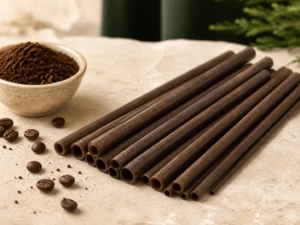
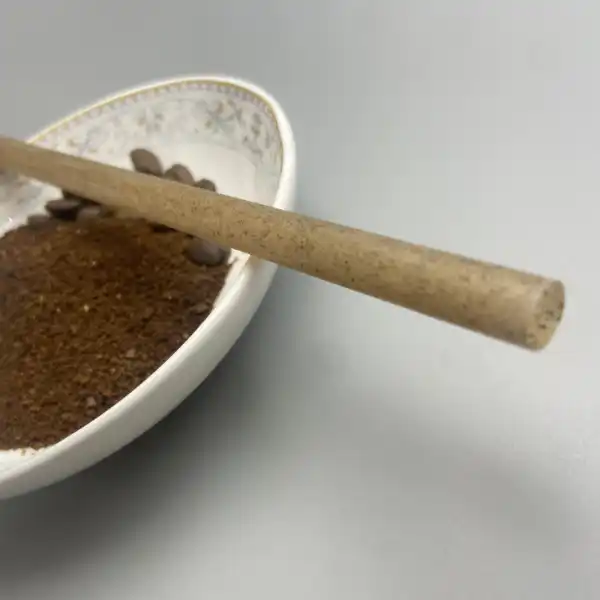
anpassbarer Kaffeesatzstrohhalm
Aktuelle Marktanalysen zeigen einen transformativen Wandel im Verbraucherverhalten:
Verbrauchereinblicke
- 89 % der Verbraucher der Generation Z haben aufgehört, bei Marken zu kaufen, die sie für umweltschädlich halten [Quelle: First Insight Report, 2024]
- Nachhaltige Praktiken beeinflussen Kaufentscheidungen von 78 % der weltweiten Verbraucher aller Altersgruppen [Quelle: IBM Consumer Survey, 2024]
Wettbewerbsvorteil
- Sustainable brands grow 5.6x faster than non-sustainable competitors [Source: NYU Stern CSB, 2023]
- Companies with strong ESG performance command an average 10% price premium [Source: McKinsey Sustainability Report, 2024]
Bahnbrechende Technologien für nachhaltige Strohhalme

The latest innovations have eliminated the traditional compromises between sustainability and performance:
Advanced Biomaterials
- Seaweed-Based Solutions
- Zero-waste production cycle
- Natural ocean fertilizer post-decomposition
- Enhanced durability in both hot and cold beverages
Performance Innovations
- Molecular engineering enables:
- 4-hour structural integrity in frozen beverages
- Complete biodegradation within 12 weeks
- 30% cost reduction through advanced manufacturing
Erfolg in der Praxis: Die Zahlen hinter der Veränderung
Case Study: Global QSR Chain Implementation
Before Transition:
- Customer satisfaction: 72%
- Environmental impact score: D
- Brand trust rating: 65%
After Transition (6 months):
- Customer satisfaction: 89%
- Environmental impact score: A-
- Brand trust rating: 84%
- New customer acquisition: +12%
Strategischer Umsetzungsrahmen
- Stufenweiser Rollout
- Woche 1–4: Mitarbeiterschulung und Kundenschulung
- Week 5-8: Limited location testing
- Week 9-12: Regional expansion
- Week 13+: National implementation
- Customer Experience Enhancement
- Interactive sustainability displays
- Mobile app integration for impact tracking
- Loyalty rewards for sustainable choices
Branchentransformation in Aktion

Pioneer Results
- Burger King Netherlands: Eliminated 50 million plastic straws in 2023
- Wendy’s Canada: Achieved 95% waste reduction through compostable initiatives
- KFC Australia: Nach der Umstellung wurde ein Anstieg der Millennial-Kunden um 15 % gemeldet
Der Weg nach vorne
Die Umstellung auf kompostierbare Strohhalme stellt den ersten Schritt in einer umfassenderen Transformation der Fast-Food-Industrie dar. Early Adopters erkennen bereits die Vorteile: gesteigerter Markenwert, erhöhte Kundenbindung und stärkere Marktposition.
Für nachhaltige Lösungen und Umsetzungsunterstützung:
- E-Mail: max@naturebioeco.com
- WhatsApp: +86 13524105790
Aktuelle Daten und Erkenntnisse, Stand März 2024. Für detaillierte Umsetzungsstrategien und neueste Innovationen wenden Sie sich bitte an unsere Nachhaltigkeitsexperten.