Introducción
La creciente crisis de la contaminación plástica en nuestros océanos exige soluciones inmediatas y efectivas. Entre los contaminantes más generalizados se encuentran los plásticos de un solo uso, siendo las tradicionales pajitas de plástico un importante contribuyente. Si bien han surgido muchas alternativas ecológicas, pajitas biodegradables marinas destacan como una innovación especialmente crucial debido a su capacidad de degradarse en ambientes marinos, ofreciendo así una solución directa a la contaminación de los océanos. Esta publicación tiene como objetivo aclarar qué hace que una pajita marina sea biodegradable, subrayar su importancia para la salud de los océanos y distinguirla de otras opciones "ecológicas".
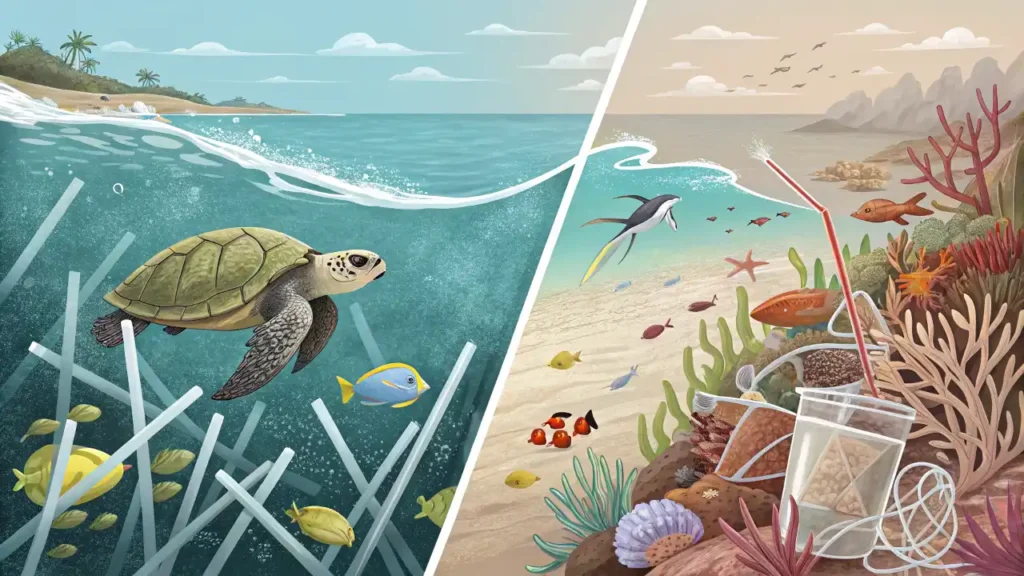
El problema: pajitas de plástico y contaminación marina
Las pajitas de plástico tradicionales son una fuente importante de desechos marinos y contribuyen a los 8 millones de toneladas métricas estimadas de plástico que ingresan a los océanos anualmente. Estas pajitas persisten durante cientos de años, descomponiéndose en microplásticos dañinos que contaminan los ecosistemas y entran en la cadena alimentaria. Los animales marinos a menudo confunden estos plásticos con alimentos, lo que lleva a su ingestión, lo que provoca obstrucciones, desnutrición y muerte. Esto representa una grave amenaza para la vida marina, incluidas las tortugas marinas, las aves y otros organismos. Por tanto, es imperativo utilizar materiales que mitiguen el daño medioambiental causado por el plástico tradicional. Para obtener información más detallada sobre el impacto ambiental de las pajitas de plástico, consulte el informe de la ACS sobre pajitas biodegradables.
¿Qué significa “biodegradable marino”?
El término "biodegradable marino" significa que un material está diseñado para descomponerse naturalmente en ambientes marinos, descomponiéndose en sustancias naturales en un período relativamente corto. Esta descomposición es facilitada por microorganismos, como bacterias y hongos, que consumen los materiales orgánicos de las pajitas. A diferencia de los plásticos convencionales, que pueden tardar cientos de años en degradarse, los materiales marinos biodegradables están formulados específicamente para descomponerse en las condiciones del agua de mar, reduciendo así su huella ambiental. Estos materiales a menudo se derivan de recursos renovables, como materia vegetal, y están diseñados para no dejar subproductos dañinos.

Diferenciar las pajitas marinas biodegradables de otras opciones
Si bien existen varias alternativas a las pajitas de plástico tradicionales, no todas son igualmente efectivas para abordar la contaminación de los océanos. Es importante distinguir las pajitas marinas biodegradables de otras opciones "ecológicas":
Pajitas de plástico recuperadas del océano
Beneficios: Estas pajitas están hechas de plástico reciclado que de otro modo terminaría en el océano, lo que ayuda a reducir los desechos plásticos y respalda los esfuerzos de limpieza.
Limitaciones: No son biodegradables y potencialmente pueden contribuir a los flujos de desechos si no se eliminan adecuadamente. Además, el proceso de recolección y reutilización de este plástico puede consumir mucha energía. No se descomponen en el medio marino.
Pajitas de PHA (Polihidroxialcanoato)
Beneficios: Las pajitas de PHA están hechas de materiales de origen vegetal y son resistentes a la temperatura. Están diseñados para descomponerse en diversos entornos sin dejar microplásticos dañinos.
Limitaciones: Si bien las pajitas de PHA se degradan eficazmente, están diseñadas principalmente para el compostaje industrial y pueden tener capacidades limitadas de descomposición marina. Sin embargo, el PHA se degrada a temperaturas naturales en una variedad de ambientes, incluso al costado de la carretera o en la playa.
Las pajitas marinas biodegradables, por otro lado, están formuladas específicamente para descomponerse en ambientes oceánicos, lo que las convierte en una solución más eficaz a la contaminación plástica marina. Estas pajitas, generalmente hechas de materiales como PHA, están diseñadas para descomponerse rápidamente en el agua de mar, lo que reduce el daño a la vida marina. Explora nuestro pajitas de caña de azúcar personalizables para opciones adaptadas a las necesidades de su negocio.
La importancia crítica de las pajitas marinas biodegradables
La importancia de las pajitas marinas biodegradables radica en su capacidad para abordar los desafíos únicos que plantea la contaminación plástica de los océanos:
- Protección de la vida marina: Estas pajitas se degradan más rápidamente, lo que reduce el riesgo de ingestión por parte de animales marinos y daños posteriores.
- Reducción de Microplásticos: Al descomponerse de forma natural, minimizan la formación de microplásticos que pueden infiltrarse en los ecosistemas y la cadena alimentaria.
- Menor Huella Ambiental: Por lo general, se elaboran a partir de recursos renovables de origen vegetal y se descomponen en sustancias naturales, lo que reduce su impacto ambiental.
- Apoyo a una economía circular: Algunas de estas pajitas se pueden convertir en abono, lo que contribuye a una economía circular al minimizar los residuos y maximizar la eficiencia de los recursos.

La ciencia detrás de las pajitas marinas biodegradables
La eficacia de las pajitas marinas biodegradables depende de su composición, que a menudo incluye polihidroxialcanoatos (PHA). Estos son producidos por microorganismos mediante fermentación y están formulados específicamente para ser descompuestos por microorganismos naturales que se encuentran en el océano. Este proceso involucra microorganismos como bacterias y hongos que se alimentan de los materiales orgánicos de las pajitas, facilitando así su descomposición en elementos naturales.
Adoptar pajitas marinas biodegradables: un paso necesario
El cambio a pajitas marinas biodegradables no es sólo una tendencia; es un paso esencial para las empresas que buscan mitigar su impacto en la salud de los océanos. Si bien otras alternativas ecológicas ofrecen algunos beneficios, sólo las pajitas marinas biodegradables abordan directamente el problema de la contaminación plástica en los ambientes marinos. Las empresas deben priorizar estas opciones para asegurarse de que están tomando medidas significativas para proteger nuestros océanos. Para conocer una variedad de opciones biodegradables marinas, visite Productos de impresión ecológica.
Elegir pajitas marinas biodegradables
Al seleccionar pajitas biodegradables marinas, considere lo siguiente:
- Certificaciones: Asegúrese de que las pajitas estén certificadas como biodegradables marinas por organizaciones acreditadas.
- Fuente de materiales: Opte por pajitas hechas de materiales renovables de origen vegetal como el PHA.
- Reputación del proveedor: Elija proveedores comprometidos con prácticas sostenibles y abastecimiento ético.
- Actuación: Confirme que las pajitas sean lo suficientemente resistentes para el uso previsto y que no se rompan demasiado rápido.

Conclusión
Las pajitas marinas biodegradables son una solución fundamental al creciente problema de la contaminación plástica en nuestros océanos. Ofrecen una alternativa sostenible a los plásticos tradicionales y otras opciones “ecológicas” menos efectivas. Al comprender la importancia de la biodegradabilidad marina y elegir pajitas diseñadas específicamente para entornos marinos, las empresas pueden contribuir significativamente a la protección de nuestros océanos. Es un paso hacia un planeta más sostenible y saludable.
Enlaces internos:
- Pajitas de caña de azúcar personalizables
- Pajitas de posos de café personalizables
- Pajitas de caña de azúcar Boba