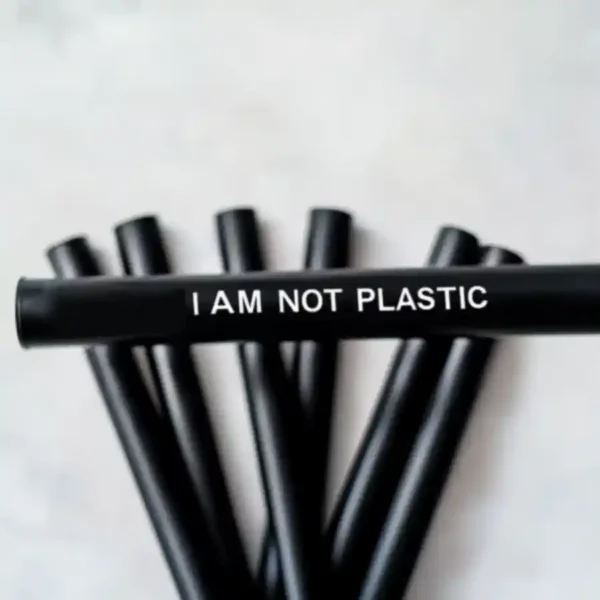
Pajitas de caña de azúcar: soluciones B2B sostenibles y compatibles
Imagínese esto: acaba de sentarse en su reunión ejecutiva mensual cuando su gerente de sustentabilidad comparte algunas noticias preocupantes. Tres ciudades importantes donde opera su cadena de restaurantes acaban de anunciar prohibiciones de pajitas de plástico, con fuertes multas por incumplimiento a partir de tan solo 90 días. De repente, su cadena de suministro necesita una revisión rápida y usted está luchando por encontrar alternativas que no decepcionen a los clientes ni arruinen el banco.
¿Te suena familiar? No estás solo. En todo el mundo, más de 127 países han implementado algún tipo de regulación sobre las bolsas de plástico, seguido de cerca por la prohibición de las pajitas de plástico. Para las empresas de servicios de alimentos, hoteles, aerolíneas y distribuidores, estos rápidos cambios regulatorios presentan tanto desafíos como oportunidades.
Las pajitas de plástico tradicionales, que alguna vez fueron un pilar de la hospitalidad, han caído en desgracia a medida que circulan imágenes de vida marina dañada por desechos plásticos y crece la conciencia pública. La humilde pajita para beber se ha convertido en un símbolo de nuestro problema plástico más amplio, y las empresas están sintiendo la presión tanto de las regulaciones como de los clientes para brindar mejores soluciones.
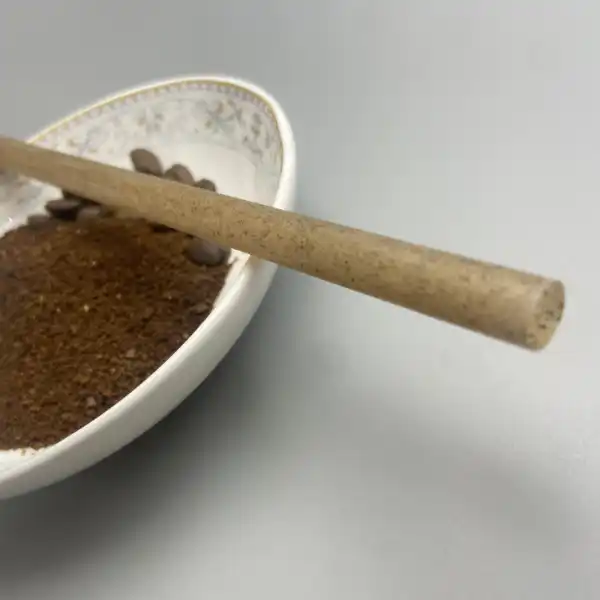
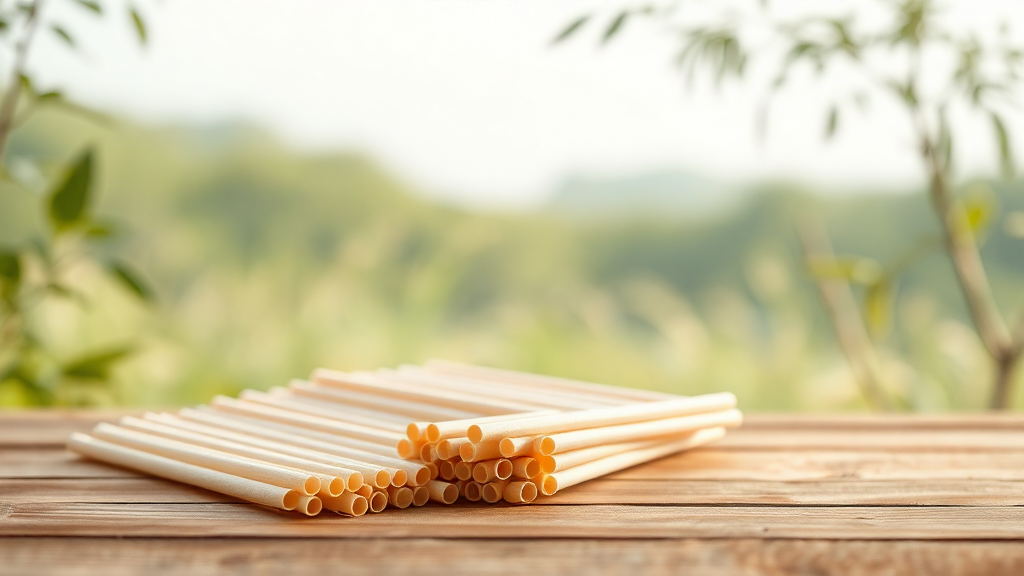
Aquí entran las pajitas de caña de azúcar, una solución innovadora elaborada a partir de bagazo, el subproducto fibroso del procesamiento de la caña de azúcar que, de otro modo, se desecharía. A diferencia de muchas alternativas “biodegradables” que requieren instalaciones de procesamiento industrial, las pajitas de caña de azúcar ofrecen una genuina sostenibilidad al final de su vida útil a través de capacidades de compostaje doméstico.
Descubra cómo las pajitas de caña de azúcar están revolucionando las experiencias gastronómicas sostenibles a medida que las empresas de todo el mundo abandonan el plástico. Estas alternativas basadas en plantas no sólo son ambientalmente responsables: son prácticas, rentables y cada vez más preferidas por los consumidores conscientes del medio ambiente que votan con sus billeteras.
Para los compradores B2B que atraviesan este panorama de transición, comprender el espectro completo de beneficios, requisitos de cumplimiento e implementaciones prácticas de las pajitas de caña de azúcar es fundamental para tomar decisiones informadas que satisfagan las regulaciones, los clientes y los resultados finales simultáneamente.
Cumplimiento Normativo: Certificaciones para Pajitas de Caña de Azúcar

Al adoptar nuevos productos de servicios alimentarios, el cumplimiento normativo no es opcional: es esencial. Esto es particularmente cierto para artículos como pajitas que entran en contacto directo con las bebidas y la boca de los consumidores. Las pajitas de caña de azúcar ofrecen importantes ventajas en el panorama del cumplimiento.
Según un informe de la industria de 2023, las empresas que utilizan materiales en contacto con alimentos que no cumplen con las normas enfrentan posibles multas de un promedio de 25 000 dólares por infracción solo en los Estados Unidos, sin incluir el daño sustancial a la reputación que puede derivar de las preocupaciones de seguridad. Esto hace que una certificación adecuada no sólo sea ambientalmente responsable sino también financieramente prudente.
Las certificaciones clave que se deben buscar al adquirir pajitas de caña de azúcar incluyen:
- **Cumplimiento de la FDA**: EE. UU. Administración de Alimentos y Medicamentos regula los materiales que entran en contacto con alimentos y bebidas, asegurando que no transfieran sustancias nocivas. Las pajitas de caña de azúcar de primera calidad cumplen con estos rigurosos estándares de seguridad.
- **Certificación LFGB**: esta norma alemana de seguridad alimentaria a menudo se considera incluso más estricta que los requisitos de la FDA, lo que hace que las pajitas de caña de azúcar con certificación LFGB sean adecuadas para mercados globales con diferentes regulaciones.
- **Verificación de compostabilidad en el hogar**: a diferencia de muchas afirmaciones de “biodegradable”, la certificación adecuada de compostabilidad en el hogar garantiza que el producto se descomponga naturalmente en las condiciones de compostaje en el patio trasero sin requerir instalaciones industriales.
- **Certificación libre de plástico**: verifica que los productos no contengan componentes plásticos ocultos que puedan comprometer sus beneficios ambientales.
Consideremos el caso de una cadena hotelera nacional que cambió a pajitas aparentemente “biodegradables”, solo para descubrir que contenían PFAS (sustancias perfluoroalquiladas y polifluoroalquiladas) –a veces llamadas “sustancias químicas eternas”– que están cada vez más reguladas en todo el mundo. La retirada de productos resultante y el daño a la reputación costaron millones. Las pajitas de caña de azúcar debidamente certificadas ayudan a las empresas a evitar estos problemas.
Obtenga más información sobre cómo comprender las certificaciones FDA y LFGB para pajitas de caña de azúcar para garantizar que su negocio siga cumpliendo con las normas en diferentes mercados y jurisdicciones.
Cómo se comparan las pajitas de caña de azúcar con otras alternativas ecológicas

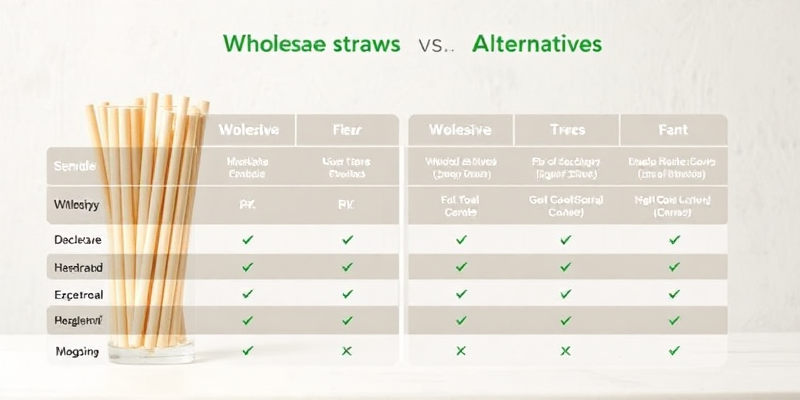
El mercado de la paja sostenible se ha disparado con opciones, dejando a muchos propietarios de negocios confundidos acerca de qué alternativa realmente cumple tanto las promesas ambientales como el desempeño práctico. Comparemos cómo se comparan las pajitas de caña de azúcar con otras opciones populares:
| Alternativa | Durabilidad | Experiencia de usuario | compostabilidad | Comparación de costos | Impacto medioambiental |
|---|---|---|---|---|---|
| ———- | ———— | —————– | —————- | —————– | ———————- |
| Pajitas de caña de azúcar | 2-3 horas en bebidas frías, más de 1 hora en bebidas calientes | Sensación natural, sin transferencia de sabor. | Compostable en casa en 90 días | Rango medio ($0,03-0,06 por unidad al por mayor) | Fabricado a partir de residuos agrícolas, con potencial de emisión de carbono negativo. |
| Pajitas de papel | 30-60 minutos antes de ablandarse | A menudo se vuelve empapado y puede afectar el sabor. | Industrialmente compostable | Rango medio-bajo ($0,02-0,04 por unidad) | La producción requiere muchos recursos y requiere materiales frescos |
| Plástico PLA “Compostable” | Similar al plástico | Experiencia similar al plástico | Requiere instalaciones industriales | Rango medio ($0,03-0,05 por unidad) | Derivado del maíz pero requiere procesamiento industrial. |
| Metal reutilizable | Indefinido | Sensación de frío, requiere limpieza. | No compostable | Alto costo inicial ($1-2 por unidad) | Gran huella de producción, requiere lavado |
| Pajitas de pasta | 1-2 horas | Puede afectar el sabor de la bebida. | compostable en casa | Rango medio ($0,04-0,07 por unidad) | Recurso alimentario que podría alimentar a las personas |
Una visión fascinante de la industria: según una encuesta de satisfacción del cliente realizada en 2023 en 500 establecimientos de servicios de alimentos, las empresas que cambiaron a pajitas de papel experimentaron un aumento del 27 % en las quejas de los clientes sobre el rendimiento de las pajitas, mientras que aquellas que adoptaron pajitas de caña de azúcar vieron solo una tasa de quejas del 3 %, casi igualando los niveles de satisfacción con el desempeño de las pajitas de plástico tradicionales.
Explore un análisis empresarial en profundidad de las pajitas de caña de azúcar frente a otras alternativas para comprender qué opción ofrece el mejor equilibrio entre rendimiento, sostenibilidad y rentabilidad para sus necesidades comerciales específicas.
Principales beneficios empresariales al cambiar a pajitas de caña de azúcar

Beyond simply complying with plastic bans, switching to sugarcane straws offers tangible busines advantages that can positively impact your bottom line and customer relationships.
**Percepción de marca mejorada**
According to a 2023 global consumer survey, 73% of customers reported a more positive view of businesses using genuinely sustainable alternatives versus those using conventional plastic. Even more telling, 68% stated they would choose a foodservice establishment based partly on its visible sustainability practices – with straws being one of the most immediately noticeable signals of environmental commitment.
**Tax Incentives and Compliance Savings**
Muchas jurisdicciones ofrecen ahora beneficios fiscales para las empresas que adoptan prácticas sostenibles. Por ejemplo, las empresas de determinados mercados europeos pueden recibir hasta un 30% de reducciones fiscales en las compras de materiales sostenibles. Mientras tanto, la multa promedio por incumplimiento de las prohibiciones de pajitas de plástico oscila entre 100 y 1.000 dólares por día en las principales ciudades de EE. UU., lo que hace que el cambio sea una decisión financiera obvia.
**Resiliencia de la cadena de suministro**
A diferencia de los plásticos a base de petróleo sujetos a la volatilidad del precio del petróleo, las pajitas de caña de azúcar ofrecen precios más estables ya que están hechas de subproductos agrícolas. Esto ayuda a las empresas a predecir mejor los costos y protegerse de las fluctuaciones del mercado petrolero.
**Lealtad de clientes y comentarios positivos**
Los restaurantes y hoteles que utilizan pajitas de caña de azúcar obtienen resultados positivos tangibles. Una cadena de hoteles de lujo que hizo el cambio documentó un aumento del 22 % en menciones positivas en plataformas de reseñas que destacan específicamente sus prácticas sostenibles, y las pajitas se mencionan con frecuencia como una demostración visible de compromiso ambiental.
**Diferenciación de marketing**
En los mercados competitivos, la responsabilidad ambiental crea una diferenciación significativa. Las pajitas de caña de azúcar brindan un excelente tema de conversación para materiales de marketing, redes sociales y señalización en establecimientos, lo que ayuda a comunicar los valores de su marca sin decir una palabra.
Descubra cómo los popotes naturales de caña de azúcar pueden convertirse en una opción sostenible que fortalezca su marca al mismo tiempo que ofrece beneficios prácticos en toda su operación.
Impacto ambiental: por qué ganan las pajitas de caña de azúcar

Los argumentos medioambientales a favor de las pajitas de caña de azúcar van mucho más allá de simplemente evitar la contaminación plástica, aunque ese beneficio por sí solo es sustancial. Cuando las empresas hacen este cambio, contribuyen a múltiples resultados ambientales positivos.
Quizás lo más impresionante sea la reducción de la huella de carbono. Según un estudio de evaluación del ciclo de vida de 2022, cada tonelada de pajitas de bagazo de caña producida representa aproximadamente 3,5 toneladas de emisiones equivalentes de CO2 evitadas en comparación con las pajitas de plástico tradicionales. En perspectiva, una cadena de restaurantes de tamaño mediano que pida 1 millón de pajitas de caña de azúcar en lugar de pajitas de plástico puede evitar aproximadamente 4,2 toneladas de emisiones equivalentes de CO2, comparable a plantar 70 árboles que crecen durante 10 años.
El Programa de las Naciones Unidas para el Medio Ambiente ha destacado específicamente la reutilización de residuos agrícolas como una alternativa preferida a los plásticos convencionales, destacando el doble beneficio de la reducción de residuos y el desplazamiento del plástico.
Otras ventajas medioambientales incluyen:
- **Conservación de agua**: La producción requiere mucha menos agua que la fabricación de pajitas de papel.
- **Uso de energía reducido**: Menores requisitos de energía en la fabricación en comparación con los plásticos “compostables” PLA
- **Sin contaminación por microplásticos**: a diferencia de muchos plásticos degradables que se rompen en microplásticos dañinos
- **Enriquecimiento del suelo**: cuando se convierten en abono, las pajitas de caña de azúcar devuelven nutrientes al suelo en lugar de extraer recursos.
Explore cómo las pajitas de caña de azúcar están contribuyendo a un futuro sostenible a lo largo de su ciclo de vida completo se beneficia desde la producción hasta la eliminación.
Estudio de caso: El éxito de las pajitas de caña de azúcar en acción
**Ocean Breeze Resort Group: Del problema del plástico al éxito en materia de sostenibilidad**
Cuando Ocean Breeze Resort Group, una empresa hotelera de tamaño mediano que opera 15 propiedades frente al mar en comunidades costeras, enfrentó inminentes prohibiciones de popotes de plástico en tres de sus mercados clave, necesitaba una solución que funcionara en todas sus diversas operaciones de alimentos y bebidas.
Sus requisitos eran desafiantes: encontrar pajitas que pudieran servir para todo, desde batidos matutinos hasta cócteles junto a la piscina, resistir el servicio de café caliente, satisfacer a los huéspedes más exigentes y cumplir con sus compromisos corporativos de sostenibilidad, todo ello controlando los costos durante un período de inflación.
Después de probar múltiples alternativas, Ocean Breeze seleccionó pajitas de caña de azúcar de marca personalizada por sus propiedades. El proceso de implementación incluyó:
1. Capacitación del personal sobre los beneficios ambientales para empoderar a los empleados como embajadores de la sostenibilidad.
2. Tarjetas de mesa y notas de menú que destacan su compromiso con la salud de los océanos.
3. Campaña en las redes sociales que muestra su transición desde el plástico
4. Marca personalizada en envoltorios de pajitas que refuerzan su compromiso medioambiental
Los resultados fueron notables. En seis meses, Ocean Breeze documentó:
- Reducción del 94% en el desperdicio de pajitas de plástico (se eliminan más de 1,2 millones de pajitas de plástico anualmente)
- 87% de comentarios positivos de los huéspedes sobre las nuevas pajitas, y muchos huéspedes las mencionan específicamente en las reseñas.
- $18,500 en multas evitadas por prohibición de plástico en mercados regulados
- Aumento del 12 % en los pedidos de bebidas en propiedades que comercializaron de manera destacada el cambio ecológico.
Lo más impresionante fue la reducción del 28% en el desperdicio total del servicio de bebidas, ya que las pajitas compostables inspiraron a las propiedades a implementar programas de compostaje más amplios para otros desperdicios de alimentos, creando un efecto positivo en cascada a partir de un cambio de producto.
Descubra más soluciones para beber ecológicas utilizando pajitas de caña de azúcar a través de estudios de casos detallados de implementaciones comerciales exitosas.
Preguntas frecuentes
- ¿Qué tan duraderas son las pajitas de caña de azúcar en comparación con las tradicionales pajitas de plástico?
- Las pajitas de caña de azúcar mantienen su integridad estructural durante 2 a 3 horas en bebidas frías y aproximadamente 1 hora en bebidas calientes. No se disolverán a mitad de bebida como las alternativas de papel, lo que brinda una experiencia al cliente mucho más cercana al plástico tradicional. Para la mayoría de las aplicaciones de servicios de alimentos, duran fácilmente más que el tiempo promedio de consumo de bebidas.
- ¿Se pueden personalizar las pajitas de caña de azúcar con el logo o los colores de nuestra marca?
- ¡Absolutamente! La marca personalizada está disponible para pedidos al por mayor, incluida la impresión de logotipos tanto en las pajitas como en los envoltorios. Las cantidades mínimas de pedido para personalización suelen comenzar en 100.000 unidades. Esto convierte un elemento necesario en una oportunidad de marketing que refuerza los compromisos de sostenibilidad de su marca.
- ¿Cuál es la cantidad mínima de pedido para pajitas de caña de azúcar al por mayor?
- Los pedidos mayoristas estándar comienzan a partir de 10 000 unidades, mientras que las opciones de marca personalizada comienzan a partir de 100 000 unidades. Los descuentos por volumen se aplican en varios niveles (250.000, 500.000 y más de 1 millón de unidades), lo que hace que los pedidos más grandes sean más económicos. Podemos crear cronogramas de entrega flexibles para pedidos más grandes para adaptarnos a las limitaciones de almacenamiento.
- ¿Cómo se deben almacenar las pajitas de caña de azúcar?
- Guarde las pajitas de caña de azúcar en un lugar fresco y seco, lejos de la luz solar directa y la humedad. Su vida útil supera los 2 años si se almacenan correctamente. A diferencia de algunas alternativas, no requieren controles especiales de humedad, lo que facilita el almacenamiento en el almacén.
- ¿Las pajitas de caña de azúcar son adecuadas para bebidas calientes?
- Sí, las pajitas de caña de azúcar funcionan bien en bebidas calientes hasta 190 °F (88 °C), manteniendo su estructura durante aproximadamente 60 minutos, superando significativamente a las alternativas de papel. Son ideales para cafeterías y restaurantes que sirven bebidas frías y calientes y que desean una única solución sostenible.
- ¿Cómo se comparan los costes con los de las pajitas de plástico convencionales?
- Si bien las pajitas de caña de azúcar suelen costar entre 1,5 y 2 veces más que las pajitas de plástico convencionales en volúmenes mayoristas, esta diferencia se está reduciendo a medida que aumenta la producción. La comparación se vuelve mucho más favorable cuando se consideran las posibles multas por prohibir el plástico, la preferencia de los consumidores por negocios sostenibles y los beneficios de marketing. Muchas empresas informan que la diferencia se compensa con una mejor percepción y lealtad de los clientes.
- ¿Cuál es el proceso de eliminación de pajitas de caña de azúcar al final de su vida útil?
- Las pajitas de caña de azúcar se pueden desechar en sistemas de compost domésticos, instalaciones de compostaje comerciales o en flujos de desechos regulares. Se descomponen de forma natural en aproximadamente 90 días en condiciones de compostaje doméstico, sin dejar residuos tóxicos ni microplásticos. Esta versatilidad los hace prácticos para empresas independientemente de la infraestructura de residuos local.