Introduction
Plastic pollution has become a critical environmental issue, with single-use plastics contributing significantly to global waste. In response, alternatives such as biodegradable plastic straws et upcycled coffee grounds straws have emerged. This blog explores their benefits, limitations, environmental impact, and best practices for businesses and consumers looking to adopt sustainable solutions.
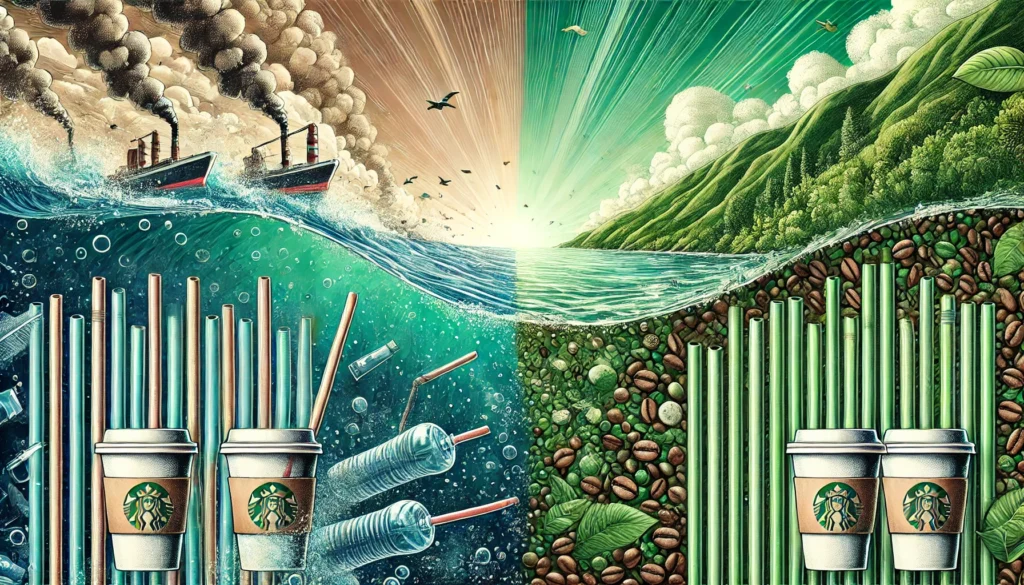
Understanding Biodegradable Plastic Straws
What Are Biodegradable Plastic Straws?
Les pailles en plastique biodégradables sont conçues pour se décomposer plus rapidement que les pailles en plastique traditionnelles. Ils sont généralement fabriqués à partir de :
- Acide polylactique (PLA) – Dérivé de l’amidon de maïs ou de la canne à sucre mais nécessite un compostage industriel.
- Polyhydroxyalcanoates (PHA) – Une alternative végétale qui se décompose dans les milieux naturels, y compris les écosystèmes marins.
- PBAT (Polybutylène Adipate Téréphtalate) – Un polymère biodégradable qui améliore la compostabilité.
Comment se décomposent-ils ?
Bien que les pailles en plastique biodégradables se dégradent plus rapidement que les plastiques conventionnels, elles nécessitent des conditions spécifiques pour décomposer efficacement :
- Compostage industriel : Des températures élevées et des environnements microbiens contrôlés sont nécessaires pour une dégradation complète.
- Décharges & Océans : In non-optimal conditions, some biodegradable plastics may degrade slowly, leaving microplastics behind.
Défis & Misconceptions
- Greenwashing Concerns: Many products labeled “biodegradable” do not break down in natural environments without proper processing.
- Limited Recycling & Composting Facilities: Many cities lack the infrastructure to compost PLA or PHA straws properly.
- Microplastic Risks: Some biodegradable plastics may only fragment rather than fully degrade.

Upcycled Coffee Grounds Straws: A Game-Changer?
What Are Coffee Grounds Straws?
Upcycled coffee grounds straws are made by repurposing used coffee grounds into durable, compostable drinking straws. This innovation supports the économie circulaire, reducing organic waste while offering an eco-friendly alternative.
Avantages clés
- Zéro déchet : Utilise du marc de café jeté qui autrement finirait dans les décharges.
- Durabilité: Contrairement aux pailles en papier, elles maintiennent l'intégrité structurelle des boissons chaudes et froides.
- Compostabilité : Se décompose naturellement dans des conditions de compostage domestique sans nécessiter d'installations industrielles.
- Saveur neutre : Contrairement à certaines pailles végétales, les pailles au marc de café n’altèrent pas le goût des boissons.
Limites & Considérations
- Production & Évolutivité : L’adoption continue de croître et la fabrication à grande échelle reste limitée.
- Sensibilité de stockage : Doit être stocké dans des conditions sèches pour maintenir la longévité.
- Coûts de production plus élevés : Par rapport aux pailles traditionnelles en plastique ou en papier, les coûts de production peuvent être légèrement plus élevés.

Comparison of Sustainable Straw Alternatives
| Type de paille | Idéal pour | Durabilité | Méthode d'élimination | Avantage clé |
|---|---|---|---|---|
| Upcycled Coffee Grounds | Coffee shops, eco-conscious consumers | Haut | Compostable à la maison | Waste reduction |
| Biodegradable Plastic (PLA/PHA) | Restaurants, fast food | Modéré | Industrial composting required | Familiar texture |
| Papier | Quick-service restaurants | Low (soggy) | Recyclable/compostable | Cost-effective |
| Bambou | Premium cafes, home use | Haut | Compostable | Matériau naturel |
| Métal/Verre | Personal use, long-term | Très élevé | Wash & reuse | Durable |
Impact environnemental & Conformité réglementaire
Do These Straws Truly Reduce Waste?
- Countries that have pailles en plastique interdites, such as the EU, Canada, and certain U.S. states, have reported reductions in single-use plastic consumption.
- UN life cycle assessment (LCA) comparing different materials shows that upcycled coffee grounds and PHA straws have a empreinte carbone réduite than conventional PLA-based straws.
Paysage réglementaire
- EU Single-Use Plastics Directive (2021) – Bans conventional plastic straws, pushing for compostable or reusable alternatives.
- U.S. State Bans (California, New York, Washington, etc.) – Restrict plastic straw distribution, encouraging biodegradable options.
- China’s Plastic Reduction Policy – Aims to eliminate single-use plastics by 2025, promoting sustainable alternatives.

Best Practices for Businesses & Consommateurs
How to Choose the Right Sustainable Straw
- Check Certifications: Rechercher BPI, TÜV OK Compost, and USDA BioPreferred labels.
- Understand Disposal Requirements: Ensure access to composting facilities for biodegradable plastics.
- Educate Consumers: Provide signage or messaging about proper straw disposal.
Sustainability Practices for Restaurants & Cafés
- Offer Straw Alternatives Only Upon Request – Reduces unnecessary waste.
- Provide Proper Disposal Bins – Encourage composting rather than landfilling.
- Transition progressive – Start by introducing eco-friendly straws for dine-in customers, then phase out single-use plastics.
Foire aux questions (FAQ)
1. Are biodegradable plastic straws really better than traditional plastic?
✅ Yes, but only when disposed of correctly. They require compostage industriel to fully degrade, unlike traditional plastic, which lingers in the environment for centuries.
2. Do biodegradable plastic straws break down in the ocean?
🚫 Most do not. Many biodegradable plastics require high temperatures to break down, which are not present in marine environments. However, PHA-based straws are more likely to degrade naturally in water.
3. Are upcycled coffee grounds straws safe for food use?
✅ Oui. They meet normes de sécurité alimentaire and do not release harmful chemicals into beverages.
4. What’s the best straw alternative for businesses?
🏢 It depends on the business type:
- Restaurants & fast food chains: Prefer biodegradable plastic straws for their durability and familiar texture.
- Coffee shops & eco-conscious brands: Benefit from using upcycled coffee grounds straws, which align with their sustainability goals.
5. Do biodegradable plastics contribute to microplastic pollution?
⚠️ Some do, especially if they are not composted under the right conditions. Incomplete decomposition in landfills or oceans may result in microplastic fragments.
6. How can consumers dispose of biodegradable and upcycled straws properly?
♻️ Proper disposal methods:
- Pailles en plastique biodégradables → Industrial composting facilities are required for full degradation.
- Upcycled coffee grounds straws → Can be composté à la maison or disposed of with organic waste.
7. How much more expensive are sustainable straws?
💰 Cost comparison of eco-friendly straws:
- Pailles en papier: 2–3x the price of plastic.
- Pailles en plastique biodégradables: 3–5x costlier than traditional plastic.
- Upcycled coffee grounds straws: Slightly higher, but offset by branding and sustainability advantages.
8. Which countries have banned plastic straws?
🌍 Global plastic straw bans:
- Europe: EU-wide ban on single-use plastics.
- USA: California, New York, Washington, and several other states have restricted plastic straw usage.
- Chine: Phasing out plastic straws by 2025 under its national plastic reduction policy.
Conclusion
Both biodegradable plastic straws et upcycled coffee grounds straws offer sustainable alternatives to traditional plastics. However, the effectiveness of these solutions depends on proper disposal, business adoption, and consumer education. Businesses should evaluate their needs and choose the most practical solution based on cost, sustainability, and regulatory compliance.
Appel à l'action
Vous recherchez une solution de paille durable ? Pensez à passer à plastique biodégradable ou upcycled coffee grounds straws et informez vos clients sur l'élimination appropriée.