Paies de canne à sucre: solutions B2B respectueuses de l'environnement pour 2025

Introduction: The Shifting Landscape of Single-Use Products

Picture this: It’s a busy Friday night at your hotel bar or restaurant. Hundreds of drinks are being served, each with a straw. Now imagine that by the end of the night, instead of contributing bags of plastic waste destined for landfills or oceans, your busines has generated only compostable materials that will break down naturally within weeks.
Ce n’est pas seulement un rêve d’écologiste : c’est en train de devenir une réalité commerciale mondiale. À mesure que nous avançons vers 2025, les interdictions de la paille en plastique ne sont plus seulement une tendance ; ils deviennent des réglementations standardisées sur tous les continents. De la Californie à l’Union européenne, de l’Australie à certaines régions d’Asie, la législation restrictive sur les plastiques à usage unique a créé non seulement un défi mais aussi une véritable opportunité pour les entreprises avant-gardistes.
Selon des recherches récentes, les pailles en plastique à usage unique peuvent mettre jusqu'à 200 ans à se décomposer, tout en libérant des microplastiques nocifs dans notre environnement. À l’opposé, les pailles de canne à sucre se décomposent complètement en 90 jours dans les installations de compostage commerciales et généralement en moins de 180 jours dans les installations de compostage domestique.
The sugarcane straws environmental impact is remarkably positive compared to conventional plastic. Derived from bagasse—the fibrous byproduct left after extracting juice from sugarcane—these straws repurpose what would otherwise be agricultural waste. This circular economy approach reduces waste while creating valuable products.
Learn about custom-branded solutions for your busines that can enhance your sustainability profile while meeting practical needs.
Au-delà des considérations environnementales, il existe de solides arguments commerciaux en faveur d’un changement maintenant plutôt que plus tard. Alors que les consommateurs prennent de plus en plus de décisions d'achat en fonction des pratiques de durabilité d'une entreprise, l'adoption d'alternatives respectueuses de l'environnement, comme les pailles de canne à sucre, place votre entreprise en avance à la fois sur les courbes réglementaires et sur les attentes du marché.
Conformité réglementaire : certifications pour les pailles de canne à sucre

Naviguer dans le paysage réglementaire complexe des matériaux destinés à entrer en contact avec des aliments peut s'avérer difficile, en particulier lorsqu'il s'agit de rechercher des alternatives durables. Pour les acheteurs B2B, comprendre les exigences de certification ne consiste pas seulement à cocher des cases : il s’agit également de garantir la sécurité des produits, la conformité légale et la protection de la réputation de votre marque.
Sugarcane straws require specific certifications to be legally marketable in different regions. The most important include FDA compliance in the United States and LFGB certification for the European market. These certifications ensure that the products are safe for food contact and don’t contain harmful chemicals or substances that might migrate into beverages.
According to a 2024 industry report, businesses failing to comply with single-use plastic regulations face fines averaging $10,000 per violation in major U.S. cities, with some jurisdictions implementing escalating penalties for repeat offenders.
Beyond mandatory certifications, look for additional credentials that signal quality and environmental responsibility:
- Certification de compostabilité domestique
- BPI (Biodegradable Products Institute) certification
- Non-GMO verification
- Chemical-free processing documentation
Discover humidity-resistant options for tropical climates that maintain their integrity even in challenging environmental conditions while meeting all necessary regulations.
When sourcing from global suppliers, verification becomes even more critical. Request comprehensive documentation directly from manufacturers, including test results from accredited third-party laboratories. The FDA’s guidelines on food-contact materials provide essential information about compliance requirements that apply to imported sustainable alternatives.
Remember that regulatory compliance isn’t just about avoiding penalties—it demonstrates your commitment to customer safety and environmental responsibility, building trust with increasingly conscious consumers.
Comment les pailles de canne à sucre se comparent à d'autres alternatives écologiques

With numerous sustainable straw options flooding the market, making an informed decision requires understanding the comparative advantages of each material. Here’s how sugarcane straws stack up against other popular eco-friendly alternatives:
| Matériel | Durabilité | Temps de compostage | Résistance à la chaleur | Sensation en bouche | Niveau de prix |
|---|---|---|---|---|---|
| ———- | ———— | —————– | —————– | ———– | ————- |
| Canne à sucre | 3-4 hours in liquids | 90-180 jours | Jusqu'à 185°F | Natural, rigid | $$$ |
| Papier | 1-2 heures | 30-60 jours | Limité | Devient souvent détrempé | $ |
| PLA (Corn) | 4+ heures | 180+ jours (industriel uniquement) | Jusqu'à 105°F | Plastic-like | $$ |
| Bambou | Réutilisable | Non compostable | Haut | Boisé | $$$$ |
| Métal | Réutilisable | Non compostable | Très élevé | Metallic, conducts temperature | $$$$$ |
According to a 2024 consumer experience survey, 73% of hospitality customers reported dissatisfaction with paper straws due to their tendency to become soggy, while sugarcane straws maintained a 91% satisfaction rating for their texture and performance.
Sugarcane straws offer several distinct advantages for specific busines applications:
- They maintain structural integrity in cold drinks for 3-4 hours—significantly longer than paper alternatives
- Unlike PLA straws, they’re truly home compostable without requiring industrial facilities
- They provide a natural feel similar to conventional plastic without the environmental downsides
- They’re heat-resistant enough for hot beverages, unlike many bioplastic options
Explore specialized eco-friendly cocktail straws for upscale beverage service that maintain both sustainability and premium aesthetics.
While paper straws may offer a lower initial price point, their performance limitations often result in higher consumption rates and customer dissatisfaction. PLA straws, while durable, require industrial composting facilities that many regions lack. Reusable options like metal or bamboo introduce washing costs and replacement needs that must be factored into total cost analysis.
Principaux avantages commerciaux du passage aux pailles de canne à sucre

Making the transition to sugarcane straws delivers tangible busines advantages beyond environmental benefits. Forward-thinking companies are discovering that sustainability initiatives like these directly impact their bottom line.
First, there’s the marketing advantage. In today’s marketplace, sustainable practices aren’t just nice-to-have—they’re increasingly expected. A 2025 Nielsen global survey revealed that 78% of consumers are more likely to choose brands that demonstrate environmental responsibility, with 67% willing to pay a premium for sustainable products and services.
Learn how educational institutions are implementing sustainable straw programs that both reduce waste and serve as teaching tools about environmental responsibility.
Second, customization opportunities allow businesses to transform necessary items into branding vehicles. Custom-printed sugarcane straws with your logo or message extend your brand presence while showcasing your sustainability commitment—a dual benefit that plastic straws never offered.
Third, there’s the employee engagement factor. Staff members, particularly millennials and Gen Z who make up an increasing percentage of the workforce, report higher satisfaction when working for environmentally responsible organizations. Your sustainable choices become recruiting and retention tools.
Fourth, sugarcane straws create opportunities for storytelling. From table tents to social media posts, the sustainable journey of your straws—from agricultural byproduct to compostable waste—provides compelling content that resonates with customers.
Finally, the cost-benefit analysis increasingly favors sustainable alternatives as:
- Plastic straw bans eliminate cheaper but non-compliant options
- Bulk purchasing of sugarcane straws reduces per-unit costs
- Premium perception justifies slight menu price increases if necessary
- Waste management costs decrease with compostable items
- Brand loyalty and customer retention improve with visible sustainability efforts
Impact environnemental : pourquoi les pailles de canne à sucre gagnent
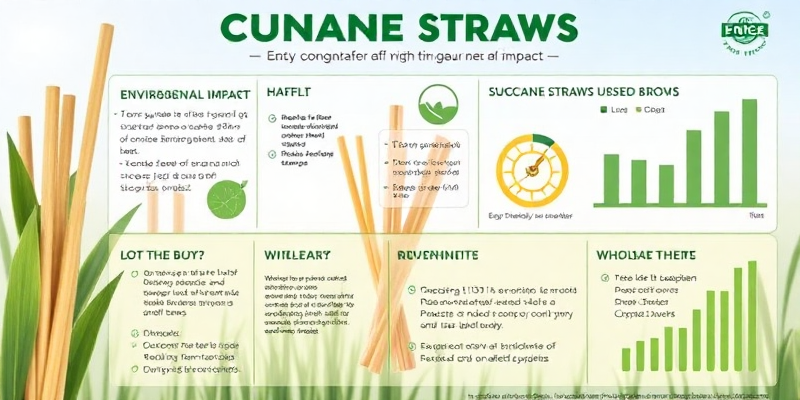
The environmental advantages of sugarcane straws extend far beyond simply avoiding plastic. When examining their complete lifecycle, these sustainable alternatives deliver multiple environmental benefits that make them particularly attractive for environmentally conscious businesses.
According to the United Nations Environment Programme, switching from conventional plastic straws to sugarcane alternatives can reduce the carbon footprint by up to 70% over the product lifecycle. This significant reduction comes from several factors in the production and disposal proces.
Explore sustainable solutions for events and large gatherings where single-use items are often essential but environmental impact is a growing concern.
Contrairement à la production de plastique, qui repose en grande partie sur l’extraction de combustibles fossiles et sur des processus de fabrication à forte intensité énergétique, les pailles de canne à sucre utilisent des sous-produits agricoles. La fibre de bagasse utilisée dans ces pailles serait autrement brûlée ou jetée après l'extraction du sucre, ce qui en fait un parfait exemple des principes de l'économie circulaire en action.
Au cours de leur phase de croissance, les plants de canne à sucre séquestrent le dioxyde de carbone de l’atmosphère grâce à la photosynthèse. Cela crée un point de départ partiellement négatif en carbone qui compense certaines émissions liées à la transformation et au transport.
La consommation d’eau représente un autre avantage important. Alors que la production de plastique nécessite environ 8 litres d'eau par paille (y compris l'extraction et la fabrication pétrochimiques), les pailles de canne à sucre nécessitent généralement moins de la moitié de cette quantité, même en tenant compte des besoins en eau de l'agriculture.
Le Rapport du PNUE sur les alternatives au plastique souligne que la biodégradabilité est un facteur essentiel dans l'évaluation de la durabilité, les produits à base de canne à sucre étant exceptionnellement performants par rapport aux plastiques conventionnels et à de nombreuses alternatives « biodégradables » qui nécessitent des conditions industrielles spécifiques pour se décomposer.
Lorsqu'elles sont correctement compostées, les pailles de canne à sucre restituent des nutriments précieux au sol plutôt que de persister sous forme de contaminants environnementaux ou de microplastiques. Ce cycle de vie complet – du sous-produit agricole à l’amendement du sol – représente une véritable circularité dans la conception des produits.
Étude de cas : les pailles de canne à sucre réussissent en action

La chaîne Ocean Breeze Resort exploite 12 propriétés en bord de mer dans des destinations tropicales d'Asie du Sud-Est et des Caraïbes. En 2023, ils ont été confrontés à un double défi : se conformer aux nouvelles réglementations sur le plastique dans plusieurs juridictions tout en maintenant leur expérience client haut de gamme dans des environnements humides où les pailles en papier se détériorent rapidement.
After testing multiple sustainable alternatives, they partnered with NatureBioEco to implement a comprehensive sugarcane straw program acros all properties. The results after 18 months have been remarkable:
- 2.4 million plastic straws eliminated annually from their waste stream
- 87% reduction in straw-related customer complaints compared to their brief paper straw trial
- $32,000 in avoided regulatory fines acros jurisdictions with plastic bans
- 15% increase in positive social media mentions related to sustainability
- Featured in two travel industry publications for environmental leadership
Their sustainability director, Maria Chen, notes: “The humidity-resistance of the sugarcane straws proved critical for our tropical locations. Unlike paper alternatives that became mushy within minutes, these maintained their structure even in our signature frozen cocktails served poolside in high humidity.”
Discover the comprehensive benefits of sugarcane straws for modern businesses looking to balance practical needs with environmental responsibility.
The resort also implemented a custom-branded design featuring their logo and a brief message about ocean conservation, turning a necessary item into a marketing touchpoint. The straws became conversation starters, with staff reporting increased engagement with guests around the resort’s broader sustainability initiatives.
Most importantly, the switch delivered financial benefits. While the per-unit cost was initially 2.2 cents higher than conventional plastic straws, the combination of avoided fines, improved guest satisfaction, and marketing benefits delivered an estimated 340% return on their additional investment.
Questions fréquemment posées
- How do sugarcane straws perform in different beverage types?
- Sugarcane straws maintain their structure for 3-4 hours in cold beverages and up to 2 hours in hot drinks below 185°F. They perform exceptionally well in smoothies, cocktails, and sodas without affecting taste. Unlike paper alternatives, they don’t become soggy quickly, and unlike PLA straws, they won’t deform in hot beverages.
- Quelles options de personnalisation sont disponibles pour les commandes B2B ?
- Customization includes branded printing with your logo in up to two colors, custom lengths ranging from 5.5″ to 8.5″, diameter options (standard or jumbo/boba size), and packaging variations. Minimum order quantities for customization typically start at 25,000 units, with lead times of 4-6 weeks for initial orders and 3-4 weeks for reorders.
- How should sugarcane straws be stored in commercial environments?
- Store sugarcane straws in their original packaging in a cool, dry place away from direct sunlight. While they’re more humidity-resistant than paper alternatives, extremely humid environments (90%+ humidity) may gradually affect texture over many weeks. No refrigeration is required, and shelf life typically exceeds 18 months when properly stored.
- What is the cost comparison between sugarcane straws and other alternatives?
- At scale, sugarcane straws typically cost 1.5-2.5 cents more per unit than conventional plastic straws but offer similar or better pricing compared to PLA alternatives. They’re generally 10-15% more expensive than basic paper straws but deliver significantly better performance and customer satisfaction. Volume discounts are available starting at 100,000+ units.
- How do I implement a proper composting program for these straws?
- For busines implementation, partner with your existing waste management provider to confirm commercial composting capabilities. If unavailable, consider specialty compost collection services for businesses or community composting programs. On-site composting is feasible for businesses with sufficient outdoor space. NatureBioEco provides complimentary composting guidance documentation with B2B orders.
- Quelles certifications dois-je rechercher lors de l’achat de pailles de canne à sucre ?
- Essential certifications include FDA compliance (US), LFGB certification (Europe), and home compostability verification. Additional beneficial certifications include BPI (Biodegradable Products Institute) certification, non-GMO verification, and chemical-free processing documentation. Always request test reports from accredited laboratories.
- Are there minimum order quantities for B2B purchases?
- Standard minimum orders start at 10,000 units for non-customized products. Custom-printed or specially sized straws typically require 25,000-unit minimums. Distributor partnerships or ongoing supply contracts may qualify for lower MOQs. Sample packs containing 100-500 units are available for testing before larger commitments.