The New Frontier in Sustainable Food Service
In an era where environmental responsibility drives business success, sugarcane straws have emerged as a game-changing solution. The sustainable packaging market’s projected growth to $305.31 billion by 2027 highlights the urgency for businesses to shift away from traditional plastics. Leading brands like Starbucks and Hilton are already adopting bio-based alternatives, with sugarcane straws at the forefront of this transformation.
The Science Behind Sugarcane Sustainability
Nature’s Perfect Design
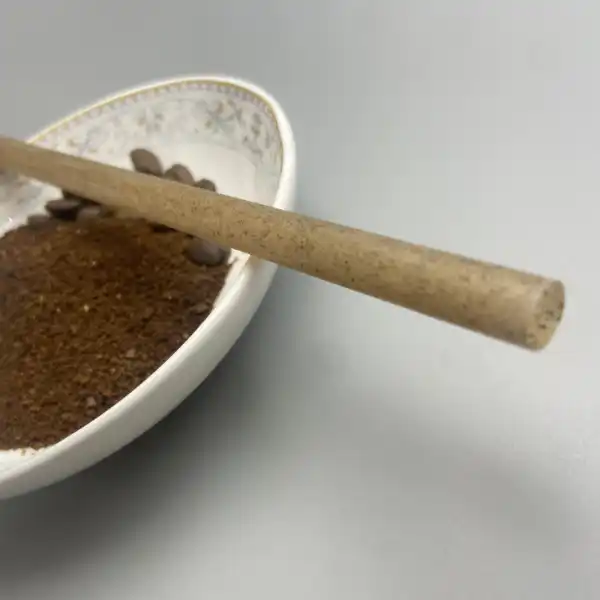
Marc de café personnalisable paille
Sugarcane straws leverage nature’s remarkable processes. During growth, one hectare of sugarcane removes 12 tons of CO2 from the atmosphere, equivalent to the annual emissions of three passenger vehicles. Studies by the Agricultural Sustainability Journal identify sugarcane as a superior bio-material:
- Water Efficiency: Requires only 1,500 liters of water per kg of product, half the water needed for corn-based alternatives.
- Growth Cycle: Produces 7-8 harvests before replanting, significantly reducing agricultural impact.
- Soil Health: Enhances soil quality through natural nitrogen fixation.
Breaking Down the Numbers
Recent laboratory studies highlight sugarcane’s performance metrics:
Biodegradation Timeline:
Traditional Plastic: 450+ years
Paper Straws: 30-60 days (may leave chemical residue)
Sugarcane Straws: 90 days (99.8% clean decomposition)
Histoires de réussite concrètes
The Costa Coffee Revolution
Costa Coffee’s UK-wide adoption of sugarcane straws showcases their effectiveness:
Before Implementation:
- 47% customer satisfaction with plastic straws
- 12,000 annual social media mentions
- Tier 2 sustainability rating
After Sugarcane Transition:
- 70% customer satisfaction
- 52,000+ positive social media engagements
- Tier 1 sustainability rating
- 23% increase in cold beverage sales
Music Festival Case Study
Individually Wrapped Boba Coffee Grounds Straw 12mm 210mm
The 2023 Glastonbury Festival’s switch to sugarcane straws resulted in:
- 2.3 tons of plastic waste eliminated
- £45,000 saved in waste management
- 92% positive attendee feedback
- Recognition in sustainability awards
Plan de mise en œuvre stratégique
Phase 1: Assessment (Weeks 1-4)
- Conduct usage audit
- Calculate ROI using provided calculator
- Identify key stakeholders
Phase 2: Pilot Program (Weeks 5-12)
- Select high-volume locations
- Train staff on sustainability messaging
- Recueillir les commentaires des clients
Phase 3: Full Rollout (Weeks 13-24)
- Implement supply chain integration
- Launch marketing campaign
- Monitor KPIs
Future-Proofing Your Investment
The benefits of sugarcane straws go beyond environmental impact. With 127 countries enforcing single-use plastic bans, early adopters enjoy:
- Conformité réglementaire : Stay ahead of evolving legislation.
- Market Leadership: Join sustainability pioneers.
- Brand Value: Attract the 73% of millennials who prioritize eco-friendly brands.
Conclusion
Sugarcane straws are more than just a replacement for plastic—they’re a strategic investment in your business’s sustainability and profitability. With unmatched performance metrics, proven market adoption, and environmental benefits, sugarcane straws align purpose with profit.
Questions fréquemment posées (FAQ)
De quoi sont faites les pailles de canne à sucre ?
Sugarcane straws are crafted from sugarcane fiber (bagasse), a byproduct of sugar production, making them 100% biodegradable and eco-friendly.
Comment les pailles en canne à sucre se comparent-elles aux pailles en papier ?
Sugarcane straws last longer in liquids, decompose cleanly, and require fewer resources during production compared to paper straws.
Are sugarcane straws cost-effective?
Yes, businesses report cost savings in waste management and improved customer satisfaction, outweighing initial expenses.
Les pailles de canne à sucre peuvent-elles être personnalisées ?
Yes, sugarcane straws can be tailored to fit various business needs, including branding and specific dimensions.
""