Perkenalan
Polusi plastik telah menjadi isu lingkungan yang penting, dan plastik sekali pakai berkontribusi signifikan terhadap limbah global. Sebagai tanggapan, alternatif seperti sedotan plastik biodegradable Dan sedotan ampas kopi daur ulang telah muncul. Blog ini mengeksplorasi manfaat, keterbatasan, dampak lingkungan, dan praktik terbaiknya bagi bisnis dan konsumen yang ingin mengadopsi solusi berkelanjutan.
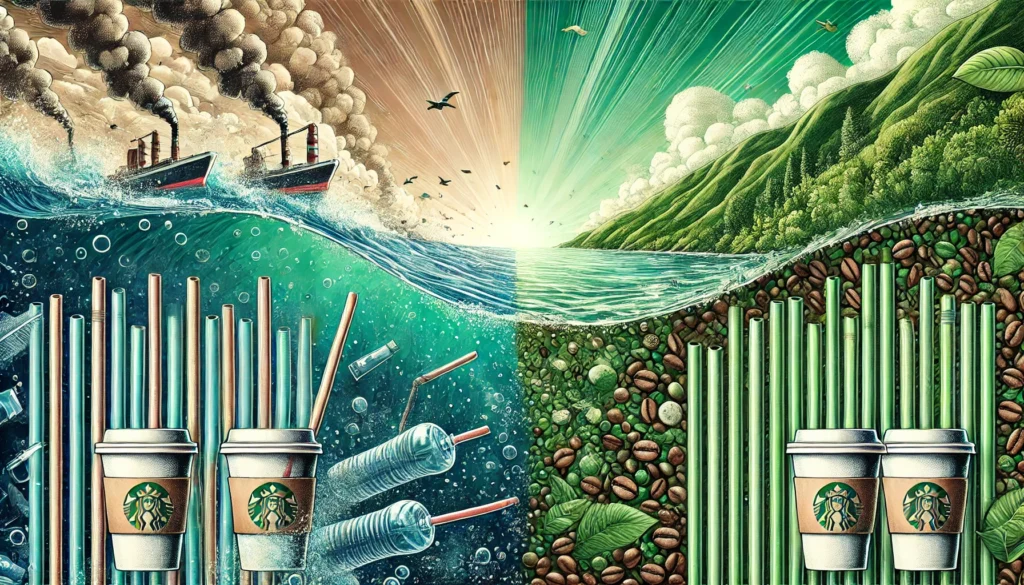
Memahami Sedotan Plastik Biodegradable
What Are Biodegradable Plastic Straws?
Biodegradable plastic straws are designed to break down more quickly than traditional plastic straws. They are typically made from:
- Polylactic Acid (PLA) – Derived from corn starch or sugarcane but requires industrial composting.
- Polyhydroxyalkanoates (PHA) – A plant-based alternative that decomposes in natural environments, including marine ecosystems.
- PBAT (Polybutylene Adipate Terephthalate) – A biodegradable polymer that enhances compostability.
How Do They Decompose?
While biodegradable plastic straws degrade faster than conventional plastics, they require specific conditions to break down efficiently:
- Industrial Composting: High temperatures and controlled microbial environments are needed for complete degradation.
- Tempat pembuangan sampah & Oceans: In non-optimal conditions, some biodegradable plastics may degrade slowly, leaving microplastics behind.
Tantangan & Misconceptions
- Greenwashing Concerns: Many products labeled “biodegradable” do not break down in natural environments without proper processing.
- Limited Recycling & Composting Facilities: Many cities lack the infrastructure to compost PLA or PHA straws properly.
- Microplastic Risks: Some biodegradable plastics may only fragment rather than fully degrade.

Sedotan Ampas Kopi Daur Ulang: Sebuah Game-Changer?
What Are Coffee Grounds Straws?
Upcycled coffee grounds straws are made by repurposing used coffee grounds into durable, compostable drinking straws. This innovation supports the ekonomi sirkular, reducing organic waste while offering an eco-friendly alternative.
Key Benefits
- Zero Waste: Uses discarded coffee grounds that would otherwise end up in landfills.
- Daya tahan: Unlike paper straws, they maintain structural integrity in hot and cold beverages.
- Komposabilitas: Naturally breaks down in home composting conditions without requiring industrial facilities.
- Flavor Neutral: Unlike some plant-based straws, coffee grounds straws do not alter the taste of drinks.
Batasan & Pertimbangan
- Production & Scalability: Adoption is still growing, and large-scale manufacturing remains limited.
- Storage Sensitivity: Must be stored in dry conditions to maintain longevity.
- Higher Production Costs: Compared to traditional plastic or paper straws, production costs may be slightly higher.

Perbandingan Alternatif Jerami Berkelanjutan
| Jenis Jerami | Terbaik untuk | Daya tahan | Metode Pembuangan | Key Benefit |
|---|---|---|---|---|
| Upcycled Coffee Grounds | Coffee shops, eco-conscious consumers | Tinggi | Kompos rumah | Waste reduction |
| Biodegradable Plastic (PLA/PHA) | Restaurants, fast food | Sedang | Industrial composting required | Familiar texture |
| Kertas | Quick-service restaurants | Low (soggy) | Dapat didaur ulang/kompos | Cost-effective |
| Bambu | Premium cafes, home use | Tinggi | Dapat dibuat kompos | Natural material |
| Metal/Glass | Personal use, long-term | Sangat Tinggi | Wash & reuse | Berkelanjutan |
Dampak lingkungan & Kepatuhan terhadap peraturan
Do These Straws Truly Reduce Waste?
- Countries that have melarang penggunaan sedotan plastik, such as the EU, Canada, and certain U.S. states, have reported reductions in single-use plastic consumption.
- A life cycle assessment (LCA) comparing different materials shows that upcycled coffee grounds and PHA straws have a lower carbon footprint than conventional PLA-based straws.
Lanskap Regulasi
- EU Single-Use Plastics Directive (2021) – Bans conventional plastic straws, pushing for compostable or reusable alternatives.
- U.S. State Bans (California, New York, Washington, etc.) – Restrict plastic straw distribution, encouraging biodegradable options.
- China’s Plastic Reduction Policy – Aims to eliminate single-use plastics by 2025, promoting sustainable alternatives.

Praktik Terbaik untuk Bisnis & Konsumen
How to Choose the Right Sustainable Straw
- Check Certifications: Mencari BPI, TÜV OK Compost, and USDA BioPreferred labels.
- Understand Disposal Requirements: Ensure access to composting facilities for biodegradable plastics.
- Educate Consumers: Provide signage or messaging about proper straw disposal.
Sustainability Practices for Restaurants & Kafe
- Offer Straw Alternatives Only Upon Request – Reduces unnecessary waste.
- Provide Proper Disposal Bins – Encourage composting rather than landfilling.
- Transisi Bertahap – Start by introducing eco-friendly straws for dine-in customers, then phase out single-use plastics.
Pertanyaan yang Sering Diajukan (FAQ)
1. Are biodegradable plastic straws really better than traditional plastic?
✅ Yes, but only when disposed of correctly. They require pengomposan industri to fully degrade, unlike traditional plastic, which lingers in the environment for centuries.
2. Do biodegradable plastic straws break down in the ocean?
🚫 Most do not. Many biodegradable plastics require high temperatures to break down, which are not present in marine environments. However, PHA-based straws are more likely to degrade naturally in water.
3. Are upcycled coffee grounds straws safe for food use?
✅ Ya. They meet food safety standards and do not release harmful chemicals into beverages.
4. What’s the best straw alternative for businesses?
🏢 It depends on the business type:
- Restoran & fast food chains: Prefer sedotan plastik biodegradable for their durability and familiar texture.
- Coffee shops & eco-conscious brands: Benefit from using sedotan ampas kopi daur ulang, which align with their sustainability goals.
5. Do biodegradable plastics contribute to microplastic pollution?
⚠️ Some do, especially if they are not composted under the right conditions. Incomplete decomposition in landfills or oceans may result in microplastic fragments.
6. How can consumers dispose of biodegradable and upcycled straws properly?
♻️ Proper disposal methods:
- Sedotan plastik biodegradable → Industrial composting facilities are required for full degradation.
- Upcycled coffee grounds straws → Can be composted at home or disposed of with organic waste.
7. How much more expensive are sustainable straws?
💰 Cost comparison of eco-friendly straws:
- Sedotan kertas: 2–3x the price of plastic.
- Sedotan plastik biodegradable: 3–5x costlier than traditional plastic.
- Upcycled coffee grounds straws: Slightly higher, but offset by branding and sustainability advantages.
8. Which countries have banned plastic straws?
🌍 Global plastic straw bans:
- Europe: EU-wide ban on single-use plastics.
- USA: California, New York, Washington, and several other states have restricted plastic straw usage.
- China: Phasing out plastic straws by 2025 under its national plastic reduction policy.
Kesimpulan
Both sedotan plastik biodegradable Dan sedotan ampas kopi daur ulang offer sustainable alternatives to traditional plastics. However, the effectiveness of these solutions depends on proper disposal, business adoption, and consumer education. Businesses should evaluate their needs and choose the most practical solution based on cost, sustainability, and regulatory compliance.
Ajakan Bertindak
Are you looking for a sustainable straw solution? Consider switching to biodegradable plastic atau sedotan ampas kopi daur ulang and educate your customers about proper disposal.