Sedotan Tebu: Solusi B2B yang Berkelanjutan dan Sesuai
Bayangkan ini: Anda baru saja menghadiri rapat eksekutif bulanan ketika manajer keberlanjutan Anda menyampaikan beberapa berita yang mengkhawatirkan. Tiga kota besar tempat jaringan restoran Anda beroperasi baru saja mengumumkan larangan sedotan plastik, dan denda besar bagi mereka yang tidak mematuhinya akan dimulai hanya dalam 90 hari. Tiba-tiba, rantai pasokan Anda memerlukan perbaikan cepat, dan Anda berusaha keras mencari alternatif yang tidak akan mengecewakan pelanggan atau merugikan bank.
Kedengarannya familier? Anda tidak sendirian. Di seluruh dunia, lebih dari 127 negara telah menerapkan beberapa bentuk peraturan kantong plastik, dan pelarangan sedotan plastik menyusul setelahnya. Bagi bisnis jasa makanan, hotel, maskapai penerbangan, dan distributor, perubahan peraturan yang cepat ini menghadirkan tantangan sekaligus peluang.
Sedotan plastik tradisional – yang pernah menjadi andalan industri perhotelan – kini mulai ditinggalkan seiring dengan beredarnya gambar kehidupan laut yang terdampak oleh sampah plastik dan meningkatnya kesadaran masyarakat. Sedotan minuman sederhana telah menjadi simbol masalah plastik yang lebih besar, dan dunia usaha merasakan tekanan baik dari peraturan maupun pelanggan untuk memberikan solusi yang lebih baik.
Masukkan sedotan tebu – solusi inovatif yang dibuat dari ampas tebu, produk sampingan berserat dari pengolahan tebu yang seharusnya dibuang. Tidak seperti banyak alternatif “biodegradable” yang memerlukan fasilitas pemrosesan industri, sedotan tebu menawarkan keberlanjutan akhir masa pakai melalui kemampuan pengomposan di rumah.
Temukan bagaimana sedotan tebu merevolusi pengalaman bersantap ramah lingkungan seiring dengan transisi bisnis di seluruh dunia dari plastik. Alternatif nabati ini tidak hanya bertanggung jawab terhadap lingkungan – namun juga praktis, hemat biaya, dan semakin disukai oleh konsumen yang sadar lingkungan dan memilih dengan menggunakan dompet mereka.
Bagi pembeli B2B yang menjalani masa transisi ini, memahami keseluruhan spektrum manfaat, persyaratan kepatuhan, dan penerapan praktis sedotan tebu sangat penting untuk membuat keputusan yang memenuhi peraturan, pelanggan, dan keuntungan secara bersamaan.
Kepatuhan Terhadap Peraturan: Sertifikasi untuk Sedotan Tebu

Saat mengadopsi produk layanan makanan baru, kepatuhan terhadap peraturan bukanlah suatu pilihan – hal ini penting. Hal ini terutama berlaku untuk barang-barang seperti sedotan yang bersentuhan langsung dengan minuman dan mulut konsumen. Jerami tebu menawarkan keuntungan yang signifikan dalam bidang kepatuhan.
Menurut laporan industri tahun 2023, bisnis yang menggunakan bahan yang bersentuhan dengan makanan yang tidak mematuhi peraturan akan menghadapi potensi denda rata-rata $25.000 per pelanggaran di Amerika Serikat saja, belum termasuk kerusakan reputasi besar yang dapat diakibatkan oleh masalah keselamatan. Hal ini menjadikan sertifikasi yang tepat tidak hanya bertanggung jawab terhadap lingkungan tetapi juga bijaksana secara finansial.
Sertifikasi utama yang harus dicari ketika membeli sedotan tebu meliputi:
- **Kepatuhan FDA**: AS Badan Pengawas Obat dan Makanan mengatur bahan-bahan yang bersentuhan dengan makanan dan minuman, memastikan bahan-bahan tersebut tidak memindahkan zat berbahaya. Sedotan tebu premium memenuhi standar keamanan yang ketat ini.
- **Sertifikasi LFGB**: Standar keamanan pangan Jerman ini sering kali dianggap lebih ketat daripada persyaratan FDA, sehingga sedotan tebu bersertifikasi LFGB cocok untuk pasar global dengan peraturan yang berbeda-beda.
- **Verifikasi Komposabilitas Rumah**: Tidak seperti banyak klaim “dapat terurai secara hayati”, sertifikasi komposabilitas rumah yang tepat memastikan produk terurai secara alami dalam kondisi pengomposan di halaman belakang tanpa memerlukan fasilitas industri.
- **Sertifikasi Bebas Plastik**: Memverifikasi produk tidak mengandung komponen plastik tersembunyi yang dapat membahayakan manfaat lingkungannya.
Misalnya saja kasus jaringan hotel nasional yang beralih ke sedotan yang terkesan “biodegradable”, namun ternyata sedotan tersebut mengandung PFAS (zat per dan polifluoroalkil) – terkadang disebut “bahan kimia selamanya” – yang semakin banyak diatur di seluruh dunia. Penarikan kembali produk dan kerusakan reputasi mengakibatkan kerugian jutaan dolar. Sedotan tebu yang tersertifikasi dengan baik membantu dunia usaha menghindari jebakan tersebut.
Pelajari lebih lanjut tentang memahami sertifikasi FDA dan LFGB untuk sedotan tebu untuk memastikan bisnis Anda tetap patuh di berbagai pasar dan yurisdiksi.
Bagaimana Jerami Tebu Dibandingkan dengan Alternatif Ramah Lingkungan Lainnya

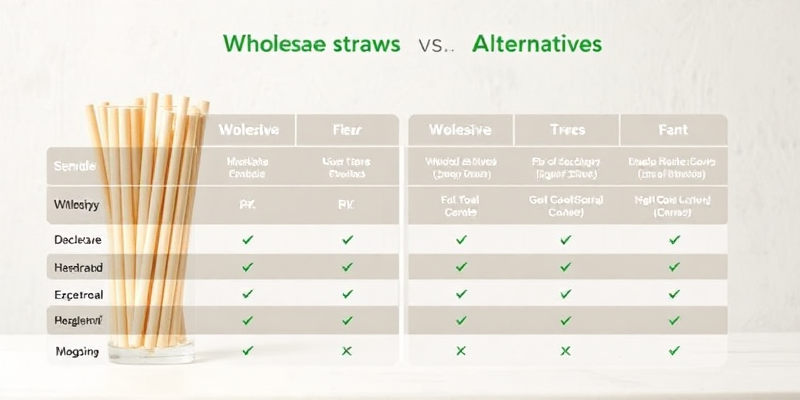
Pasar jerami berkelanjutan telah penuh dengan pilihan, membuat banyak pemilik usaha bingung mengenai alternatif mana yang benar-benar memenuhi janji lingkungan dan kinerja praktis. Mari kita bandingkan bagaimana sedotan tebu dibandingkan dengan pilihan populer lainnya:
| Alternatif | Daya tahan | Pengalaman Pengguna | Komposabilitas | Perbandingan Biaya | Dampak lingkungan |
|---|---|---|---|---|---|
| ————- | ———— | —————– | —————- | —————– | ---------------- |
| Sedotan Tebu | 2-3 jam dalam minuman dingin, 1+ jam dalam panas | Nuansa alami, tanpa transfer rasa | Rumah dapat dibuat kompos dalam 90 hari | Kelas menengah ($0,03-0,06 per unit secara grosir) | Terbuat dari limbah pertanian, potensi karbon negatif |
| Sedotan Kertas | 30-60 menit sebelum melunakkan | Seringkali menjadi lembek, bisa mempengaruhi rasa | Dapat dibuat kompos secara industri | Kisaran rendah-menengah ($0,02-0,04 per unit) | Produksi intensif sumber daya, membutuhkan bahan segar |
| Plastik “Kompos” PLA | Mirip dengan plastik | Pengalaman seperti plastik | Membutuhkan fasilitas industri | Kelas menengah ($0,03-0,05 per unit) | Berasal dari jagung tetapi membutuhkan pengolahan industri |
| Logam yang Dapat Digunakan Kembali | Tak terbatas | Sensasi dingin, perlu dibersihkan | Tidak dapat dibuat kompos | Biaya awal yang tinggi ($1-2 per unit) | Jejak produksi tinggi, memerlukan pencucian |
| Sedotan Pasta | 1-2 jam | Dapat mempengaruhi rasa minuman | Kompos rumah | Kelas menengah ($0,04-0,07 per unit) | Sumber daya berbasis pangan yang dapat memberi makan masyarakat |
Wawasan industri yang menarik: Menurut survei kepuasan pelanggan pada tahun 2023 terhadap 500 perusahaan jasa makanan, bisnis yang beralih ke sedotan kertas mengalami peningkatan keluhan pelanggan sebesar 27% terhadap kinerja sedotan, sementara perusahaan yang menggunakan sedotan tebu hanya mengalami tingkat keluhan sebesar 3% – hampir menyamai tingkat kepuasan kinerja sedotan plastik tradisional.
Jelajahi analisis bisnis mendalam mengenai sedotan tebu versus alternatif lainnya untuk memahami opsi mana yang memberikan keseimbangan terbaik antara kinerja, keberlanjutan, dan efektivitas biaya untuk kebutuhan spesifik bisnis Anda.
Manfaat Utama bagi Bisnis dari Beralih ke Sedotan Tebu

Selain sekadar mematuhi larangan penggunaan plastik, peralihan ke sedotan tebu menawarkan keuntungan bisnis nyata yang dapat berdampak positif terhadap laba dan hubungan pelanggan Anda.
**Peningkatan Persepsi Merek**
Menurut survei konsumen global pada tahun 2023, 73% pelanggan melaporkan pandangan yang lebih positif terhadap bisnis yang menggunakan alternatif yang benar-benar berkelanjutan dibandingkan bisnis yang menggunakan plastik konvensional. Yang lebih menarik lagi, 68% menyatakan bahwa mereka akan memilih perusahaan jasa makanan berdasarkan praktik keberlanjutan yang terlihat – dimana sedotan menjadi salah satu tanda komitmen lingkungan yang paling nyata.
**Insentif Pajak dan Penghematan Kepatuhan**
Banyak yurisdiksi kini menawarkan manfaat pajak bagi bisnis yang menerapkan praktik berkelanjutan. Misalnya, bisnis di pasar Eropa tertentu dapat menerima pengurangan pajak hingga 30% atas pembelian material berkelanjutan. Sementara itu, denda rata-rata bagi mereka yang tidak mematuhi larangan sedotan plastik berkisar antara $100-$1.000 per hari di kota-kota besar di AS, sehingga peralihan ini merupakan keputusan finansial yang jelas.
**Ketahanan Rantai Pasokan**
Berbeda dengan plastik berbahan dasar minyak bumi yang sering mengalami fluktuasi harga minyak, sedotan tebu menawarkan harga yang lebih stabil karena terbuat dari produk sampingan pertanian. Hal ini membantu dunia usaha memprediksi biaya dengan lebih baik dan melindungi diri mereka dari fluktuasi pasar minyak bumi.
**Loyalitas Pelanggan dan Umpan Balik Positif**
Restoran dan hotel yang menerapkan sedotan tebu melaporkan tanggapan positif yang nyata. Sebuah jaringan hotel mewah yang melakukan peralihan tersebut mendokumentasikan peningkatan sebutan positif sebesar 22% pada platform ulasan yang secara khusus mencatat praktik berkelanjutan mereka, dan sedotan sering disebutkan sebagai bukti nyata komitmen lingkungan.
**Diferensiasi Pemasaran**
Dalam pasar yang kompetitif, tanggung jawab terhadap lingkungan menciptakan diferensiasi yang berarti. Sedotan tebu menjadi bahan pembicaraan yang sangat baik untuk materi pemasaran, media sosial, dan papan nama perusahaan, membantu mengomunikasikan nilai merek Anda tanpa mengucapkan sepatah kata pun.
Temukan bagaimana sedotan tebu alami dapat menjadi pilihan berkelanjutan yang memperkuat merek Anda sekaligus memberikan manfaat praktis di seluruh operasi Anda.
Dampak Lingkungan: Mengapa Jerami Tebu Menang

Dukungan terhadap lingkungan hidup dari sedotan tebu lebih dari sekadar menghindari polusi plastik – meskipun manfaatnya saja sudah sangat besar. Ketika dunia usaha melakukan perubahan ini, mereka berkontribusi terhadap berbagai dampak lingkungan yang positif.
Mungkin yang paling mengesankan adalah pengurangan jejak karbon. Menurut studi penilaian siklus hidup pada tahun 2022, setiap ton sedotan ampas tebu yang dihasilkan mewakili sekitar 3,5 ton emisi setara CO2 yang dapat dihindari dibandingkan dengan sedotan plastik tradisional. Sebagai gambaran, jaringan restoran skala menengah yang memesan 1 juta sedotan tebu dibandingkan sedotan plastik dapat mencegah sekitar 4,2 ton emisi setara CO2 – sebanding dengan menanam 70 pohon yang tumbuh selama 10 tahun.
Itu Program Lingkungan Perserikatan Bangsa-Bangsa secara khusus menyoroti penggunaan kembali limbah pertanian sebagai alternatif pilihan dibandingkan plastik konvensional, dengan memperhatikan manfaat ganda dari pengurangan limbah dan penggantian plastik.
Keuntungan lingkungan lainnya meliputi:
- **Konservasi Air**: Produksi memerlukan lebih sedikit air dibandingkan pembuatan sedotan kertas
- **Pengurangan Penggunaan Energi**: Kebutuhan energi yang lebih rendah di bidang manufaktur dibandingkan dengan plastik “kompos” PLA
- **Tanpa Kontaminasi Mikroplastik**: Berbeda dengan banyak plastik mudah terurai yang berubah menjadi mikroplastik berbahaya
- **Pengayaan Tanah**: Saat dikomposkan, jerami tebu mengembalikan nutrisi ke tanah, bukan mengekstraksi sumber daya
Jelajahi bagaimana sedotan tebu berkontribusi terhadap masa depan yang berkelanjutan melalui manfaat siklus hidup penuh dari produksi hingga pembuangan.
Studi Kasus: Kesuksesan Sedotan Tebu
**Ocean Breeze Resort Group: Dari Masalah Plastik Menuju Kesuksesan Keberlanjutan**
Ketika Ocean Breeze Resort Group, sebuah perusahaan perhotelan skala menengah yang mengoperasikan 15 properti tepi pantai di komunitas pesisir, menghadapi larangan sedotan plastik di tiga pasar utama mereka, mereka memerlukan solusi yang dapat diterapkan pada beragam operasi makanan dan minuman mereka.
Persyaratan yang mereka perlukan cukup menantang: menemukan sedotan yang dapat menangani segala hal mulai dari smoothie pagi hari hingga koktail di tepi kolam renang, tahan terhadap layanan kopi panas, memuaskan para tamu yang cerdas, dan memenuhi komitmen keberlanjutan perusahaan – sambil mengendalikan biaya selama periode inflasi.
Setelah menguji beberapa alternatif, Ocean Breeze memilih sedotan tebu dengan merek khusus untuk sifat-sifatnya. Proses implementasinya meliputi:
1. Pelatihan staf mengenai manfaat lingkungan untuk memberdayakan karyawan sebagai duta keberlanjutan
2. Kartu meja dan catatan menu yang menyoroti komitmen mereka terhadap kesehatan laut
3. Kampanye media sosial yang menampilkan transisi mereka dari plastik
4. Pemberian merek khusus pada bungkus jerami untuk memperkuat komitmen lingkungan mereka
Hasilnya luar biasa. Dalam waktu enam bulan, Ocean Breeze mendokumentasikan:
- Pengurangan limbah sedotan plastik sebesar 94% (lebih dari 1,2 juta sedotan plastik dihilangkan setiap tahunnya)
- 87% tanggapan positif dari tamu mengenai sedotan baru ini, dan banyak tamu yang secara khusus menyebutkannya dalam ulasan
- $18.500 dalam bentuk denda larangan plastik yang dapat dihindari di pasar yang diatur
- Peningkatan pesanan minuman sebesar 12% di properti yang secara jelas memasarkan perubahan ramah lingkungan
Yang paling mengesankan adalah pengurangan total limbah layanan minuman sebesar 28%, karena sedotan yang dapat dijadikan kompos menginspirasi properti untuk menerapkan program pengomposan yang lebih luas untuk limbah makanan lainnya, sehingga menciptakan efek positif yang terus menerus dari satu perubahan produk.
Temukan lebih banyak solusi minum ramah lingkungan menggunakan sedotan tebu melalui studi kasus terperinci tentang implementasi bisnis yang sukses.
Pertanyaan yang Sering Diajukan
- Seberapa tahan lama sedotan tebu dibandingkan sedotan plastik tradisional?
- Sedotan tebu mempertahankan integritas strukturalnya selama 2-3 jam dalam minuman dingin dan sekitar 1 jam dalam minuman panas. Mereka tidak akan larut di tengah minuman seperti alternatif kertas, sehingga memberikan pengalaman pelanggan yang lebih mirip dengan plastik tradisional. Untuk sebagian besar aplikasi jasa makanan, mereka dengan mudah bertahan lebih lama dari rata-rata waktu konsumsi minuman.
- Apakah sedotan tebu bisa disesuaikan dengan logo atau warna merek kami?
- Sangat! Pencitraan merek khusus tersedia untuk pesanan massal, termasuk pencetakan logo pada sedotan dan pembungkus. Jumlah pesanan minimum untuk penyesuaian biasanya mulai dari 100.000 unit. Hal ini mengubah item penting menjadi peluang pemasaran yang memperkuat komitmen keberlanjutan merek Anda.
- Berapa jumlah minimum pemesanan sedotan tebu grosir?
- Pesanan grosir standar mulai dari 10.000 unit, sedangkan opsi merek khusus mulai dari 100.000 unit. Diskon volume berlaku di berbagai level (unit 250K, 500K, dan 1M+), membuat pesanan dalam jumlah besar menjadi lebih ekonomis. Kami dapat membuat jadwal pengiriman yang fleksibel untuk pesanan yang lebih besar guna mengakomodasi keterbatasan penyimpanan.
- Bagaimana cara menyimpan sedotan tebu?
- Simpan sedotan tebu di tempat sejuk dan kering, jauh dari sinar matahari langsung dan lembab. Umur simpannya melebihi 2 tahun bila disimpan dengan benar. Tidak seperti beberapa alternatif lainnya, produk ini tidak memerlukan kontrol kelembapan khusus, sehingga penyimpanan di gudang menjadi mudah.
- Apakah sedotan tebu cocok untuk minuman panas?
- Ya, sedotan tebu bekerja dengan baik dalam minuman panas hingga suhu 190°F (88°C), mempertahankan strukturnya selama kurang lebih 60 menit – secara signifikan mengungguli alternatif kertas. Mereka ideal untuk kedai kopi dan restoran yang menyajikan minuman panas dan dingin yang menginginkan solusi tunggal yang berkelanjutan.
- Bagaimana perbandingan biayanya dengan sedotan plastik konvensional?
- Meskipun harga sedotan tebu biasanya 1,5-2x lebih mahal dibandingkan sedotan plastik konvensional pada volume grosir, perbedaan ini semakin menyempit seiring dengan peningkatan produksi. Perbandingan ini menjadi lebih menguntungkan ketika mempertimbangkan potensi denda larangan penggunaan plastik, preferensi konsumen terhadap bisnis berkelanjutan, dan manfaat pemasaran. Banyak perusahaan melaporkan bahwa perbedaan tersebut diimbangi dengan peningkatan persepsi dan loyalitas pelanggan.
- Bagaimana proses pembuangan sedotan tebu yang sudah habis masa pakainya?
- Jerami tebu dapat dibuang ke sistem kompos rumah, fasilitas pengomposan komersial, atau aliran limbah biasa. Mereka secara alami terurai dalam waktu sekitar 90 hari dalam kondisi pengomposan di rumah, tanpa meninggalkan residu beracun atau mikroplastik. Keserbagunaan ini menjadikannya praktis untuk bisnis yang berkaitan dengan infrastruktur limbah lokal.