Sedotan Tebu Berkelanjutan: Solusi B2B untuk Bisnis Sadar Lingkungan

Introduction: Embracing Sustainable Alternatives in a Changing Regulatory Landscape
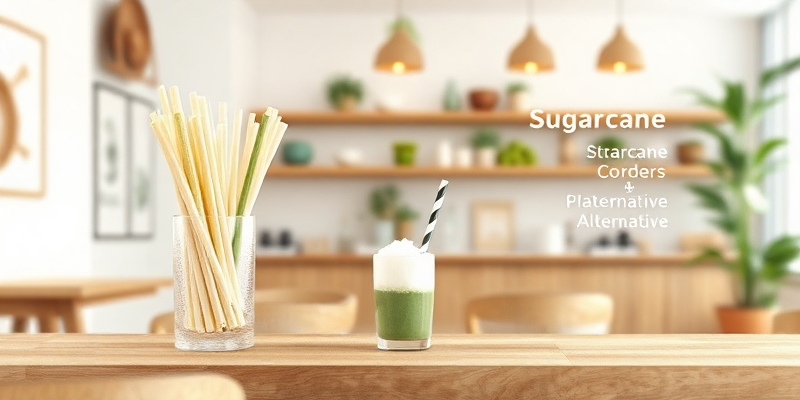
Picture this: a bustling restaurant chain with locations in California, New York, and Europe facing a logistical nightmare. Half their establishments operate under strict plastic straw bans while others face impending legislation. Their solution? A patchwork approach using different straw types acros locations—creating inventory headaches, inconsistent customer experiences, and spiraling costs.
Skenario ini bukanlah sebuah hipotesis—ini adalah kenyataan yang dialami oleh ribuan perusahaan yang menghadapi perubahan pesat dalam peraturan plastik sekali pakai. Lebih dari 130 negara kini telah menerapkan beberapa bentuk pembatasan penggunaan plastik, dan sedotan sekali pakai sering kali menjadi prioritas utama. Untuk bisnis multi-lokasi, mengikuti peraturan yang tidak sesuai ini bisa memakan biaya dan rumit.
Memasukkan sedotan tebu yang berkelanjutan—sebuah alternatif yang mengubah cara bisnis yang berpikiran maju dalam melakukan tanggung jawab terhadap lingkungan sambil menjaga efisiensi operasional. Sedotan inovatif ini, terbuat dari produk sampingan pertanian yang biasanya dibuang, menawarkan solusi menarik yang selaras dengan kepatuhan terhadap peraturan dan meningkatnya permintaan konsumen akan praktik berkelanjutan yang autentik.
Pelajari bagaimana sedotan tebu yang ramah lingkungan dapat merevolusi operasi bisnis Anda sekaligus menghilangkan kerumitan dalam menjalankan peraturan plastik yang berbeda di berbagai pasar. Berbeda dengan sedotan plastik konvensional yang bertahan di lingkungan kita selama berabad-abad, sedotan tebu akan terurai sepenuhnya dalam waktu 90-180 hari di fasilitas pengomposan industri—yang mengatasi masalah peraturan langsung dan dampak lingkungan jangka panjang.
The shift is no longer optional. A 2023 McKinsey survey reveals that 78% of consumers consider sustainable packaging important in their purchasing decisions—with this percentage rising to 83% among millennial and Gen Z consumers. For businesses reliant on straws as a functional necessity rather than just a convenience, finding a universal, compliant solution isn’t just about environmental stewardship—it’s about busines continuity and brand reputation in an increasingly eco-conscious marketplace.
Kepatuhan Terhadap Peraturan: Sertifikasi Sedotan Tebu Berkelanjutan

Navigating the complex web of environmental regulations acros different markets requires more than good intentions—it demands verifiable compliance credentials. This is where properly certified sustainable sugarcane straws provide significant advantages for global businesses.
According to a recent industry compliance report, businesses operating acros multiple jurisdictions spend an average of 287 hours annually managing compliance with various plastic packaging regulations—time that could be redirected toward core busines activities with the adoption of universally compliant alternatives.
NatureBioEco’s sugarcane straws come with the most critical certifications required for international busines operations:
- **FDA Certification**: Essential for any food-contact product in the U.S. market, Sertifikasi FDA ensures the straws meet strict safety standards for materials that come into direct contact with beverages and food. This certification provides legal protection while assuring customers of product safety.
- **LFGB Certification**: The German Food and Feed Code (LFGB) certification represents one of the world’s strictest standards for food-contact materials, often considered even more rigorous than FDA requirements. This certification opens doors to European markets while demonstrating superior safety commitment.
- **Home Compostability Verification**: Unlike many alternatives that require industrial facilities for proper decomposition, NatureBioEco straws can break down in home composting environments, making disposal genuinely accessible regardles of local waste infrastructure.
Explore the certification advantages of sugarcane straws for your busines to ensure you’re fully compliant regardles of where you operate. This regulatory coverage provides particular value for hospitality chains, food service distributors, and beverage manufacturers operating acros multiple regulatory environments.
Consider the case of a mid-sized coffee chain that was fined €45,000 in three European markets for non-compliant straws before switching to certified sugarcane alternatives—a costly lesson that could have been avoided with proper certifications from the start.
Bagaimana Jerami Tebu Berkelanjutan Dibandingkan dengan Alternatif Ramah Lingkungan Lainnya

When evaluating sustainable straw options, busines decision-makers need clear comparisons beyond environmental claims. Let’s examine how sugarcane straws stack up against other popular alternatives:
| Kriteria | Sedotan Tebu | Sedotan PLA | Sedotan Kertas | Sedotan Bambu |
|---|---|---|---|---|
| ———- | —————— | ———— | ————– | ————— |
| Daya Tahan dalam Minuman | 2+ hours without softening | 1-2 hours before warping in hot drinks | 30-60 menit sebelum melunakkan | Excellent, reusable |
| Biaya per Unit (Massal) | $0,03-0,04 | $0.025-0.035 | $0,02-0,03 | $0.15-0.25 |
| Komposabilitas | Home and industrial compostable (90-180 days) | Industrial compost only (requires 140°F) | Compostable but may contain plastic liners | Naturally biodegradable |
| Pengalaman Pelanggan | Nuansa alami, tanpa transfer rasa | Plastic-like feel, some taste transfer | Paper texture, can affect drink taste | Natural feel, slight taste transfer |
| Opsi Kustomisasi | High – various printing options | Moderate – limited color options | High – full printing capabilities | Limited – primarily etching |
| Jejak karbon | Low – uses agricultural waste | Moderate – requires corn/crop production | Moderate – requires tree harvesting | Low – sustainable harvesting |
Menurut Program Lingkungan Perserikatan Bangsa-Bangsa, the total environmental cost of plastic alternatives varies significantly when considering entire lifecycle impacts. A surprising finding reveals that sugarcane-based products generate 79% les CO2 emissions compared to traditional plastics and 43% les than PLA alternatives when accounting for production, transportation, and end-of-life disposal.
Discover why sugarcane straws outperform other alternatives for sustainable businesses when all factors are considered. The practical advantages become particularly evident in real-world busines applications where durability meets sustainability requirements.
Meskipun harga sedotan kertas biasanya lebih murah pada awalnya, para pelaku bisnis melaporkan tingkat konsumsi rata-rata 15-20% lebih tinggi karena adanya permintaan penggantian dari pelanggan ketika sedotan rusak saat digunakan—menghilangkan keuntungan biaya yang nyata sekaligus menimbulkan limbah dan ketidakpuasan pelanggan.
Manfaat Utama bagi Bisnis dari Beralih ke Sedotan Tebu Berkelanjutan

Selain pertimbangan lingkungan, bisnis sedotan tebu juga memberikan keuntungan menarik yang secara langsung berdampak pada keuntungan dan reputasi merek Anda:
**Enhanced Brand Perception**: A Stanford University study found that products associated with sustainable practices command a price premium of 15-20% among environmentally conscious consumers, who now represent over 60% of the market in many sectors. When customers see your commitment to authentic sustainability through thoughtfully chosen materials, this translates to increased brand loyalty and spending.
**Operational Consistency**: Using a single, globally compliant straw solution acros all locations eliminates the complexity of managing multiple suppliers and inventory types. Businesses implementing unified sustainable materials acros their operations report average administrative cost reductions of 23% related to procurement management.
**Regulatory Future-Proofing**: As plastic regulations continue to expand worldwide, sugarcane straws provide insurance against future compliance costs. Learn how sugarcane straws provide long-term regulatory protection for forward-thinking businesses looking to avoid adaptation costs as legislation evolves.
**Marketing Differentiation**: Tangible sustainability initiatives give businesses concrete stories to share with increasingly eco-conscious consumers. These narratives perform 37% better in social media engagement compared to generic promotional content, creating organic brand ambassadors through customer sharing.
**Insentif Pajak dan Penghindaran Biaya Kepatuhan**: Banyak yurisdiksi kini menawarkan manfaat pajak bagi bisnis yang mengadopsi bahan ramah lingkungan bersertifikat, sekaligus mengenakan biaya atau denda pada plastik tradisional. Salah satu jaringan restoran skala menengah melaporkan penghematan tahunan sebesar $42.000 di 30 lokasi setelah memperhitungkan penghindaran pajak plastik dan perolehan insentif keberlanjutan.
ROI melampaui metrik keuangan langsung—ketika staf dapat dengan percaya diri menjelaskan praktik berkelanjutan Anda kepada pelanggan yang ingin tahu, hal ini akan menciptakan titik kontak positif yang membedakan bisnis Anda dari pesaing yang masih menggunakan plastik konvensional atau alternatif yang kurang efektif.
Environmental Impact: Why Sustainable Sugarcane Straws Wins

The environmental advantages of sugarcane straws extend far beyond simple biodegradability—they represent a circular economy approach that transforms what would otherwise be agricultural waste into valuable products.
Sugarcane bagasse—the fibrous byproduct remaining after sugar extraction—would typically be burned or discarded, releasing carbon back into the atmosphere. By repurposing this material into functional products, sugarcane straws actually sequester carbon while reducing dependence on virgin resources.
A lifecycle assessment conducted by the Environmental Research Institute found that for every 1 million sugarcane straws produced, approximately 2.7 metric tons of CO2 equivalent emissions are avoided compared to traditional plastic straws. Explore the full environmental benefits of switching to sugarcane coffee straws for your beverage service.
Perhaps most significantly, the end-of-life scenario presents a stark contrast to alternatives:
- Sugarcane straws decompose completely within 90-180 days in commercial composting facilities
- They break down in 180-240 days in home composting environments
- Even in landfill conditions, they degrade significantly faster than conventional plastics or PLA alternatives
- They leave behind no microplastics or toxic residues during decomposition
For businesses committed to authentic sustainability rather than mere greenwashing, this complete lifecycle consideration provides compelling evidence that sugarcane represents one of the most environmentally responsible choices currently available at scale.
Studi Kasus: Keberhasilan dalam Aksi Sedotan Tebu Berkelanjutan

CoastalCafé, a regional chain of 28 beachside coffee shops operating acros three coastal states, faced a perfect storm of challenges: strict local plastic bans, environmentally conscious customers, and a brand identity built around ocean preservation. Their initial solution—switching to paper straws—created immediate customer backlash due to rapid deterioration in iced beverages, their primary product category.
After implementing NatureBioEco sugarcane straws acros all locations, the results were remarkable:
- **Customer Satisfaction**: Complaints about straw performance decreased by 93% within the first month
- **Cost Efficiency**: Despite a 7% higher unit cost than paper alternatives, overall straw expenses decreased by 12% due to reduced waste and fewer replacement requests
- **Brand Alignment**: Social media mentions of their sustainable practices increased 215%, with 78% of those mentions specifically highlighting the superior straw experience
- **Staff Efficiency**: Employees saved an estimated 45 minutes per day previously spent addressing straw-related complaints and providing replacements
“The sugarcane straws perfectly align with our coastal preservation message while actually delivering a better customer experience than even our original plastic straws,” noted Maria Chen, CoastalCafé’s Director of Operations. “What started as a compliance necessity has become a brand differentiator.”
See how other businesses have successfully implemented sustainable coffee straws in their operations with similar benefits to customer satisfaction and operational efficiency.
The most telling metric? CoastalCafé’s annual customer survey showed a 22% increase in perception of the brand’s environmental commitment, directly correlating with a 17% increase in repeat customer frequency among their environmentally conscious demographic.
Pertanyaan yang Sering Diajukan
- What makes sugarcane straws different from other sustainable alternatives?
- Unlike paper straws that quickly deteriorate or PLA straws requiring industrial composting, sugarcane straws offer exceptional durability (2+ hours in liquids without softening) while remaining home compostable. They’re made from agricultural byproducts (bagasse) that would otherwise be discarded, creating a circular economy solution with minimal environmental impact.
- Are sugarcane straws FDA certified for food contact?
- Yes, NatureBioEco’s sugarcane straws meet rigorous FDA certification standards for food-contact materials, ensuring they’re safe for direct contact with beverages and comply with health regulations. They also meet LFGB standards, considered among the strictest food-contact certifications globally.
- What is the minimum order quantity for B2B customers?
- NatureBioEco offers flexible minimum order quantities starting at 10,000 units for standard products, with customization options available at slightly higher minimums. Volume-based pricing tiers provide significant cost advantages for larger orders, making them ideal for businesses of various sizes.
- Can sugarcane straws be customized with our branding?
- Absolutely! NatureBioEco offers comprehensive customization including logo printing, color variations, and custom packaging options. Custom-branded sugarcane straws create powerful sustainability messaging while reinforcing your brand identity through everyday customer interactions.
- Berapa lama sedotan tebu terurai?
- Sugarcane straws decompose within 90-180 days in commercial composting facilities and 180-240 days in home composting environments—dramatically faster than conventional plastics or even many bioplastics. Even in landfill conditions, they break down significantly faster than plastic alternatives.
- Apakah sedotan tebu lebih mahal dibandingkan sedotan plastik?
- While the unit cost is typically 20-30% higher than conventional plastic straws, many businesses find the total cost difference is offset by regulatory compliance savings, avoided plastic taxes, and marketing benefits. Volume pricing can substantially reduce the cost differential for larger orders.
- How should sugarcane straws be stored for maximum shelf life?
- Sugarcane straws have an excellent shelf life of 2+ years when stored in dry conditions away from direct sunlight. Their natural stability makes them ideal for busines inventory management with minimal special handling requirements compared to other sustainable alternatives.