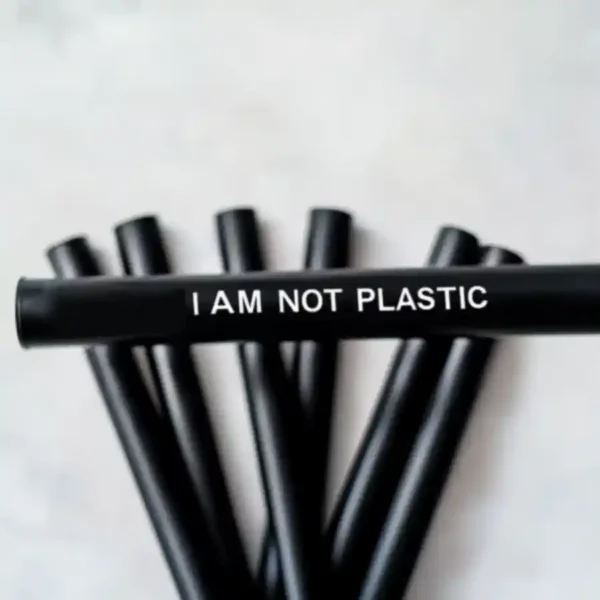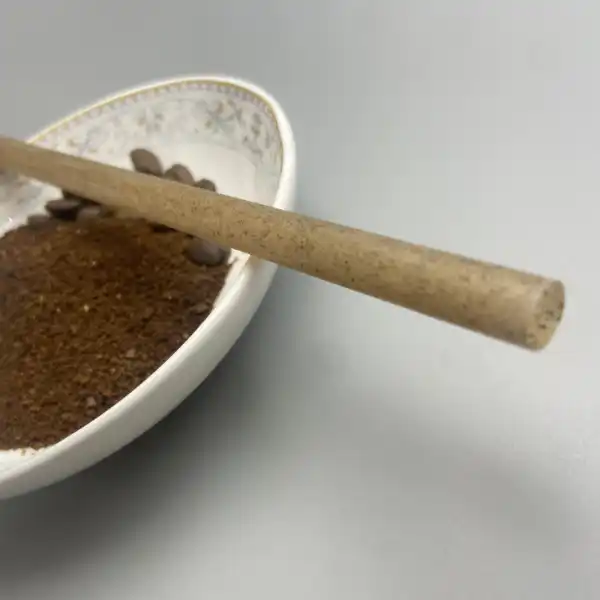

Dalam menghadapi meningkatnya permasalahan lingkungan hidup, dunia telah menyaksikan peningkatan peraturan yang menargetkan sedotan boba plastik, yang merupakan kontributor utama krisis polusi plastik. Postingan blog ini bertujuan untuk menjelaskan situasi saat ini, peraturan pemerintah, dan implikasinya terhadap bisnis dalam hal kepatuhan, keberlanjutan, dan tren masa depan.
Perkenalan

Skenario Polusi Plastik Saat Ini
Polusi plastik merupakan masalah lingkungan yang serius, dimana plastik sekali pakai termasuk sedotan boba plastik menyebabkan kerusakan ekologis yang signifikan. Di A.S., 500 juta sedotan plastik dibuang setiap hari, sehingga berkontribusi besar terhadap polusi laut[1][5]. Sedotan ini seringkali berakhir di tempat pembuangan sampah atau lautan, sehingga menimbulkan ancaman serius bagi kehidupan laut.
Peraturan Pemerintah tentang Sedotan Boba Plastik
Pemerintah di seluruh dunia telah menerapkan peraturan untuk mengurangi penggunaan sedotan boba plastik. Misalnya, Inggris telah melarang distribusi sedotan plastik sejak Juli 2021 dengan beberapa pengecualian[4].
Kepatuhan dan Keberlanjutan untuk Dunia Usaha

Kepatuhan terhadap peraturan ini bukan hanya persyaratan hukum namun merupakan kebutuhan bisnis. Pembeli B2B dan bisnis yang berfokus pada keberlanjutan harus beradaptasi dengan perubahan ini untuk mempertahankan reputasi dan posisi pasar mereka.
Latar belakang
Sejarah Peraturan Sedotan Plastik
Peraturan yang melarang sedotan plastik telah meningkat selama bertahun-tahun. Di A.S., Undang-undang Save Our Seas 2.0 yang disahkan pada bulan Desember 2020 mengarahkan EPA untuk mengembangkan strategi nasional untuk mengatasi polusi plastik, termasuk mengurangi penggunaan sedotan plastik[3].
Masalah Sedotan Boba Plastik

Sedotan boba plastik, karena penggunaannya yang luas dalam industri makanan dan minuman, berkontribusi signifikan terhadap polusi mikroplastik. Sifat sedotan yang tidak dapat terurai secara hayati berarti sedotan tersebut dapat bertahan di lingkungan selama ratusan tahun, melepaskan mikroplastik berbahaya saat terurai.
Current Government Regulations on Plastic Boba Straws
Governments across the world have implemented regulations to curb the use of plastic boba straws. These regulations are pushing businesses, particularly those in the food and beverage industry, to adopt sustainable alternatives. Below is an overview of key regulations in several countries:
European Union (EU)
In 2021, the European Union enforced the Single-Use Plastics Directive (SUPD), which prohibits the use of single-use plastic straws, whether they are labeled as “bio-sourced” or “home compostable.” This ban applies to all EU member states and aims to reduce plastic waste and its environmental impact.
United Kingdom (UK)
Since Juli 2021, the UK has implemented a ban on the distribution of plastic straws. Businesses are prohibited from selling plastic straws as a standard offering and must instead provide alternatives such as paper or bamboo. However, there are exemptions:
- Plastic straws may be kept out of sight and provided only upon customer request.
- Businesses cannot offer plastic straws verbally or in writing.
Australia (New South Wales)
Starting January 1, 2025, businesses in New South Wales will no longer be allowed to include banned plastic items in packaged food and drinks. This includes plastic straws sealed within packaging or attached to beverage containers via machine automation.
Implications for Businesses
Compliance Requirements
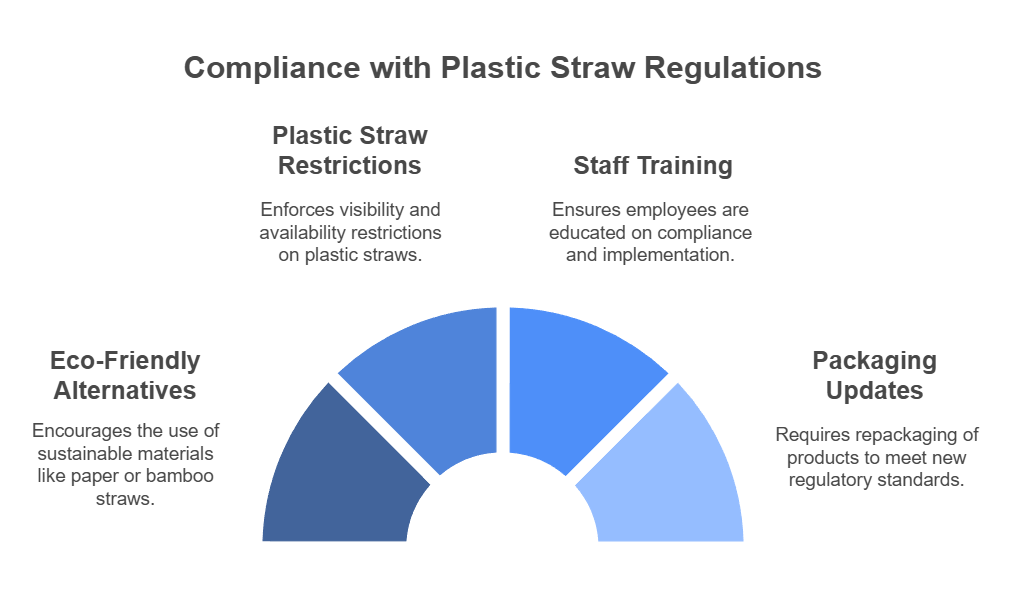
To comply with these regulations, businesses must make adjustments to their operations:
- Offer Alternatives: Businesses must provide eco-friendly alternatives such as paper or bamboo straws.
- Plastic Straw Restrictions: Where permitted, businesses must keep plastic straws out of sight and offer them only upon request.
- Pelatihan Staf: Businesses need to ensure that employees are informed about the new regulations and understand how to implement them.
- Packaging Updates: Products with integrated straws must be repackaged to comply with the new regulations.
Sustainability Challenges
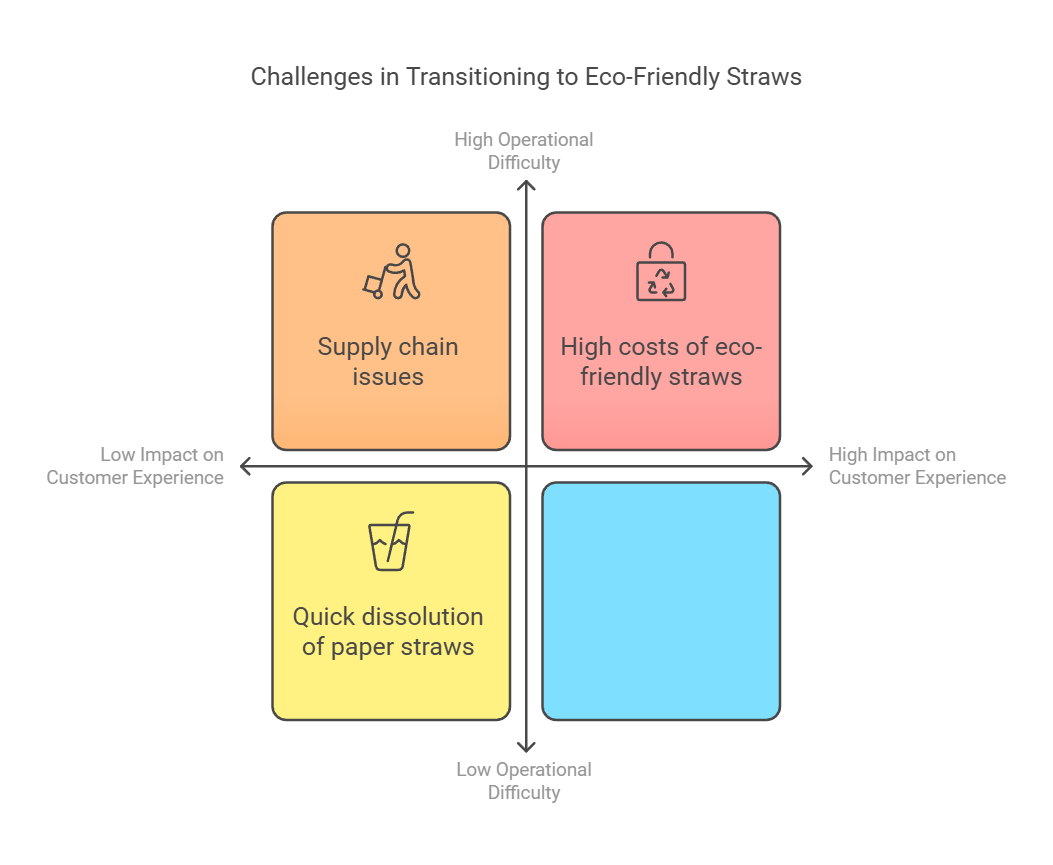
While transitioning away from plastic straws, businesses face several challenges:
- Quality of Alternatives: Many paper straws dissolve quickly in liquids, potentially affecting the customer experience, especially in beverages like bubble tea.
- Higher Costs: Eco-friendly alternatives often come with a higher price point compared to plastic straws.
- Supply Chain Issues: Businesses must source reliable suppliers for sustainable straws, which can sometimes be challenging and costly.

Tren masa depan
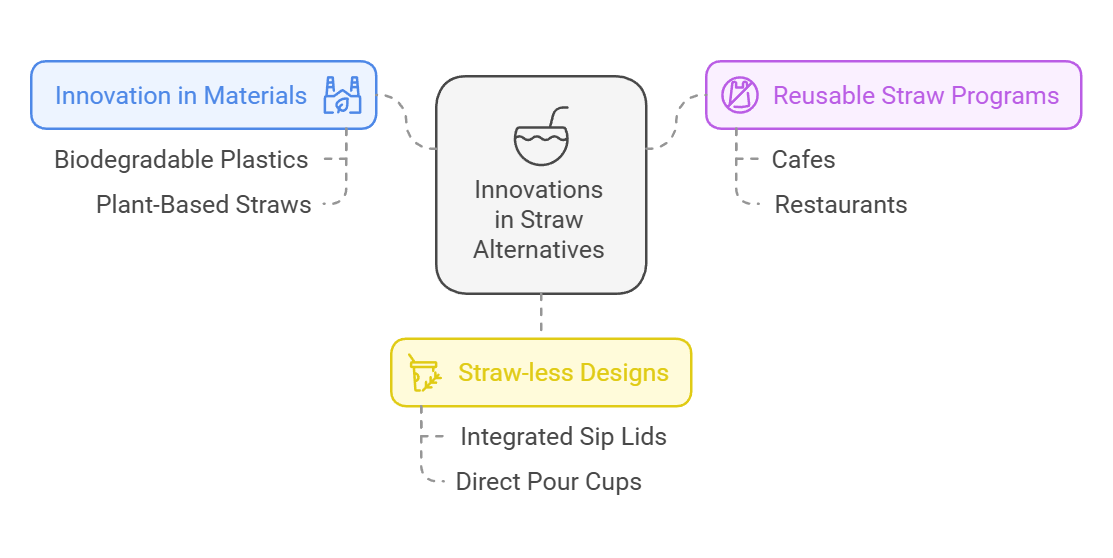
As the market adapts to these regulations, businesses are looking towards innovations that can address both environmental concerns and customer needs:
- Innovation in Materials: New, more durable, and eco-friendly materials are being developed to replace plastic straws.
- Reusable Straw Programs: Cafes and restaurants are introducing reusable straw programs to further reduce waste and enhance sustainability.
- Straw-less Designs: Some businesses are exploring cup designs that eliminate the need for straws altogether, further contributing to sustainability efforts.
Kesimpulan
The shift towards banning plastic straws is not just a regulatory requirement but a business opportunity. By staying informed about government regulations and adopting sustainable practices, businesses, especially in the bubble tea industry, can avoid penalties, enhance their brand image, and attract environmentally conscious customers. Embracing eco-friendly alternatives can improve sustainability efforts, reduce costs, and ultimately build customer loyalty.
Kutipan:
- Taipec – Plastic Straws: What Are the Rules Bubble Tea Shop Owners Should Know?
- Drinking Straw – What is Bio-Sourced Bioplastic Straw?
- EPA – New South Wales Plastics Ban Guidance
- Drinking Straw – Which Alternatives to Plastic Straws?
- Renouvo – Plastic Straws Ban in the US and Europe
- Instagram – Advancing Justice