Material deep-dive for buyers
Apa Itu Sedotan Bubuk Kopi? Pertanyaan Komposisi untuk Ditanyakan
Jawaban cepat: coffee-ground straws are drinking straws made from spent coffee grounds combined with a binder such as PLA, starch, cellulose or another plant-based polymer. The exact recipe differs by manufacturer, so buyers must ask what the binder is, what percentage the coffee grounds make up, what additives exist, and whether the finished straw, its inks, coating and wrapper have food-contact evidence. Composition drives odour, taste transfer, strength, allergens, food-contact behaviour and every environmental claim.
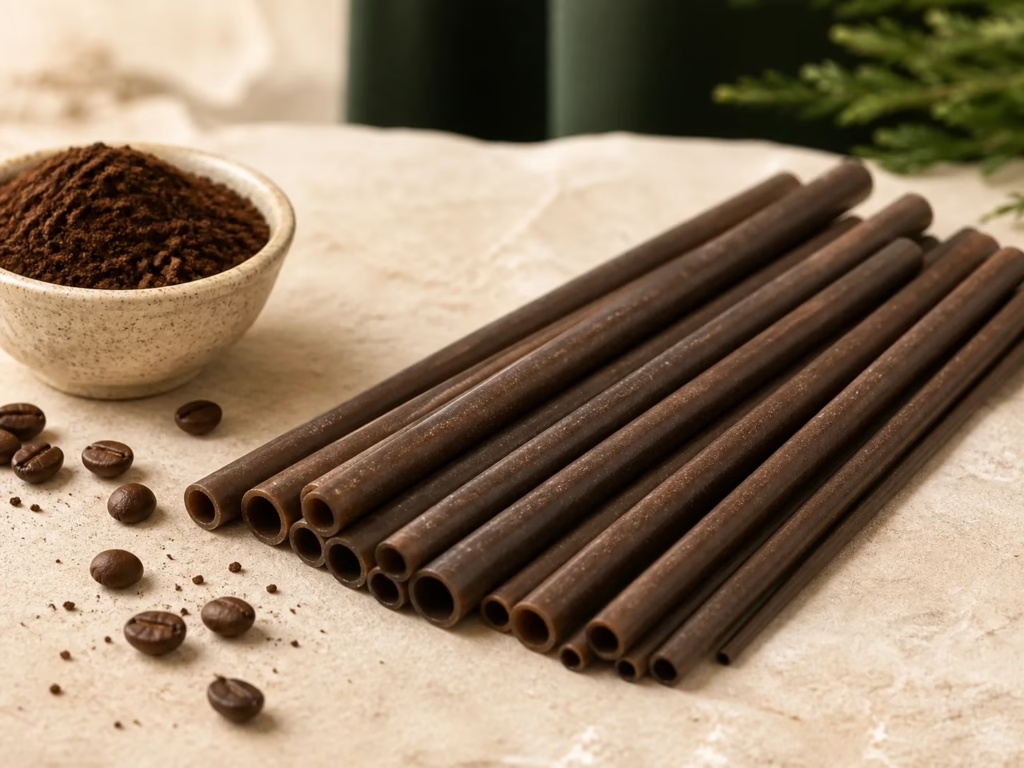
“Coffee-ground straw” describes a family of products, not one formula. Suppliers use different coffee sources, binder systems, additive packages and manufacturing routes. Two straws that look identical on a counter can behave very differently in a hot latte, a carbonated soda or a long service window. This guide explains what the material actually is, which composition questions to ask, and how the answers change your sample testing, documents and claims.
What coffee-ground straws are
A coffee-ground straw is a single-use drinking straw whose main solid ingredient is spent coffee grounds — the used coffee residue left after brewing — held together by a binder that gives the straw its structure. Binders seen in the market and in published research include polylactic acid (PLA), starches such as corn, rice or potato, cellulose-based materials such as hydroxypropyl methylcellulose (HPMC), and other food-grade biopolymers. Some published work has even explored protein-based binders such as gelatin. The straw may also contain colouring, flavouring, coatings, inks and, when wrapped, a wrapper.
Because there is no single standard recipe, “coffee-ground” alone tells you almost nothing about performance or compliance. The composition questions below are the practical minimum before you compare samples.
Composition varies by manufacturer
| Binder family | What buyers typically see | Questions it raises |
|---|---|---|
| PLA-based | Bio-based plastic binder blended with coffee grounds | Percentage of PLA, compostability environment, hot-drink limits, migration evidence |
| Starch-based | Corn, rice or potato starch as the structural binder | Which starch, moisture sensitivity, soak time, allergen declarations, vegan status |
| Cellulose-based | Plant-fibre and cellulose derivatives such as HPMC | Source of fibre, water behaviour, coating requirements, print compatibility |
| Protein-based | Food-grade proteins such as gelatin used in research formulations | Animal origin, vegan and halal status, allergen risk, religious-diet fit |
This is not an exhaustive list, and formulations can combine families. Ask the supplier to state the binder in writing rather than relying on a marketing name such as “coffee fibre”.
The composition questions to ask
- What is the binder? Exact name or material code, not just “natural binder”.
- What percentage is coffee grounds? A stated range such as “40–60%” is a claim until the specification confirms it.
- Spent or virgin coffee? Spent grounds (post-brew) and unbrewed coffee behave differently in odour, colour and migration.
- Which additives? Colouring, flavouring, plasticisers, coatings and preservatives, each with its own food-contact questions.
- Are any animal-derived ingredients present? Gelatin, shellac or other animal sources affect vegan, halal and kosher suitability.
- What allergens are declared? Corn, soy, wheat or other allergen-bearing components, and how the supplier declares them.
- What is the coating or surface treatment? Coatings change moisture resistance, taste transfer and compostability.
- Does the printed version change composition? Inks and print overcoats are part of the finished article specification.
Put the answers in the specification, not in an email. The templat spesifikasi RFQ sedotan has fields for composition, binder and additives.
How composition affects performance
| Performance area | What composition changes | How to test |
|---|---|---|
| Odour and taste transfer | Coffee aroma or flavour can transfer into drinks, more so at higher temperature | Taste and smell the production recipe at serving temperature |
| Strength and stiffness | Binder type and coffee percentage change wall strength and buckling | Test with ice, sealed-film lids and long service time |
| Soak behaviour | Starch and fibre binders can soften faster in water | Record the longest expected drink-contact time |
| Minuman panas | Heat can soften some binders or change odour release | Test at the highest temperature your menu uses |
| Carbonated drinks | Bubble formation and acidity interact with the surface | Test carbonated drinks alongside still drinks |
| Rasa di mulut | Surface texture and residue differ by formulation | Run a staff sensory panel on the real drink |
Because formulations vary, treat the composition sheet and the sensory test as one package. A straw that performs in water may fail in your actual menu item.
Sensory and safety evidence
Composition also raises food-contact and sensory questions that need evidence, not adjectives. Buyers should ask the supplier for:
- Food-contact test reports for the finished straw, including inks, coating and wrapper where applicable.
- Migration results under realistic conditions of use, including temperature and contact time.
- Sensory testing or odour/taste evidence, especially if the straw will be used with hot or neutral-tasting drinks.
- Composition and additive disclosure sufficient to check allergens, animal origin and restricted substances.
- A change-notice process so a new binder, coating or additive cannot ship silently.
Gunakan daftar periksa pembeli dokumen kontak makanan to review the evidence, and the panduan verifikasi klaim jerami to keep environmental wording matched to the exact SKU.
Allergen and dietary questions
Composition questions are also menu questions. If your customers include vegans, people with allergies, or halal or kosher requirements, the binder and additives matter:
- Ask for the complete ingredient and additive list, including coatings.
- Confirm whether any component is animal-derived, such as gelatin-based binders.
- Check allergen declarations for corn, soy, wheat or other sources in starch binders.
- Ask whether the supplier has dietary or religious-diet documentation, and verify its scope per SKU.
- Remember that a “plant-based” label can still coexist with animal-derived additives; confirm in writing.
Environmental claims follow composition
Every environmental claim — biodegradable, industrial compostable, home compostable — follows the exact composition, not the coffee grounds alone. The binder, additives, inks, coatings and wrapper can each change the result and the applicable standard.
- Ask which standard or certificate applies (for example, industrial compostability references such as EN 13432 in the EU), and which environment it covers.
- Ask whether the certificate covers the finished printed and wrapped product or only an unprinted core.
- Ask for the percentage basis of any “X% coffee grounds” or “X% bio-based” claim, and how it is verified.
- Do not assume that “biodegradable” means compostable, or that home and industrial composting are interchangeable.
Published examples show both the range and the verification path: a coffee-ground straw blended with PLA was launched by a major coffee chain, and DIN CERTCO lists a recycled-coffee-ground straw registration under DIN EN 13432. Neither example applies to any other product, including NatureBioEco SKUs — every product needs its own evidence. See the panduan verifikasi klaim for the full method.
A sample test plan for composition
- Get the specification first. Binder, coffee percentage, additives, coating and wrapper in writing.
- Request two candidate formulations if available. Comparing binders is more informative than testing one.
- Run the sensory test. Production recipe, serving temperature, still and carbonated drinks, full contact time.
- Run the handling test. Ice, sealed-film lid, staff motion, expected service window.
- Review the evidence file. Food-contact reports, composition sheet, allergen and dietary declarations, change notice.
- Freeze the reference. Put the approved composition, SKU, sample identity and document versions in the purchase specification.
Coffee-ground formats to compare
The links below connect this guide to current NatureBioEco coffee-ground SKUs. They are comparison candidates, not automatic fit declarations — request the composition sheet, food-contact documents and samples before approval. For the full sourcing workflow, use the coffee-ground straw wholesale buyer guide.
| Current format | Suggested first use |
|---|---|
| Sedotan Bubuk Kopi Tanpa Bungkus 6mm x 210mm | 6mm unwrapped – regular iced drinks |
| Sedotan Bubuk Kopi yang Dibungkus Satu per satu 6mm x 210mm | 6mm wrapped – takeaway and self-serve |
| Sedotan Bubuk Kopi Tanpa Bungkus 8mm x 210mm | 8mm unwrapped – thicker drinks |
| Sedotan Bubuk Kopi Tanpa Bungkus 12mm x 210mm | 12mm unwrapped – boba and inclusions |
| Sedotan Bubuk Kopi yang Dibungkus Satu per satu 12mm x 210mm | 12mm wrapped – boba takeaway |
| Sedotan kopi yang dapat disesuaikan: Sedotan minum ramah lingkungan untuk B2B | customisable coffee-ground format |
Pertanyaan yang sering diajukan
What are coffee-ground straws made of?
Coffee-ground straws are drinking straws made from spent coffee grounds combined with a binder such as PLA, starch, cellulose, or another plant-based polymer. The exact recipe differs by manufacturer, so ask for the binder identity, the percentage of coffee grounds, additives and the food-contact evidence for the finished straw before approving samples.
Are coffee-ground straws biodegradable or compostable?
It depends on the exact composition and the claiming system. A straw may be biodegradable under one set of conditions and not compostable in a home or industrial facility. The binder, additives, inks and wrapper all affect the result, so ask which standard or certificate applies, which environment it covers, and match the wording to the exact SKU.
Do coffee-ground straws taste or smell like coffee?
Some formats transfer a coffee aroma or flavour into beverages, and the effect can differ between hot and cold drinks. Because formulations vary, test the production recipe at serving temperature, with carbonated and still drinks, and record any taste, odour or residue over the full expected contact time.
Can coffee-ground straws contain allergens or animal ingredients?
Yes, possibly. Some binders are plant-based, but published formulations also use food-grade biopolymers such as gelatin, which is animal-derived. Ask for the full ingredient and additive list and check allergens, vegan, halal or kosher requirements before committing.
Why does the binder matter for my menu?
The binder affects strength, soak time, odour, taste transfer, compostability and food-contact behaviour. Two straws that look identical can behave very differently in hot drinks, carbonated drinks or long service times, so verify the binder and not just the coffee-ground percentage.
What documents should I request for composition?
Request the current specification with the full composition, a Declaration of Compliance or equivalent statement, food-contact test reports for the finished article (material, ink, coating and wrapper), batch or QC records, and any compostability certificate matched to the exact SKU and environment. The food-contact checklist and claim verification guide cover the review sequence.
Sumber primer
- Peer-reviewed research on biodegradable straws made from spent coffee grounds with food-grade biopolymers — Proses (MDPI), 2025
- Commercial example: coffee-ground straws made with coffee grounds and PLA — China Daily, April 2021
- Example of an EN 13432 registration for a recycled coffee-ground straw — DIN CERTCO registration directory
Ask, test, then commit
Coffee-ground straws are a composition decision, not a label decision. Get the binder and additives in writing, test the real recipe, review the food-contact and claim evidence per SKU, and freeze the approved version in the specification. Composition is the part suppliers cannot see from a photo — and the part that determines whether your menu, guests and claims are protected.
