Corrispondenza delle prove per gli acquirenti di cannucce
Risposta rapida: approvare un rapporto di test sulla paglia solo quando vengono dimostrati tre collegamenti: il laboratorio lo ha effettivamente rilasciato, il test pertinente rientra nell'attuale ambito di accreditamento del laboratorio e il campione testato corrisponde esattamente allo SKU, alla formulazione, alle dimensioni, al colore, all'involucro e all'uso previsto acquistato. Quindi confermare metodi, condizioni, risultati, date e modifiche post-test prima del rilascio.
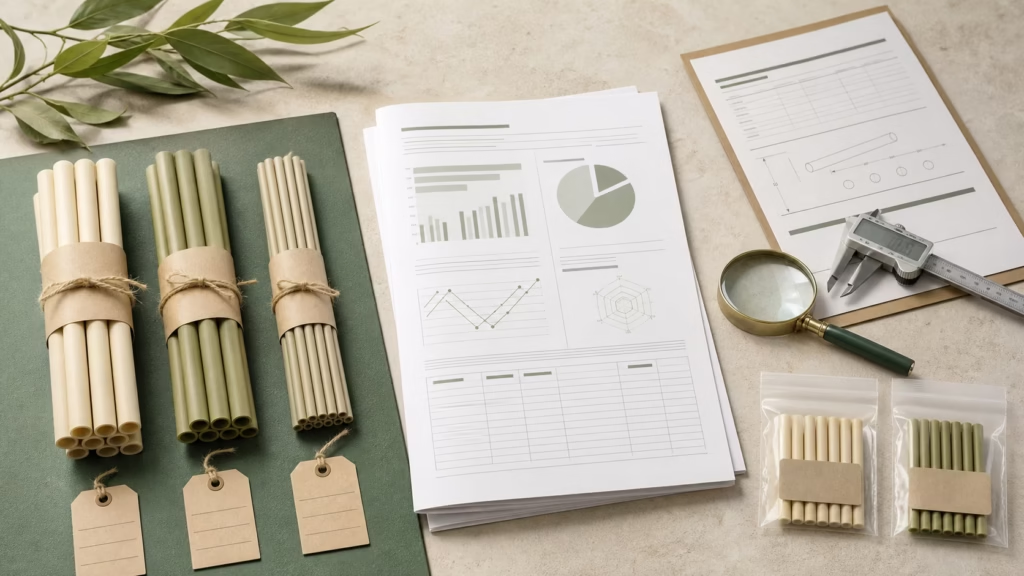
Un PDF raffinato può essere autentico ma irrilevante. Può riguardare uno stabilimento, una formulazione, una dimensione, un pigmento, un involucro, un tipo di alimento o una temperatura diversi. Può anche descrivere un campione rappresentativo senza spiegare quali SKU attuali appartengono a quella famiglia di prodotti. Gli acquirenti quindi hanno bisogno di qualcosa di più di un numero di rapporto o di una riga di “pass”: hanno bisogno di una catena di prove dal laboratorio al campione fisico e da quel campione all’ordine di acquisto.
Questa guida si concentra sulla corrispondenza tra report e SKU. Per il pacchetto completo di documenti, utilizzare il file Lista di controllo dei documenti a contatto con gli alimenti. Per specifiche, reclami e tracciabilità oltre i test, utilizzare il file Lista di controllo per la conformità delle cannucce.
Le tre prove di cui ha bisogno un acquirente
Segnala l'autenticità
Il laboratorio emittente conferma il numero del rapporto, la versione, il cliente e lo stato attraverso un canale ufficiale.
Ambito di laboratorio
La sede del laboratorio è accreditata per il test o il campo tecnico pertinente, non semplicemente accreditata per qualcos'altro.
Collegamento SKU esatto
Il campione testato e l'ordine attuale condividono identità, composizione, costruzione e uso previsto controllati.
Tutti e tre contano. Un rapporto autentico da parte di un laboratorio competente può comunque non supportare l'ordine attuale se il campione è diverso. Un campione corrispondente può comunque produrre prove deboli se il metodo non è idoneo o non rientra nell'uso previsto. Un logo di accreditamento può essere reale mentre il test particolare non rientra nell'ambito dettagliato.
Passaggio 1: conservare il record del rapporto originale
Request the complete PDF directly from the supplier, including cover, all numbered pages, annexes, photos, amendment history and signature or authorization details. Record the received filename, date, sender and cryptographic hash if the document is important to product release. Do not rely on a screenshot, a cropped pass page or a report embedded in a catalogue.
- Report number, issue date, revision and total page count are consistent throughout.
- Applicant and manufacturer names are visible and explainable.
- Sample receipt, testing and issue dates follow a plausible sequence.
- Every amendment says what changed and whether earlier versions are withdrawn.
- Annexes, sample photos and result tables belong to the same report number.
Passaggio 2: verificare il laboratorio da fonti indipendenti
Utilizza il sito web ufficiale del laboratorio o la directory dell’organismo di accreditamento per ottenere i dettagli di contatto. Non fidarti solo di un numero di telefono, di un collegamento e-mail o di un codice QR stampato all'interno del PDF non verificato. Chiedere al laboratorio di confermare se ha emesso il report, se la versione fornita è aggiornata e se qualche pagina o risultato è stato modificato.
L'ISO spiega che la norma ISO/IEC 17025 stabilisce i requisiti per la competenza, l'imparzialità e il funzionamento coerente dei laboratori di prova e taratura. Gli organismi di accreditamento lo utilizzano per valutare i laboratori. L'ILAC spiega che la sua ricerca dei firmatari dell'MRA identifica gli organismi di accreditamento riconosciuti e si collega alle directory delle strutture accreditate, dove gli utenti possono verificare l'ubicazione e gli ambiti dei laboratori.
Passo 3: leggere lo scopo dell'accreditamento, non solo il simbolo
| Scope field | Buyer comparison | Risk signal |
|---|---|---|
| Accredited organization | Legal name and laboratory site shown in the report | A different subsidiary, country or facility |
| Accreditation standard | ISO/IEC 17025 for testing activities | Only a management-system certificate or unrelated standard |
| Technical field | Food-contact, chemical, material or relevant testing field | The laboratory is accredited only for unrelated tests |
| Methods/standards | Method named in the report or an allowed flexible scope | No connection between scope and reported method |
| Matrix/product | Materials or articles covered by the scope | Scope covers water, textiles or another matrix only |
| Status and date | Scope active when the work was performed and when reviewed | Suspended, expired or superseded scope |
If a result is outside the accredited scope, that does not automatically make it false. It changes the level and type of assurance. Record which results are accredited, what contractual or regulatory acceptance is required, and whether additional evidence or retesting is necessary.
Fase 4: abbinare richiedente, produttore e catena di fornitura
Il richiedente può essere un fornitore, proprietario di un marchio, distributore o fabbrica. Tale nome non dimostra automaticamente la proprietà della formulazione testata. Mappare il richiedente del report, il mittente del campione, il produttore, il venditore attuale e l'entità di fatturazione. Richiedere una spiegazione scritta e una catena di supporto quando la segnalazione appartiene a un'affiliata, a un fornitore di materie prime o a una fabbrica precedente.
Per l'autorizzazione al contatto alimentare negli Stati Uniti, la FDA afferma che le notifiche di contatto alimentare sono specifiche per l'azienda notificante e per l'uso previsto specificato. Altri percorsi normativi possono avere portata diversa. L'acquirente deve identificare l'effettiva base di autorizzazione anziché considerare ogni riferimento alla "FDA" come trasferibile a qualsiasi produttore o articolo finito.
Passaggio 5: creare un crosswalk report-to-SKU
| Campo del rapporto | Confronta con | Esempio di mancata corrispondenza |
|---|---|---|
| Codice campione/prodotto | Preventivo, specifiche e ordine di acquisto | Impossibile trovare il codice del rapporto nell'offerta attuale |
| Descrizione del campione | Nome del prodotto e piattaforma dei materiali controllati | Il rapporto dice che la paglia di carta; l'ordine è fibrocomposito |
| Foto di esempio | Campione fisico e disegno approvati | Colore, punta, involucro o costruzione diversi |
| Dimensioni | Diametro interno/esterno, lunghezza, parete e tolleranza | Rapporto da 6 mm offerto per una SKU boba da 12 mm senza motivazione |
| Composizione | Distinte materiali e dichiarazioni dei fornitori | Legante, pigmento o rivestimento sono cambiati dopo il test |
| Sito di produzione | Attuale stabilimento e percorso del processo | Il campione del rapporto proveniva da una struttura precedente |
| Involucro/stampa | Specifiche dell'imballaggio e revisione della grafica | Campione non imballato utilizzato per supportare uno SKU confezionato stampato |
| Destinazione d'uso | Bevande, temperatura e tempo di contatto | Test acquoso freddo utilizzato per servizio caldo o alcolico |
Aggiungi una riga di attraversamento pedonale per ogni combinazione di report e SKU. Contrassegna lo stato come corrispondente, corrispondente in modo condizionale, non supportato o in attesa di chiarimento. Collega ciascuna conclusione alla risposta del fornitore, alla logica della famiglia di prodotti o alla nuova richiesta di test.
Passaggio 6: valutare la copertura della famiglia di prodotti
Un laboratorio può testare un articolo rappresentativo mentre il fornitore vende una famiglia di taglie, colori o varianti di imballaggio. La copertura familiare non è automaticamente sbagliata, ma la motivazione tecnica deve essere esplicita. Chiedi chi ha selezionato il rappresentante, quale differenza rappresenta il caso peggiore, quali caratteristiche rimangono identiche e quali SKU sono inclusi.
| Variazione | Domanda prima del raggruppamento |
|---|---|
| Diametro o spessore della parete | La superficie, la massa, la produzione o l’esposizione rendono un’altra dimensione più grave? |
| Colore | L'identità del pigmento e il carico sono uguali o valutati separatamente? |
| Materiale/legante | La formulazione è davvero identica, compresi additivi e coadiuvanti tecnologici? |
| Rivestimento | Il rapporto include l'articolo finito rivestito e il lato di contatto previsto? |
| Involucro e inchiostro | Il trasferimento, la compensazione o i componenti rilevanti dell'involucro sono stati esaminati separatamente? |
| Fabbrica/processo | I controlli sulle materie prime, le attrezzature e le condizioni di stagionatura/essiccazione sono equivalenti? |
Non scrivere il tuo ponte scientifico dalla somiglianza visiva. Ottenere la motivazione del raggruppamento dalla parte tecnica responsabile e farla esaminare per il mercato e l'uso applicabili.
Fase 7: confrontare il metodo di prova e l'uso previsto
A report is only as relevant as its test conditions. For EU plastic food-contact materials, Regulation (EU) No 10/2011 provides structured rules for sample preparation, food simulants, contact time and temperature, including worst foreseeable conditions. The exact legal route may differ by material and Member State, but the buyer still needs the same practical comparison.
- Applicable market and legal or customer specification.
- Test method edition and any laboratory modification.
- Finished article or material specimen, tested side and surface area.
- Food/beverage categories and selected simulants.
- Contact time, temperature and repeated-use sequence where relevant.
- Analytes, units, reporting limits and acceptance limits.
- Uncertainty or decision rule when it affects pass/fail interpretation.
Un rapporto può contenere risultati soddisfacenti ed essere comunque insufficiente per l'affermazione proposta o l'uso previsto. Documentare cosa copre il test, cosa non copre e quali composizioni di supporto o documenti normativi colmano le lacune rimanenti.
Passo 8: leggi ogni risultato, qualificazione e allegato
Non fermarti al riassunto. Verificare che vengano visualizzati tutti gli analiti o le categorie di migrazione richiesti, che le unità corrispondano ai limiti e che "non rilevato", "sotto la quantificazione" e "superato" non siano trattati come identici senza il limite di reporting del metodo. Esaminare le note a piè di pagina, le deviazioni, il lavoro subappaltato e le dichiarazioni secondo cui i risultati si applicano solo al campione ricevuto.
Se il report contiene una dichiarazione di conformità, identificare la regola utilizzata per redigerla. Un risultato di laboratorio è la prova di un campione definito; non è di per sé un certificato globale per la produzione futura, per ogni mercato o per ogni richiesta.
Passaggio 9: collegare il report alla produzione dopo il test
Il regolamento (CE) n. 1935/2004 richiede un'adeguata documentazione per dimostrare la conformità ove applicabile e la tracciabilità in tutte le fasi. La Commissione Europea spiega che una Dichiarazione di Conformità si basa sulla documentazione di supporto e che le GMP collegano la responsabilità del prodotto alla produzione controllata. Il compito dell’acquirente continua quindi dopo il test di laboratorio.
- Registrare il lotto testato, il mittente del campione e il metodo di selezione del campione.
- Conservare o fotografare un campione di controllo codificato, ove possibile.
- Numero del rapporto di riferimento e revisione del prodotto nella specifica approvata.
- Richiedere un preavviso per modifiche a formulazione, fornitore, sito, processo, dimensioni, colore, rivestimento, involucro e stampa.
- Definire quando una modifica richiede una revisione delle motivazioni, un test comparativo o un nuovo test completo.
- Controllare il registro dei rapporti prima di ogni riordino importante o approvazione della richiesta di opere d'arte.
Un record di approvazione dell'acquirente in dodici punti
- Rapporto originale completo e revisione verificata.
- Laboratorio emittente confermato attraverso un canale ufficiale indipendente.
- Controllo della voce dell'ente di accreditamento e dell'elenco dei laboratori.
- Sito pertinente e ambito dettagliato controllati per il test segnalato.
- Documentata la relazione tra richiedente, produttore e catena di fornitura.
- Codice campione, foto, dimensioni e materiale abbinati alla SKU.
- Formulazione, colore, rivestimento, involucro e stampa a confronto.
- Market, method, simulants, time and temperature reviewed.
- Results, units, limits, qualifiers and deviations reviewed.
- Product-family grouping rationale approved or rejected.
- Changes since sampling reviewed and recorded.
- Decision owner, date, limitations and next review trigger signed off.
IL NatureBioEco RFQ workbook includes a document tracker and SKU comparison structure that can hold this approval record.
Domande frequenti
How can I tell whether a test report belongs to the straw I am buying?
Match the report’s applicant, manufacturer, sample name or code, photos, material, dimensions, color, wrapper, formulation and test date against the current quotation, specification, bill of materials and approved sample. Any mismatch needs a written product-family rationale or new testing before approval.
Does an authentic laboratory report prove my current straw SKU complies?
No. Authenticity proves the laboratory issued the report. You still need to confirm that the laboratory’s accredited scope covers the test, the tested sample matches the current SKU, the method and conditions fit the target market and intended use, and no relevant product change occurred afterward.
How do I verify a laboratory and its accreditation?
Start from the accreditation body’s official directory, not a logo copied into the PDF. ILAC’s signatory search can identify recognized accreditation bodies and their accredited-facility directories. Check the laboratory’s legal name, site, certificate status, standard and detailed scope for the specific test or field.
Can one report cover several straw sizes or colors?
Sometimes, but only with a documented grouping rationale. The supplier should explain why the tested representative is worst-case or technically representative and identify every covered SKU. Changes in formulation, pigment, diameter, wall thickness, coating, wrapper or intended use can break the link.
What test conditions should a drinking-straw buyer compare?
Confrontare il mercato di riferimento, i tipi di alimenti o bevande, i simulanti alimentari, il tempo di contatto, la temperatura, il campione di prova, le ipotesi superficie-volume, il metodo analitico, i limiti di rilevamento o quantificazione, le unità e i criteri di accettazione con l'uso previsto. Un risultato di acqua fredda non copre automaticamente il contatto caldo, acido, grasso o alcolico.
L'accreditamento ISO/IEC 17025 significa che ogni test effettuato da quel laboratorio è accreditato?
No. ISO/IEC 17025 è lo standard di competenza utilizzato per i laboratori di prova e taratura, ma l'accreditamento viene concesso per un ambito definito. Verificare che l'ubicazione del laboratorio pertinente e il test o il campo tecnico specifico rientrino nell'ambito attuale e verificare se il rapporto identifica i risultati come accreditati.
When should a straw test report be reviewed again?
Review it before first approval and after changes to formulation, supplier, factory, dimensions, color, coating, wrapper, print, intended use, test method, regulation or accreditation status. Also set a risk-based periodic review date even when no change is reported.
Fonti primarie
- ISO: ISO/IEC 17025:2017 — competence, impartiality and consistent operation of testing and calibration laboratories.
- ILAC MRA and Signatories E ILAC Signatory Search — accreditation-body recognition and accredited-facility directories.
- Regulation (EC) No 1935/2004 — supporting documentation and traceability.
- European Commission: Food-contact materials legislation — declarations, supporting documentation, GMP and migration-test context.
- Regulation (EU) No 10/2011 — preparazione del campione, simulanti alimentari, condizioni di tempo e temperatura per i materiali plastici ricoperti.
- FDA statunitense: come sono regolamentate le sostanze a contatto con gli alimenti — ambito FCN specifico per l'azienda e l'uso previsto.
Approva la corrispondenza, non la copertina del PDF
Un rapporto di prova diventa una prova d'acquisto utile solo dopo aver collegato l'autenticità, l'ambito di laboratorio, l'esatta identità del campione, la pertinenza del test e il controllo della produzione post-test. Se manca un collegamento, registrare la limitazione e ottenere chiarimenti, una motivazione familiare difendibile o nuovi test prima di richiedere la copertura.