Cafe and iced-drink procurement guide
Coffee Shop Straws Wholesale: Iced Coffee Buyer Guide
簡単な答え: for a cafe wholesale programme, start by testing a nominal 6mm x 210mm straw with standard iced coffee, cold brew, iced tea and other low-viscosity drinks. Add an 8mm candidate for frappes and thicker or blended recipes. Confirm inner and outer diameter, cup and lid fit, length, ice, sensory neutrality, contact time, wrapping, storage and exact SKU documents before choosing a case quantity.
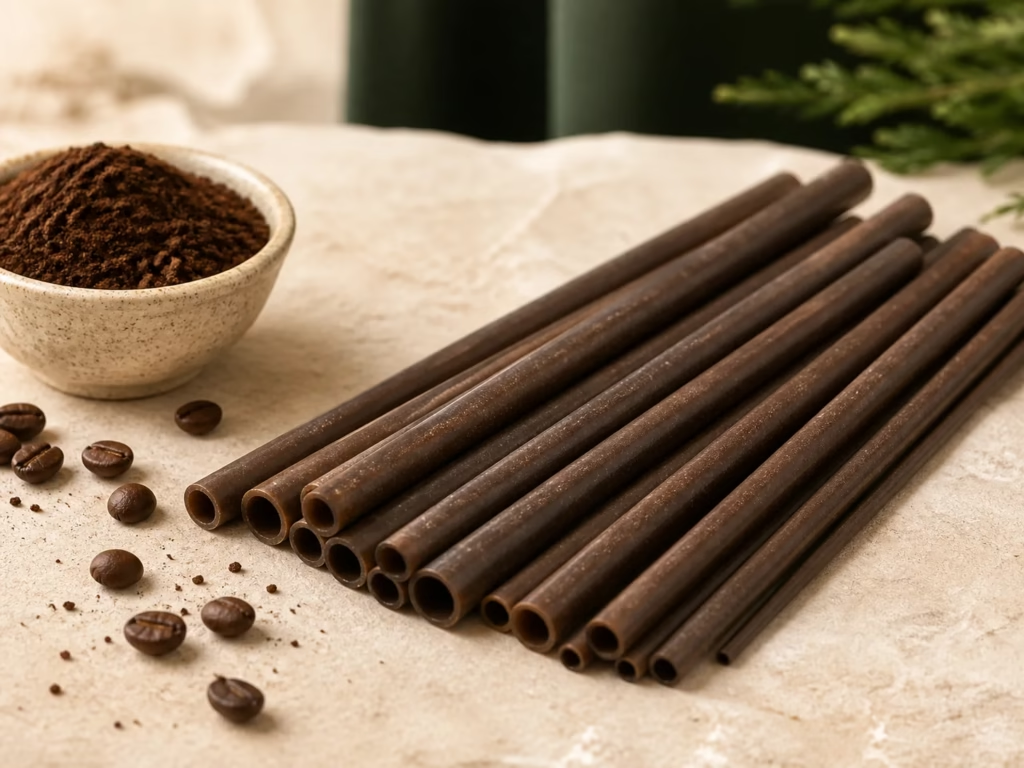
A coffee shop may serve cold brew, iced Americano, iced latte, flavoured coffee, tea, lemonade, frappe-style drinks and smoothies from several cup and lid systems. Treating them as one “cold drink” category can create unnecessary blockage, oversized mouthfeel, lid interference or too many uncontrolled straw formats.
This guide gives cafe operators, chains, roasters with retail locations, hospitality groups, distributors and private-label buyers a menu-to-SKU method. It focuses on function, service workflow and procurement evidence. It does not state that a coffee-derived material is universally suitable, does not promise a fixed performance time, and does not infer compostability or food-contact status from the feedstock name.
List the actual drinks sold through a straw. For each one, record viscosity, ice format, foam, pulp, seeds, toppings, temperature at handoff, expected time to consume, cup, lid and whether customers stir with the straw. Group drinks by functional demand rather than marketing name.
| Menu group | Candidate diameter | Primary risk | Test condition |
|---|---|---|---|
| Cold brew, iced Americano, iced tea | 6mm starting candidate | Lid fit, length, ice and mouthfeel | Normal dilution, ice and service time |
| Iced latte and flavoured iced coffee | 6mm starting candidate | Syrup, foam, settling and sensory effect | Complete recipe, including milk and syrup |
| Frappe or lighter blended drink | 8mm starting candidate | High suction, ice fragments and blockage | Production blender settings and serving temperature |
| Smoothie or drink with fine solids | 8mm or wider candidate | Pulp, seeds and ingredient variation | Largest normal solids and longest contact time |
| Boba or large inclusions | 12mm application review | Topping clearance and film puncture | を使用します。 12mm boba buyer guide |
When a 6mm straw fits a cafe programme
A nominal 6mm straw is a practical starting candidate for standard iced coffee, cold brew, tea, soda and juice without large solids. It can provide a restrained mouthfeel and may fit common flat-lid openings. However, “6mm” must be defined: request nominal inner diameter, outer diameter, wall or stiffness notes, tolerance and length.
Test drinks with the normal ice amount. Cubes can pin the straw, lift it or narrow the available flow path near the bottom of the cup. If customers use the straw to mix syrup or milk, include stirring in the test. Record any cracking, permanent bending or surface change after repeated movement against ice.
When a cafe should test 8mm
An 8mm format provides a wider flow path and may be a better candidate for frappes, lighter smoothies, thicker juices or drinks with fine suspended solids. It is not automatically appropriate for every blended beverage. Recipe viscosity, ice fragment size, pulp, seeds and serving temperature can still create resistance or blockage.
Use production blender settings rather than a specially thinned sample. Test at the point of service and again after the longest realistic pickup or delivery delay. If the drink separates or thickens, record whether flow remains acceptable without excessive suction.
Check inner diameter, outer diameter and lid fit
Inner diameter controls flow. Outer diameter controls whether the straw passes through the lid opening and influences mouthfeel. Wall thickness and formulation influence stiffness. Since suppliers may describe a nominal family using different measurements, request a drawing or specification that labels each value.
Test every lid system used by the shop, including flat lids, domed lids and any sip lid with a secondary straw opening. Check insertion force, free movement, whether the lid grips too tightly, whether the opening cuts or abrades the straw, and whether an oversized hole lets it fall into the cup.
Select length from cup geometry, not ounces
A nominal 210mm length is a candidate for many taller takeaway formats, but cup volume is not a reliable height measurement. Two cups with the same volume can have different profiles, lids and fill levels. Measure from the likely lower resting point to the highest part of the lid, then define comfortable extension above it.
複数のサイズのメニューの場合は、1 つの長さで数杯を安全かつ快適にカバーできるかどうか、または最も高い容器に制御された 2 番目の長さが必要かどうかを決定します。氷の移動とドーム型の蓋が含まれます。空のディスプレイカップに適合するストローは、カップがいっぱいになると異なる動作をする可能性があります。
Run a sensory test with the actual coffee
コーヒープログラムは味と香りに敏感です。候補となるストローは、水だけではなく実際の飲料と一緒に評価する必要があります。可能であれば、単純な盲検比較を使用します。候補者と現在の対照で同じ飲み物を準備し、サービス時および予想される接触時間後に知覚された味、匂い、または口当たりの違いを記録します。
Separate the straw’s own odour from cup, lid, wrapper, storage carton and surrounding environment. Test units from more than one inner pack. If wrapping is printed, include the final wrapper because inks, adhesives or storage conditions can create a different experience from an unwrapped development sample.
Temperature and hot-drink boundaries
Do not assume that a coffee-related straw is intended for hot coffee. Request the exact SKU’s stated conditions of use and supporting food-contact scope, then test within those boundaries. Material behaviour can change with temperature and time.
Very hot beverages also create a user burn risk when consumed through a straw because liquid can reach the mouth quickly and bypass normal cooling cues. A cafe should review serving temperature, lid design, warnings, accessibility needs and local requirements separately. This page focuses primarily on iced and cold cafe drinks and does not recommend straws for uncontrolled very hot service.
Wrapped versus unwrapped cafe workflows
| Decision area | 個別包装 | 包装されていない |
|---|---|---|
| Typical fit | Takeaway, delivery, self-service, pre-packed orders | Controlled counter dispenser or staff handoff |
| Operational checks | Opening speed, seal integrity, wrapper litter and print | Dispenser protection, refill handling and access |
| Commercial checks | Setup, print, wrapper material and units per pack | Inner bag, carton count and dispenser compatibility |
| Evidence checks | Review claims for wrapper and straw separately | Confirm inner-pack material and storage conditions |
Simulate a busy handoff. Staff should be able to identify 6mm and 8mm formats without opening packs or reading tiny codes. Use distinct dispensers, cartons, wrapper marks or storage positions where picking errors are possible. Record refill time and how partially opened inner packs are protected.
A nine-step cafe sample test
- Define candidate SKUs. Record material direction, dimensions, wrapping and sample code.
- Measure several units. Check inner diameter, outer diameter and length against the supplier specification.
- Build a menu test matrix. Include the thinnest, thickest and highest-solid recipes.
- Use production serviceware. Test each cup, lid, ice type and dispenser.
- Run at normal temperature. Include the actual holding or delivery delay.
- Record flow and handling. Note suction, blockage, stirring, bending and lid interference.
- Run sensory comparison. Record taste, odour and mouthfeel at defined times.
- Simulate peak service. Check picking, unwrapping, insertion, refill and waste workflow.
- Freeze the approval. Retain the sample code, test record and specification revision.
Use the free drinking straw RFQ and specification workbook to record these tests and compare quotations.
Storage and carton planning
Request units per inner pack, inners per carton, total units, carton dimensions, gross weight and storage conditions. Translate the monthly beverage forecast into cartons and safety stock. Account for separate wrapped and unwrapped formats, multiple diameters and seasonal menu changes.
サンプルの評価中、サンプルの一部を意図したカフェまたは倉庫の条件下で保管し、一部を対照として保管します。製品を未承認の熱、湿気、直射光、または強い臭気から遠ざけて保管してください。普遍的な有効期限を想定するのではなく、現在の SKU ストレージ仕様に従ってください。
Documents and environmental-claim boundaries
提案されている各環境主張について、正確な製品仕様、完全な成分記述、該当する食品接触報告書または宣言、包装仕様および証拠を要求します。会社の所有者、SKU または配合、テストされたサンプル、発行者、方法または規格、日付、ステータス、市場および使用条件を確認します。
“Made with coffee grounds” describes an input direction; it does not prove the complete formulation, recycled-content percentage, plastic-free status, compostability or biodegradation conditions. Avoid printing broad claims on wrappers or menu boards until the evidence and destination-market wording have been reviewed. See the coffee-ground straw wholesale guide、 claims verification guide そして コンプライアンスチェックリスト。
Current NatureBioEco cafe formats to compare
These representative pages are candidate formats, not automatic suitability declarations. Request the current sample and documents for the exact commercial offer.
| 候補ページ | Handling format | Buyer action |
|---|---|---|
| 6mm x 210mm 包装されていないコーヒーグラウンドストロー | 包装されていない | Confirm cup/lid fit, drink test and current SKU documents |
| 6mm x 210mm 個包装コーヒーグラウンドストロー | 個別包装 | Confirm cup/lid fit, drink test and current SKU documents |
| 8mm x 210mm Unwrapped Coffee-Ground Straws | 包装されていない | Confirm cup/lid fit, drink test and current SKU documents |
Prepare a comparable cafe RFQ
- Menu groups, viscosity, solids, ice and serving temperatures.
- Cup and lid references, dimensions and expected straw extension.
- Nominal inner diameter, outer diameter, length and tolerances.
- Material direction, colour, wall/stiffness and tip requirement.
- Wrapped or unwrapped format, wrapper printing and inner-pack count.
- Sample quantity, first order, monthly use and annual forecast.
- Destination, currency, Incoterm, named place and required date.
- Specification, composition, food-contact and claim-evidence needs.
- Approved sample code and specification revision before purchase order.
よくある質問
What straw diameter should a coffee shop use for iced coffee?
A nominal 6mm straw is a practical starting candidate for standard iced coffee, cold brew, iced tea and similar drinks without large solids. Confirm inner and outer diameter and test the actual beverage, ice, cup and lid.
When should a cafe test an 8mm straw?
An 8mm format can be a useful candidate for frappes, lighter blended drinks, thick juices and recipes with more viscosity or fine solids. Test the production recipe because pulp, seeds and ice fragments can still block the opening.
Can one straw size cover every cafe drink?
Often not. A cafe with standard iced drinks and blended drinks may need separate 6mm and 8mm formats. Stocking decisions should balance menu coverage, dispenser control, training, carton storage and order volume.
Are coffee-ground straws suitable for hot coffee?
Do not assume suitability from the material name. Confirm the exact SKU’s intended temperature and conditions of use, then test it. Straws also create a burn-safety concern with very hot drinks, so the serving method requires a separate risk review.
Should coffee-shop straws be wrapped or unwrapped?
Individual wrapping may fit takeaway, delivery and self-service; unwrapped straws may fit controlled counter dispensers. Compare handling, wrapper seal, print, pack count, storage and waste procedures.
What should a cafe include in a wholesale straw RFQ?
Include the menu, serving temperatures, cup and lid, diameter and length, wrapping, sample quantity, forecast, destination, Incoterm, packaging and exact document requirements.
Request cafe samples and documents
Send the menu, cups and lids, candidate sizes, wrapped/unwrapped preference, expected volume, destination and evidence requirements. NatureBioEco will confirm the proposed SKU scope before quotation.
