Introduction: Addressing the Global Plastic Straw Epidemic
Single-use plastic straws contribute significantly to environmental degradation, with an estimated 8.3 billion metric tons of plastic waste generated globally since the 1950s. In response, sugarcane straws have emerged as a scientifically validated, biodegradable alternative leveraging agricultural byproducts. This article examines their material properties, environmental efficacy, and implementation strategies for businesses committed to sustainability.
1. Material Composition and Production Process
From Bagasse to Functional Product
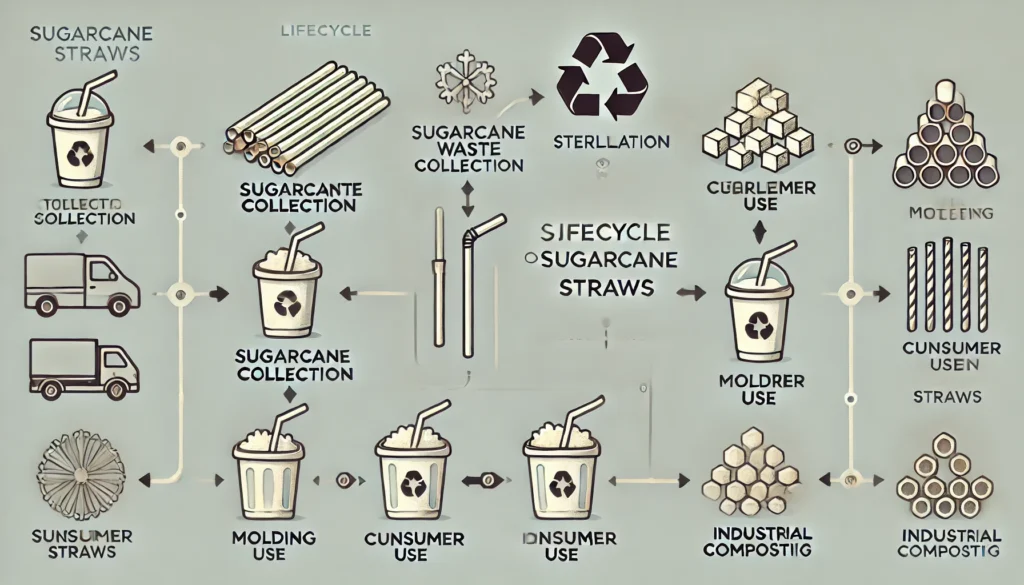
Sugarcane straws are manufactured using サトウキビバガス, a fibrous residue from sugar extraction, combined with ポリ乳酸(PLA), a plant-based polymer. The production workflow involves:
- Waste Collection: Bagasse is sourced from sugar mills, reducing agricultural landfill waste.
- Sterilization and Pulping: High-temperature treatment eliminates organic contaminants.
- Extrusion and Molding: The mixture is shaped into straws under controlled conditions to ensure structural integrity.
Quality Assurance and Certifications
- BPI Certification: Validates compostability under industrial conditions (ASTM D6400).
- FDAのコンプライアンス: Guarantees food-safe status, free from BPA and phthalates.
2. Environmental and Ethical Implications
二酸化炭素排出量の削減
A 2023 lifecycle analysis determined sugarcane straws generate 52% fewer CO2 emissions than plastic straws, attributed to waste repurposing and energy-efficient production.
Ethical Supply Chain Considerations
- Fair Trade Partnerships: Collaborations with sugarcane cooperatives in Brazil and India ensure equitable wages.
- Zero-Waste Manufacturing: Byproduct utilization (e.g., excess biomass for bioenergy).
3. Performance Benchmarking Against Alternatives
| 材料 | 耐久性 (液体中での時間) | 堆肥化可能性 | Cost per 1,000 Units |
|---|---|---|---|
| プラスチック | 不定 | 非生分解性 | $10 |
| 紙 | 0.5–1 | 2~6週間 | 15ドル |
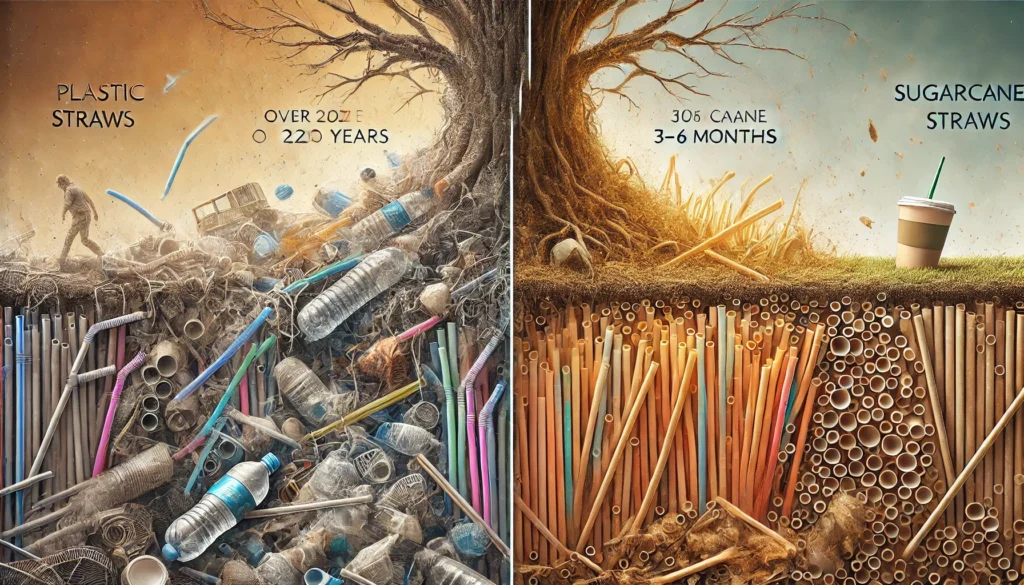
| サトウキビ | 4~6 | 3~6ヶ月 | $20 |
Competitive Advantages
- 熱安定性: Withstands temperatures up to 80°C (176°F), outperforming PLA.
- Brand Differentiation: Natural aesthetic aligns with eco-conscious consumer preferences.
4. Strategic Implementation for Enterprises
Operational Integration
- Phased Adoption: Replace 30% of plastic straws quarterly to balance cost and impact.
- 一括調達: Tiered pricing models (e.g., 20% discount for 10,000+ units).
Stakeholder Education
- Training Modules: Educate staff on composting protocols and customer communication.
- Digital Campaigns: Share lifecycle infographics via social media to enhance brand loyalty.

5. Challenges and Mitigation Strategies
Supply Chain Vulnerabilities
- Seasonal Bagasse Shortages: Diversify suppliers across geographic regions.
- Logistics Emissions: Opt for carbon-neutral shipping partners (e.g., DHL GoGreen).
Consumer Misconceptions
- 神話: “Compostable means I can litter.”
解決: Partner with NGOs to distribute disposal guides.
6. Future Innovations and Policy Trends
技術の進歩
- ハイブリッド材料: Integration with rice husk fibers for enhanced tensile strength.
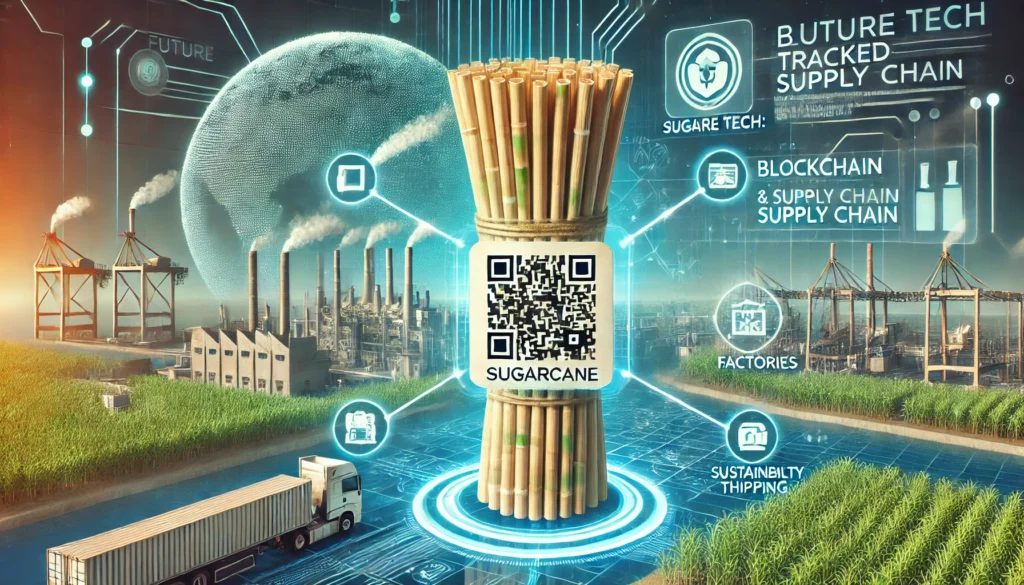
- Blockchain Tracking: Transparent supply chain monitoring from farm to end-user.
Regulatory Incentives
- EU Taxonomy: Financial incentives for businesses adopting circular economy models.
7. Frequently Asked Questions (FAQ)
1. Are sugarcane straws truly industrially compostable?
Yes. They meet ASTM D6400 standards and decompose within 90–180 days in certified facilities.
2. Do they alter beverage flavor profiles?
No. Residual sugars are removed during sterilization (FDA, 2021).
3. How do costs compare to traditional plastic straws?
Initial costs are 20–30% higher, but long-term savings accrue through waste fee reductions.
4. Are customization options available for businesses?
Yes. Options include embossed logos, color dyes, and branded packaging.
5. Can these straws be home-composted?
Technically yes, but industrial composting is recommended for efficiency.
6. Do they comply with EU single-use plastics bans?
Yes. Compliant with Directive (EU) 2019/904.
7. What ethical certifications should buyers prioritize?
Seek B Corp, Fair Trade, or Rainforest Alliance certifications.
8. Where can I purchase in bulk?
Licensed suppliers include サトウキビストローカンパニー そして Eco-Products。
Conclusion: Pioneering Sustainable Consumption
Sugarcane straws represent a critical advancement in sustainable materials, aligning ecological responsibility with commercial viability. By adopting these straws, businesses mitigate regulatory risks, enhance brand equity, and contribute to global waste reduction efforts.
引用
- テュフ・オーストリア。 (2023年)。 OK Compost Industrial Certification Standards。 https://www.tuv-at.be/compost
- 米国環境保護庁 (EPA)。 (2022年)。 Plastic Waste Management Report。 https://www.epa.gov/plastics
- 欧州委員会。 (2023年)。 Single-Use Plastics Directive Guidelines。 https://ec.europa.eu/environment/plastics
- Biodegradable Products Institute (BPI). (2023). Certification Directory。 https://www.bpiworld.org
- 米国食品医薬品局 (FDA)。 (2021年)。 食品接触物質に関する規制。 https://www.fda.gov/food
- Journal of Cleaner Production. (2023). Lifecycle Analysis of Sugarcane Straws.
- Fair Trade International. (2023). Sugarcane Farming Cooperatives Case Study。
- DHL. (2023). GoGreen Carbon-Neutral Shipping Solutions。 https://www.dhl.com/gogreen