I. Inleiding
Plastic afval is een mondiale milieucrisis geworden, waarbij plastic voor eenmalig gebruik – vooral rietjes – aanzienlijk bijdraagt aan de vervuiling. Terwijl overheden en bedrijven overgaan op duurzaamheid, biologisch afbreekbare boba-rietjes zijn in opkomst als een levensvatbaar alternatief voor plastic.
Deze gids onderzoekt de materialen, duurzaamheid, verwijderingsmethoden, uitdagingen en zakelijke voordelen van biologisch afbreekbare boba-rietjes, waardoor bedrijven en consumenten de nodige kennis krijgen om weloverwogen keuzes te maken.

II. Wat zijn biologisch afbreekbare Boba-rietjes?
A. Biologische afbreekbaarheid definiëren
Biologisch afbreekbare rietjes zijn ontworpen om worden op natuurlijke wijze afgebroken tot organisch materiaal without leaving harmful residues. Unlike conventional plastic straws, which persist for centuries, these alternatives decompose within months or years under the right conditions.
B. The Need for Biodegradable Alternatives
- Plastic waste crisis: Over 8 million tons of plastic enter the ocean annually, threatening marine ecosystems【1】.
- Regulatory bans: Many regions, including the EU, Canada, and multiple U.S. states, have implemented restrictions on plastic straws【2】.
- Consumer demand: Studies show that 78% of consumers prefer eco-friendly brands, influencing market trends【3】.
III. Vergelijking van biologisch afbreekbare stromaterialen
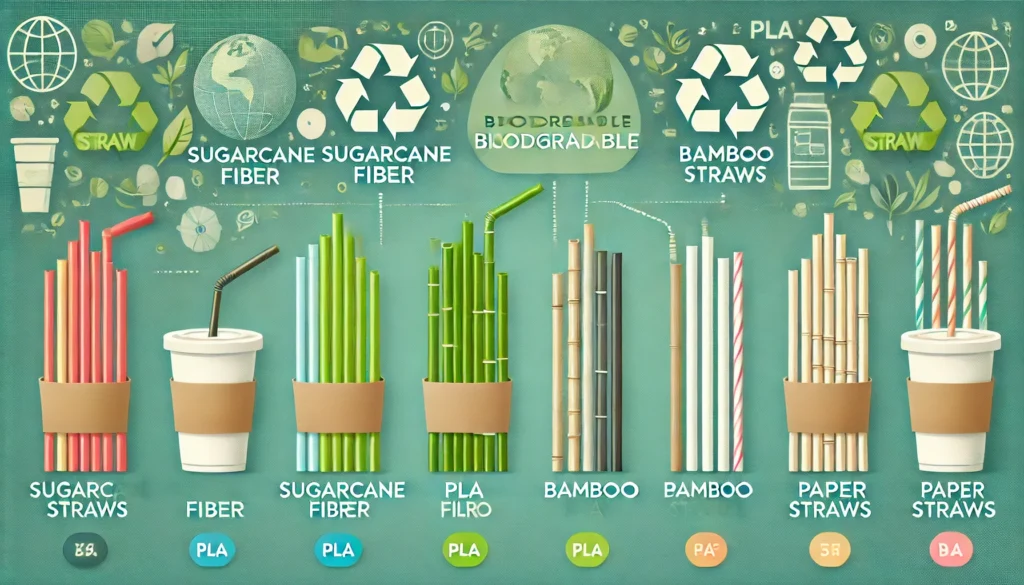
A. Breakdown of Popular Biodegradable Straws
| Materiaal | Pluspunten | Nadelen |
|---|---|---|
| Suikerriet vezels | Compostable, durable, and moisture-resistant | Vereist industriële compostering |
| PLA (op maïs gebaseerd) | Resembles plastic, widely available | Requires industrial composting, not home-friendly |
| Bamboe | Sturdy, reusable, 100% natural | Duurder |
| Papier | Kosteneffectief, overal verkrijgbaar | Wordt snel drassig |
| Rijst/Tarwe | Eetbaar, volledig biologisch afbreekbaar | Minder duurzaam, kan de smaak veranderen |
B. Choosing the Best Straw for Boba Tea
- Duurzaamheid: Can it withstand thick drinks such as bubble tea and smoothies?
- Smaakneutraliteit: Does it alter the flavor of beverages?
- Milieu-impact: How quickly does it decompose?
Voor bobawinkels en cafés, suikerrietvezels en bamboerietjes are preferred due to their strength, compostability, and resistance to sogginess.
IV. Prestatie & Bruikbaarheid van biologisch afbreekbare rietjes
A. Comparing Biodegradable Straws to Plastic Straws
- Duurzaamheid: Sugarcane and PLA straws last 2-3 uur before softening, while paper straws degrade in 30–45 minutes【4】.
- Structural integrity: Bamboo and sugarcane straws can puncture sealed boba lids without breaking.
- Consumer satisfaction: Taste-neutral materials ensure that flavors remain unchanged.
B. Practical Considerations for Businesses
- Testing biodegradable straws in beverages before adopting them.
- Klanten opleiden on the proper use and disposal of compostable straws.
V. Juiste verwijderingsmethoden voor biologisch afbreekbare rietjes
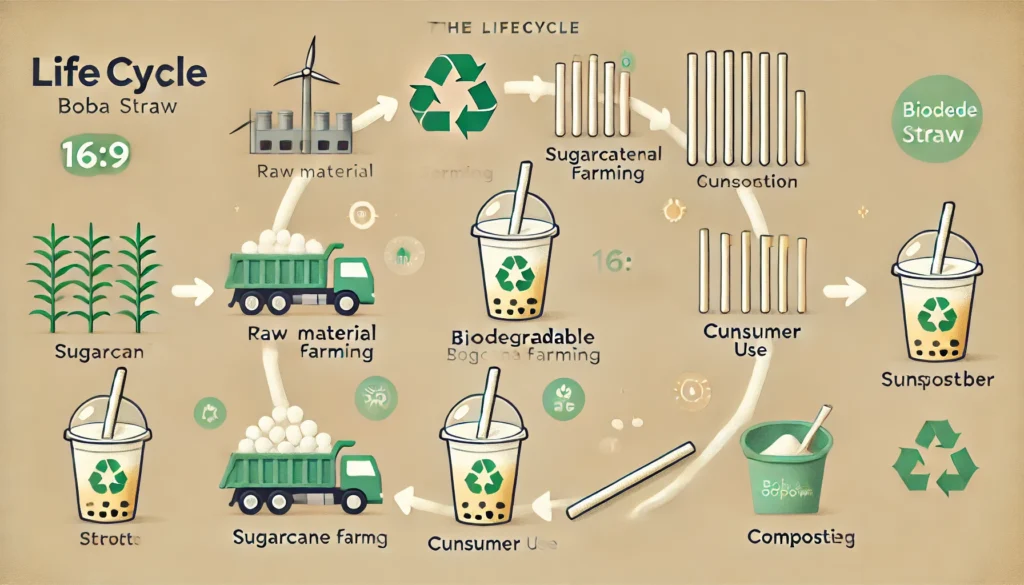
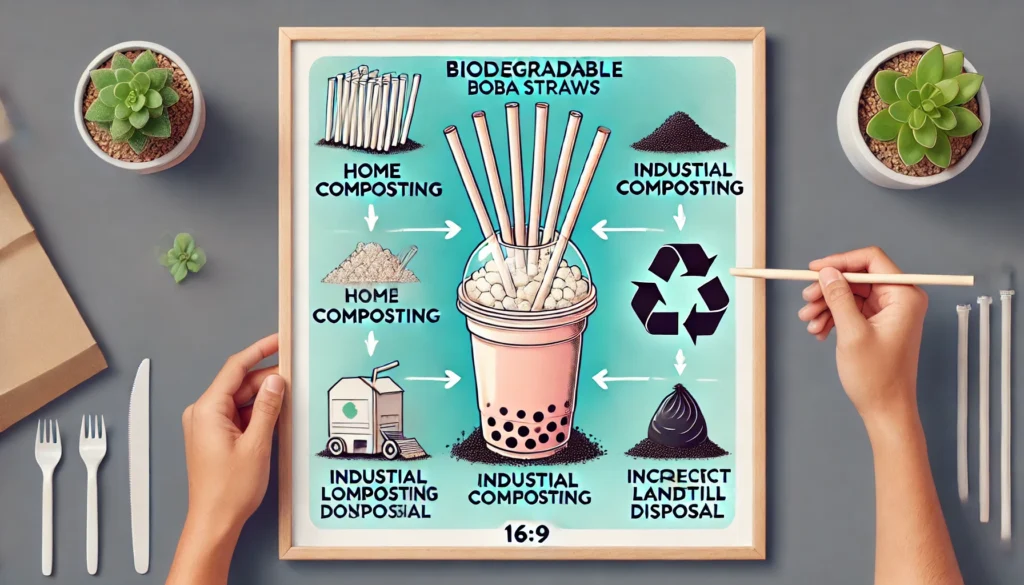
A. Home vs. Industrial Composting
- Thuis composteerbaar: Bamboo, paper, rice, wheat.
- Industriële compostering vereist: Sugarcane fiber and PLA straws.
B. Common Disposal Mistakes
- Biodegradable straws should not be recycled with plastics.
- Landfills slow decomposition due to oxygen deprivation【5】.
C. Promoting Proper Disposal Practices
- Businesses can provide clear disposal instructions on packaging.
- Cafés can offer composting bins to encourage responsible waste management.
VI. Uitdagingen bij de overgang naar biologisch afbreekbare rietjes
A. Business Concerns
- Higher costs compared to plastic straws.
- Limited supply chain availability in sommige regio's.
- Consumer education is required for proper disposal.
B. Myths vs. Reality
| Mythe | Realiteit |
|---|---|
| “Biodegradable straws dissolve in liquid” | High-quality sugarcane fiber straws last 2+ uur |
| “PLA straws decompose anywhere” | PLA requires industriële compostering |
| “Paper straws are the best alternative” | Suikerriet & bamboo provide better durability |
| “Compostable means it breaks down anywhere” | Needs proper composting conditions |
C. Solutions for Businesses
- Bulk purchasing strategies to reduce costs.
- Collaborations with composting facilities for responsible waste management.
- Customer education campaigns on sustainability benefits.
VII. Zakelijke voordelen van biologisch afbreekbare rietjes
A. Why Businesses Should Make the Switch
- Consumer preference for sustainable brands drives sales【6】.
- Avoidance of plastic ban penalties ensures regulatory compliance.
- Enhanced brand image attracts environmentally conscious customers.
B. Case Studies: How Businesses Are Transitioning
- Starbucks and McDonald’s plastic straw bans and their impact on sustainability.
- Independent boba shops increasing customer loyalty through eco-friendly initiatives.
C. Measuring Return on Investment
- Cost-benefit analysis of biodegradable vs. plastic straws.
- Long-term brand loyalty gains from sustainable business practices.
VIII. De toekomst van duurzame rietjes
A. Emerging Innovations
- Rietjes op basis van algen – fully edible and dissolvable.
- Hybrid sugarcane-bamboo materials – enhanced durability.
- Zelfontbindende bioplastics – break down in days instead of months.
B. Regulatory Trends
- Increasing global plastic bans require businesses to adapt.
- Fast-food chains and retailers transitioning to compostable alternatives.
C. Encouraging Consumer Participation
- Supporting businesses that prioritize duurzaamheid.
- Advocating for better composting infrastructure.
IX. Veelgestelde vragen (FAQ)
1. Zijn biologisch afbreekbare boba-rietjes echt beter dan plastic?
✅ Absoluut! Unlike plastic straws, which take hundreds of years to break down, biologisch afbreekbare boba-rietjes naturally decompose, significantly reducing plastic waste and ocean pollution【1】.
2. Ontbinden biologisch afbreekbare rietjes op stortplaatsen?
❌ Niet efficiënt. Biodegradable materials require zuurstof, vocht en microbiële activiteit to break down properly. Landfills lack these conditions, meaning decomposition can take significantly longer【5】.
3. Hoe kan ik controleren of een rietje echt biologisch afbreekbaar is?
🔍 Zoek naar deze certificeringen:
- ASTM D6400 (VS) – Ensures compostability in industrial settings.
- EN 13432 (EU) – Confirms full biodegradability under European standards.
- TÜV OK Compost (wereldwijd) – Certifies home or industrial composting suitability【6】.
4. Hebben biologisch afbreekbare rietjes invloed op de smaak van drankjes?
🥤 No, they do not. Hoge kwaliteit suikerrietvezels en PLA-rietjes Zijn smaakneutraal, ensuring that your beverage remains uncompromised. However, some lower-quality paper straws may leave an aftertaste【4】.
5. Kan ik biologisch afbreekbare rietjes thuis composteren?
🏡 Het hangt af van het materiaal:
- ✅ Thuis composteerbaar: Suikerrietvezels, bamboe, rijst en tarwerietjes.
- ❌ Industriële compostering vereist: PLA-based straws need high temperatures and special composting conditions【7】.
6. Zijn biologisch afbreekbare rietjes kosteneffectief voor bedrijven?
💰 Ja! Hoewel de kosten vooraf hoger kunnen zijn dan die van plastic, bulkaankoop verlaagt de kosten per eenheid. Moreover, eco-conscious customers actively seek out sustainable businesses, boosting brand loyalty and sales【4】.
7. Wat is het beste biologisch afbreekbare rietje voor bubble tea?
🍹 De ideale opties zijn:
- Rietjes van suikerrietvezels – Sterk, composteerbaar en ideaal voor dikke dranken.
- Bamboe rietjes – Stevig, herbruikbaar en milieuvriendelijk.
- PLA-rietjes – Plastic-like feel but requires industrial composting【5】.
8. Waar kan ik biologisch afbreekbare boba-rietjes in bulk kopen?
🛒 Aanbevolen leveranciers zijn onder meer:
- NatureBieEco – Gespecialiseerd in duurzame rietjes van suikerrietvezels.
- TheSugarcaneStraw.com – Biedt groothandel in biologisch afbreekbare boba-rietjes.
X. Citaties & Verder lezen
- EPA: De impact van plastic rietjes op het milieu
- Composting Council Guide to Biologisch afbreekbare materialen
- Nielsen-rapport over de consumentenvraag naar duurzaamheid
- Vergelijking van biologisch afbreekbare stromaterialen
- Duurzame bedrijfscasestudies
- ASTM D6400 Composteerbaarheidsnorm
- Europese bioplastics: EN 13432-certificering
Laatste gedachten
- Biodegradable boba straws offer an eco-friendly solution to plastic waste.
- Bedrijven profiteren from adopting sustainable alternatives.
- The future of drinkware is shifting toward compostable solutions.