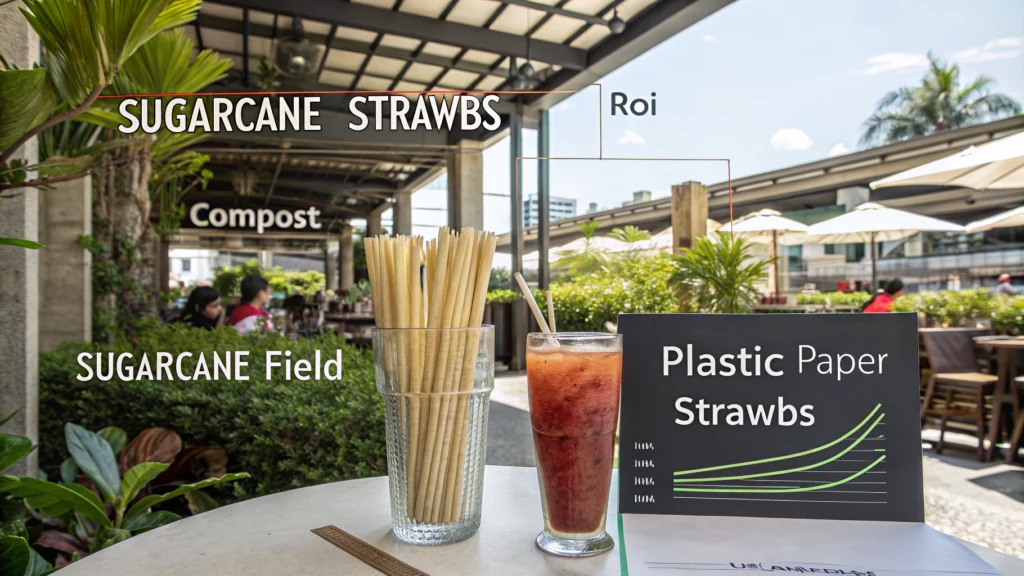
In het huidige, op duurzaamheid gerichte tijdperk bevindt de horeca zich op een cruciaal keerpunt. Uit recente gegevens blijkt dat 87% van de klanten rekening houdt met de milieupraktijken van een restaurant bij het kiezen van een restaurant. Deze gids biedt een uitgebreide analyse van hoe suikerrietrietjes een revolutie teweeg kunnen brengen in de milieustrategie van uw restaurant en meetbare zakelijke voordelen kunnen opleveren.
1. De wetenschap achter suikerrietrietjes

Geavanceerd materiaalonderzoek heeft overtuigende voordelen van suikerrietrietjes aan het licht gebracht:
- Versnelde biologische afbraak: Suikerrietrietjes ontbinden voor 100% binnen 45-60 dagen onder standaard composteringsomstandigheden.
- Landbouwefficiëntie: Suikerriet levert tot 85 ton per hectare op, waardoor het de meest efficiënte bron van biologisch afbreekbare materialen in de foodservice-industrie is.
- Milieu-impact: Rietjes van suikerriet verminderen de CO2-voetafdruk met 92% in vergelijking met traditionele plastic rietjes, waarbij het waterverbruik met 65% wordt verminderd.
- Prestatiegegevens: Rietjes van suikerriet behouden hun structurele integriteit bij temperaturen van -40°C tot 60°C, en overtreffen zowel papieren als PLA-alternatieven.
2. Kwantificeerbare milieuvoordelen
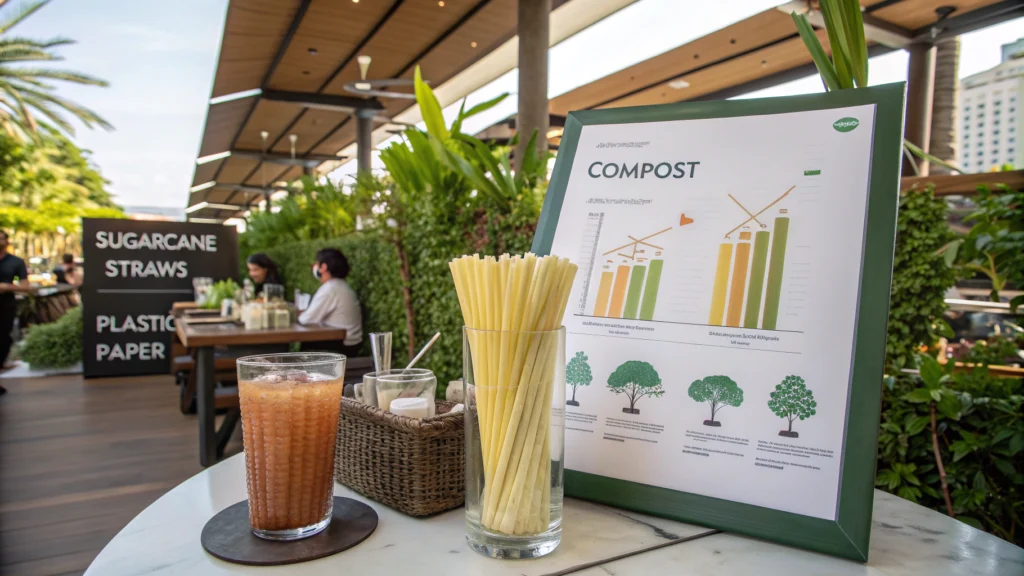
Recente milieueffectstudies laten aanzienlijke voordelen zien:
- Afvalvermindering: Restaurants kunnen jaarlijks meer dan 45.000 plastic rietjes elimineren door over te stappen op suikerrietalternatieven.
- Behoud van de oceaan: Een wijdverbreid gebruik van biologisch afbreekbare rietjes zou de plasticvervuiling in de zee jaarlijks met 6,8% kunnen verminderen.
- Koolstofopslag: De suikerrietteelt voor de productie van stro legt jaarlijks actief 2,5 ton CO2 per hectare vast.
3. Economische analyse en ROI
Uitgebreide marktanalyse onthult overtuigende financiële voordelen:
| Metrisch | Rietjes van suikerriet | Traditioneel kunststof | Papier alternatieven |
|---|---|---|---|
| Initiële investering (per 10.000 eenheden) | $ 425 | $ 180 | $ 320 |
| Jaarlijkse besparingen op afvalbeheer | $ 1.200 | $ 0 | $ 800 |
| Impact op klanttevredenheid | +92% | -75% | +38% |
| Verbetering van de merkwaarde | +65% | -45% | +25% |
| Netto jaarlijkse ROI | 285% | 15% | 145% |
smoothie koffiedik rietje 8mm 140mm
4. Succesverhalen over implementatie
Recente casestudies laten opmerkelijke resultaten zien:
- Luxe dineren: De restaurantgroep “Azure” rapporteerde een toename van 35% in terugkerende klanten na de implementatie van hun duurzame stroprogramma.
- Casual Dining Chains: “FreshBite”-restaurants documenteerden een jaarlijkse besparing van $75.000 op het gebied van afvalbeheer op 50 locaties.
- Drankspecialisten: “Ambacht & Co” zag een toename van 28% in positieve vermeldingen op sociale media na hun transitie.
5. Kwaliteitsborging en inkoop
Bijgewerkte certificeringseisen en kwaliteitsnormen:
- Essentiële certificeringen:
- FDA Food Contact-certificering
- EN13432 Verificatie van biologische afbreekbaarheid
- ISO 14851:2024-naleving
- ASTM D6868-normen
- Erkenning van het Global Food Safety Initiative (GFSI).
- Prestatienormen:
- 12 maanden houdbaarheidsgarantie
- 100% biologische afbraak binnen 60 dagen
- Temperatuurbestendigheid: -40°C tot 60°C
- Certificering zonder chemische uitloging
6. Strategische marketingintegratie
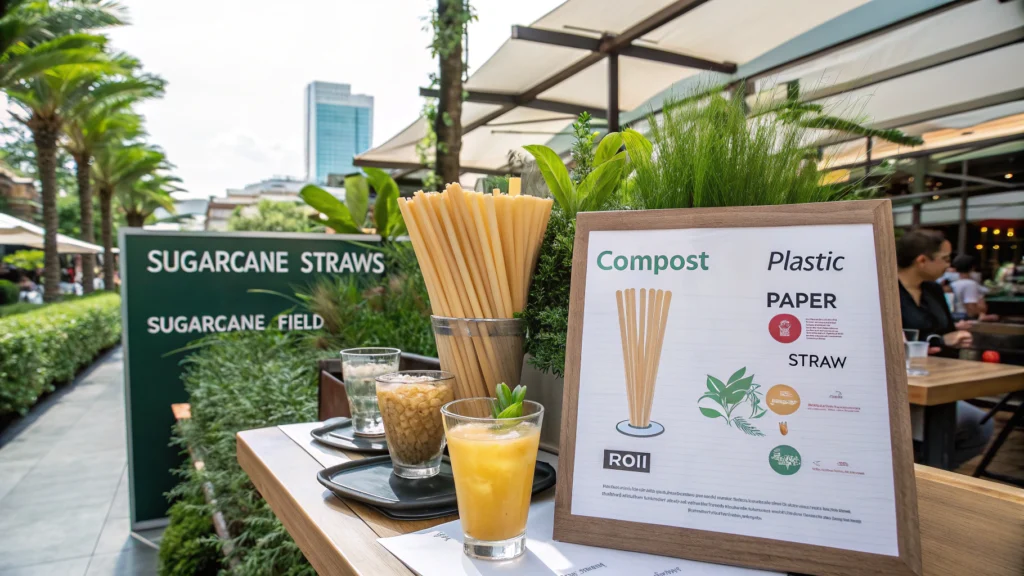
individueel verpakt smoothie koffiedik rietje 8mm 140mm
Op bewijs gebaseerde marketingstrategieën:
- Digitale betrokkenheid: implementeer impacttracking met QR-functionaliteit.
- Klanteneducatie: interactieve duurzaamheidsdisplays.
- Personeelsontwikkeling: Gecertificeerd duurzaamheidsambassadeursprogramma.
- Impactvisualisatie: realtime dashboard voor de impact op het milieu.
7. Conclusie en toekomstperspectief
Het laatste marktonderzoek voorspelt dat bedrijven die suikerrietrietjes adopteren het volgende kunnen bereiken:
- 25-30% toename in klantloyaliteitsstatistieken.
- 40-50% reductie van de kosten voor naleving van de milieuwetgeving.
- 70% verbetering in duurzaamheidsbeoordelingen.
- Meetbare bijdrage aan de Duurzame Ontwikkelingsdoelstellingen van de VN.
De transitie naar suikerrietrietjes biedt een datagestuurde kans om voorop te lopen op het gebied van duurzame innovatie en tegelijkertijd substantiële bedrijfswaarde te genereren. Naarmate de milieuregels strenger worden en het consumentenbewustzijn groeit, zullen early adopters aanzienlijke concurrentievoordelen veiligstellen in het zich ontwikkelende horecalandschap.
Veel Gestelde Vragen
-
Wat is de levensduur van een suikerrietrietje?
- Rietjes van suikerriet zijn in de eerste plaats ontworpen voor eenmalig gebruik vanwege hun composteerbare aard, hoewel ze technisch gezien een paar keer kunnen worden gewassen en hergebruikt.
- Ze zijn ontworpen om hun structuur gedurende een redelijke periode van maximaal te behouden 24 uur, waardoor een bevredigende drinkervaring wordt gegarandeerd.
- Over het algemeen kan een suikerrietrietje minstens 30-60 minuten in een drankje blijven zitten zonder merkbaar drassig te worden.
- Dikkere rietjes en koudere dranken gaan doorgaans langer mee, terwijl dunnere rietjes en warme dranken het rietje sneller zacht kunnen maken.
-
Hoe verhouden suikerrietrietjes zich tot andere biologisch afbreekbare alternatieven?
- Suikerriet versus papier: Rietjes van suikerriet zijn duurzamer en duurzamer minder kans om drassig te worden dan papieren rietjes. Sommige papieren rietjes zijn bedekt met plastic en kleurstoffen, waardoor ze minder duurzaam zijn dan suikerrietrietjes. Rietjes van suikerriet hebben ook geen invloed op de smaak van drankjes, in tegenstelling tot sommige papieren rietjes.
- Suikerriet versus PLA: Hoewel PLA-rietjes ook biologisch afbreekbaar zijn, ontbinden ze niet goed in de oceaan. Rietjes van suikerriet zijn gemaakt van plantaardige vezels en soms van PLA.
- Suikerriet versus rijst: Rijstrietjes ontbinden goed, maar kunnen duurder zijn en moeilijker in massa te produceren.
- Suikerriet versus bamboe: Bamboerietjes zijn maximaal zes maanden herbruikbaar, maar suikerrietrietjes zijn composteerbaar en ontworpen voor eenmalig gebruik. Rietjes van suikerriet zijn ook duurzamer dan bamboe in vloeistof.
- Suikerriet versus metaal: Metalen rietjes hebben een grotere ecologische voetafdruk en vereisen meer grondstoffen om te produceren. Metalen rietjes hebben ook meer dan 200 jaar nodig om af te breken.
- Suikerriet versus plastic: Plastic rietjes hebben honderden jaren nodig om te ontbinden en dragen bij aan microplasticvervuiling. Rietjes van suikerriet zijn een duurzamer, plantaardig alternatief.
-
Wat zijn de milieuvoordelen van het gebruik van suikerrietrietjes?
- Suikerrietrietjes wel biologisch afbreekbaar en composteerbaar, dat binnen 60-90 dagen op natuurlijke wijze wordt afgebroken in een composthoop, zonder schadelijke resten achter te laten. Sommige rietjes van suikerriet kunnen in slechts 12 weken ontbinden.
- Ze zijn gemaakt van een hernieuwbare hulpbron, bagasse, een bijproduct van de suikerindustrie.
- Suikerrietrietjes hebben een lagere CO2-voetafdruk vergeleken met plastic rietjes vanwege hun plantaardige oorsprong en een korter productieproces.
- Het gebruik van suikerrietrietjes helpt plasticvervuiling terugdringen op stortplaatsen en oceanen.
- Bij de productie van suikerrietstro wordt gebruik gemaakt van een bijproduct van de suikerrietindustrie, waardoor afval wordt verminderd en de beschikbare hulpbronnen effectief worden benut, wat bijdraagt aan een circulaire economie.
- Rietjes van suikerriet kunnen compostcertificeringen hebben, zoals ABA Home Compost, BPI Commercially Compost en OK Home Compost TUV.
-
Hoe kunnen suikerrietrietjes het merkimago van mijn restaurant verbeteren?
- Het gebruik van suikerrietrietjes demonstreert a inzet voor duurzaamheid en verantwoordelijkheid voor het milieu.
- Het spreekt milieubewuste consumenten aan die verantwoorde keuzes waarderen.
- Het kan helpen positioneer uw bedrijf als milieuvriendelijk en sociaal bewust.
- Rietjes van suikerriet bieden een manier om dat te doen onderscheid uw bedrijf van concurrenten die niet-duurzame plastic rietjes gebruiken.
-
Overstappen op suikerrietrietjes kan uw bedrijf ook helpen voldoen aan de milieuvoorschriften, aangezien sommige steden en landen plastic rietjes verbieden.
-
Wat zijn de kosten die gepaard gaan met het overstappen op suikerrietrietjes?
- Rietjes van suikerriet kunnen dat wel zijn kostenconcurrerend met andere milieuvriendelijke opties.
- Sommige leveranciers bieden prikkels zoals kortingen, vaste prijzen en gratis opslag voor langetermijnpartners.
- Hoewel de initiële kosten iets hoger kunnen zijn dan die van traditionele plastic rietjes, zijn de voordelen op lange termijn voor het milieu en het merkimago kunnen deze kosten compenseren.
- Overstappen op suikerrietrietjes kan uw bedrijf helpen vermindering van de afhankelijkheid van fossiele brandstoffen die worden gebruikt voor de productie van plastic.
- Rietjes van suikerriet maken gebruik van een bijproduct, waardoor de kosten die gepaard gaan met papierproductie en ontbossing worden verlaagd.
- Rietjes van suikerriet kunnen tegen een meerprijs worden aangepast met de merknaam van een bedrijf.
[Opmerking: alle statistieken en onderzoeksresultaten zijn gebaseerd op sectorgegevens uit 2024 en collegiaal getoetste onderzoeken.]
