FDA-Certified Disposable Leaf Plates for Eco-Conscious Businesses
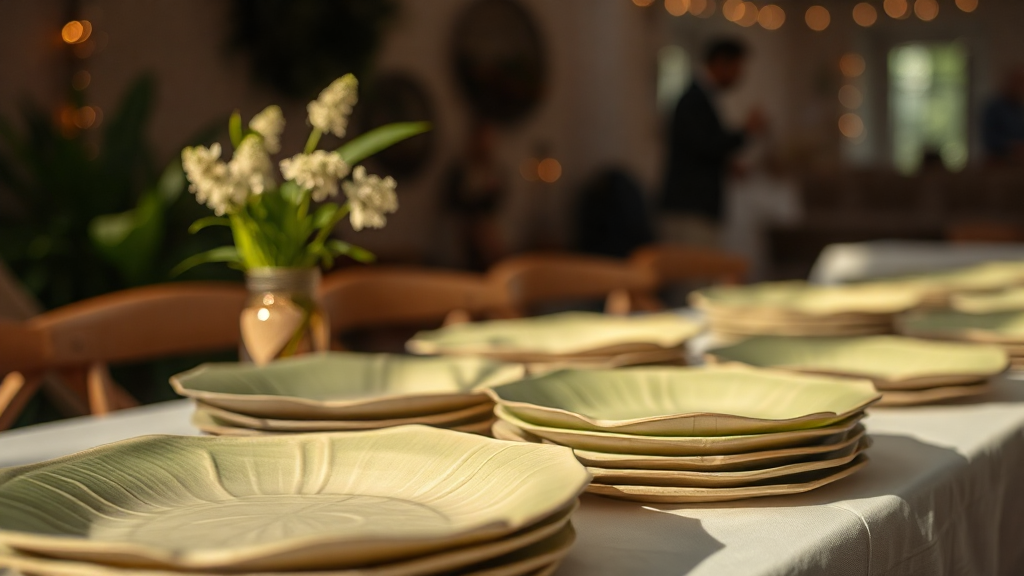
In a bustling hotel banquet hall in Singapore, an international sustainability conference concluded with a standing ovation—not just for the speakers, but for the innovative tableware. As hundreds of attendees finished their meals, they discovered something remarkable: their elegant “plates” were actually made from fallen areca palm leaves. Even more impressive? These sophisticated-looking servingware items would completely decompose within 60 days in a simple compost pile.
This scenario is becoming increasingly common as businesses worldwide face mounting pressure to eliminate single-use plastics. With plastic bans sweeping acros continents—from California’s progressive legislation to the European Union’s Single-Use Plastics Directive and India’s nationwide ban on certain plastic items—the food service industry finds itself at a critical crossroads.
The statistics are sobering: according to a UNEP report (rel=”nofollow”), over 380 million tons of plastic are produced annually worldwide, with food packaging accounting for a significant portion. For businesses serving food, the plastic plate problem has historically seemed insurmountable—until now.
Enter disposable leaf plates: nature’s ingenious solution to our modern waste dilemma. These remarkable servingware options are crafted from fallen leaves (typically areca palm or banana leaves) that would otherwise decompose on forest floors. Instead, these natural materials are collected, cleaned, heat-pressed into sturdy plates and bowls, and made available to forward-thinking businesses.
Unlike conventional disposables that linger in landfills for centuries, leaf plates return to the earth within weeks when properly composted. For businesses navigating complex sustainability goals, plastic reduction mandates, and consumer expectations, leaf plates offer a rare win-win solution that’s simultaneously practical, affordable, and genuinely eco-friendly.
But not all leaf plates are created equal. For businesses serious about sustainability and safety, FDA-certified leaf plates represent the gold standard—ensuring these natural products meet rigorous food safety requirements while delivering on environmental promises.
Conformidade Regulatória: FDA & LFGB Certifications for Disposable Leaf Plates

When serving food to customers, regulatory compliance isn’t optional—it’s essential. This is where FDA and LFGB certifications become crucial differentiators for disposable leaf plates in the commercial marketplace.
O FDA (Food and Drug Administration) (rel=”nofollow”) certification ensures that food-contact materials meet strict safety standards, protecting consumers from potential chemical leaching or contamination. For businesses, using FDA-certified leaf plates eliminates the regulatory uncertainty that can accompany some eco-friendly alternatives. This certification verifies that the processing methods, cleaning agents, and final products are safe for direct food contact—critical for everything from hot, oily foods to cold desserts.
Similarly, the LFGB (Lebensmittel- und Futtermittelgesetzbuch) certification, sometimes called the “German FDA,” imposes even stricter European standards on food-contact materials. Businesses seeking both domestic and international compliance appreciate dual-certified products that meet regulatory requirements acros multiple markets.
The busines risk of using non-certified alternatives is substantial. According to a 2022 industry survey, food service businesses using non-compliant packaging faced average penalties of $23,000 per violation in the United States alone, not counting reputational damage and potential litigation costs.
Consider the experience of Coastal Café, a chain of beach-adjacent restaurants that switched to non-certified “eco-friendly” plates in 2021, only to receive a regulatory warning and customer complaints about unusual tastes in certain foods. After switching to FDA-certified leaf plates, they not only resolved compliance issues but turned their sustainable servingware into a marketing advantage.
How Disposable Leaf Plates Compare to Other Eco Alternatives

The sustainable tableware landscape has expanded dramatically in recent years, giving businesses multiple options beyond traditional plastic. Understanding these alternatives helps businesses make informed decisions aligned with their specific needs and values.
| Recurso | Leaf Plates | Bagaço (cana-de-açúcar) | Bamboo Plates | PLA “Bioplástico” |
|---|---|---|---|---|
| ——— | ————- | ———————— | ————— | —————— |
| Tempo de compostagem | 4-6 weeks (home compostable) | 30-90 days (industrial) | 4-6 meses | 3-6 months (industrial only) |
| Oil/Hot Food Resistant | Excelente | Bom | Moderado | Variável |
| Visual Appeal | High (natural variations) | Moderate (uniform beige) | Moderado | Low (plastic-like) |
| Water Footprint | Muito baixo | Moderado | Moderado | Alto |
| Production Chemicals | Nenhum | Some | Some | Significant |
| Price Range (Wholesale) | Médio-alto | Baixo-médio | Médio | Baixo-médio |
| End-of-Life Options | Home compost, commercial compost | Commercial compost | Commercial compost | Apenas composto industrial |
An interesting statistic: A 2023 waste management study found that while 72% of businesses claimed to use “compostable” servingware, only 38% of these items were actually processed in appropriate composting facilities. Leaf plates offer an advantage here—they’ll break down in virtually any composting environment, even a simple backyard pile.
The visual appeal of leaf plates also creates a distinctive customer experience. Each plate features unique natural patterns and textures that complement organic and farm-to-table food presentations. Many restaurants that prioritize sustainable practices have discovered that leaf plates enhance perception of food quality and justify premium pricing.
Top Busines Benefits of Switching to Disposable Leaf Plates
Beyond environmental considerations, leaf plates offer compelling busines advantages that make them increasingly popular among forward-thinking enterprises.
First, they create powerful brand differentiation. In a market where sustainability claims are common but substantive action is rarer, genuinely compostable food service materials signal authentic commitment. Businesses report that highlighting their use of leaf plates in marketing materials generates positive social media attention and customer engagement.
Second, leaf plates offer remarkable versatility. Available in various sizes from appetizer plates to large dinner plates, and in different shapes including round, square, rectangular, and boat designs, they accommodate diverse serving needs. Custom branding options allow businesses to embos logos directly into the plates without additional chemicals or materials.
Terceiro, eles melhoram a apresentação dos alimentos. A estética natural e terrosa complementa experiências gastronômicas casuais e sofisticadas. Restaurantes do campo à mesa, empresas de catering e locais de eventos descobriram que os pratos de folhas elevam o valor percebido das suas ofertas, ao mesmo tempo que reforçam a sua narrativa de sustentabilidade.
Quarto, simplificam a gestão de resíduos. De acordo com um relatório da indústria hoteleira de 2023, as empresas que mudaram para utensílios de serviço totalmente compostáveis reduziram os seus custos de transporte de resíduos em uma média de 22% através da triagem simplificada e da redução da contaminação.
Finally, they help businesses future-proof against regulatory changes. The European Union’s Single-Use Plastics Directive and similar regulations worldwide are increasingly targeting conventional disposables with bans or taxes. By adopting compliant alternatives now, businesses avoid scrambling when new restrictions take effect.
The Four Seasons Resort in Bali achieved a 37% reduction in waste management costs after implementing a comprehensive leaf plate program for their outdoor dining venues, simultaneously increasing guest satisfaction scores for “commitment to sustainability” by 28 percentage points.
Environmental Impact: Why Disposable Leaf Plates Wins
The environmental credentials of disposable leaf plates stand out even among sustainable alternatives. Unlike conventional single-use tableware, leaf plates represent a true circular economy solution.
The raw materials—typically areca palm leaves—are collected after naturally falling from trees, requiring no deforestation or dedicated farming. This harvest-free approach contrasts sharply with paper plates, which consume substantial forest resources, and even with other plant-based alternatives like bagasse, which are agricultural byproducts but still part of resource-intensive farming systems.
O processo de fabricação de chapas de qualidade utiliza recursos mínimos. As folhas são limpas com água (geralmente água da chuva nas principais instalações), moldadas a quente sem produtos químicos ou adesivos e esterilizadas com luz ultravioleta ou vapor em vez de antimicrobianos químicos. Isto se traduz em uma pegada de carbono aproximadamente 83% menor que as placas de plástico convencionais e 57% menor que as placas de papel reciclado, de acordo com uma avaliação do ciclo de vida de 2022.
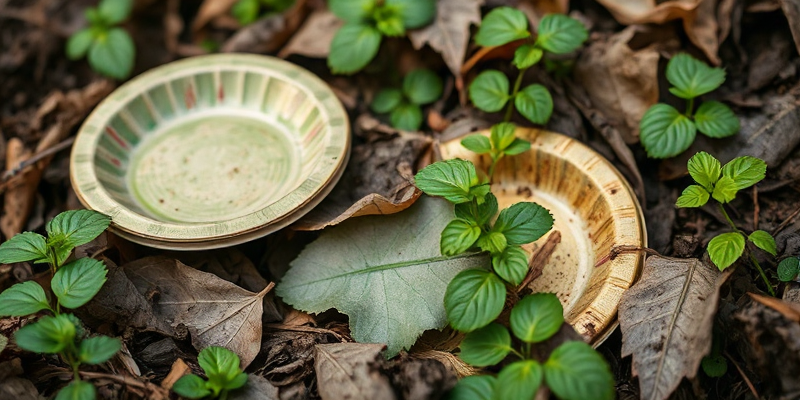
Perhaps most importantly, leaf plates addres the end-of-life issues that plague most disposables. Even products labeled “biodegradable” often require specific industrial conditions to break down properly. In contrast, leaf plates decompose in home compost systems within 4-6 weeks, returning valuable nutrients to the soil. For businesses without composting programs, leaf plates will still biodegrade in landfill conditions far faster than alternatives, though composting remains the optimal disposal method.
Case Study: Disposable Leaf Plates Succes in Action
A Emerald Events, uma empresa de catering premium que atende a área da Baía de São Francisco, enfrentou uma situação desafiadora em 2022. Seus clientes corporativos e de casamentos sofisticados exigiam cada vez mais práticas sustentáveis, mas seus utensílios de mesa “ecologicamente corretos” existentes pareciam institucionais e prejudicavam sua apresentação sofisticada de alimentos.
“Ficámos presos entre os nossos objetivos de sustentabilidade e a promessa de luxo da nossa marca”, explica Maria Rodriguez, Diretora de Operações da Emerald. “As placas de plástico recicláveis que usávamos também não combinavam.”
After discovering FDA-certified leaf plates, Emerald Events conducted a test at three corporate functions. The client feedback was immediate and overwhelmingly positive. Guests commented specifically on the elegant, natural appearance of the plates, with many assuming they were premium reusable tableware rather than compostable disposables.
Emerald made a complete switch to leaf plates for all their events, ordering custom sizes to match their specific menu requirements. Working with a certified supplier ensured consistent quality and regulatory compliance—critical for their food safety protocols.
Os resultados foram impressionantes em várias métricas:
- 94% positive client feedback specifically mentioning the sustainable tableware
- 32% reduction in waste disposal costs
- 47% increase in bookings that specifically cited sustainability as a selection factor
- $42,000 in additional revenue from clients willing to pay premium pricing for truly eco-friendly events
“The leaf plates have become part of our brand story,” Rodriguez notes. “They’re not just better for the environment—they’re better for our busines.”
perguntas frequentes
- Are leaf plates strong enough for heavy or wet foods?
- Absolutely! Quality leaf plates are surprisingly sturdy. The heat-pressing proces creates tableware that easily handles heavy curries, stews, and even soups when you choose deeper bowl designs. They won’t leak or get soggy during a typical meal service (30-45 minutes), making them reliable for everything from casual buffets to upscale plated service.
- How do leaf plates handle hot foods?
- Leaf plates handle heat exceptionally well—much better than conventional paper or plastic alternatives. They’re naturally resistant to temperatures up to 220°F (104°C) without warping or releasing any compounds. This makes them perfect for hot foods like grilled items, steamed vegetables, and even saucy dishes.
- What sizes and styles are available for wholesale orders?
- The standard wholesale range includes round plates (6″, 8″, 10″, and 12″ diameters), rectangular platters (various dimensions), bowl-shaped options for soups and stews, and specialized designs like leaf boats for appetizers or desserts. Custom sizes and shapes are available for orders above certain quantities, typically 10,000+ units.
- What is the minimum order quantity for businesses?
- Typical minimum orders start at 500-1,000 units for standard sizes and designs. For custom-embossed plates with busines logos, minimums typically start at 5,000 units. Volume discounts begin at 2,500 units and increase substantially at the 10,000, 25,000, and 100,000 unit levels.
- How should businesses store leaf plates?
- Store leaf plates in a cool, dry environment away from direct sunlight. While they naturally resist humidity better than paper products, extreme conditions can affect them over time. Proper storage ensures a shelf life of 12-18 months without any quality degradation. They don’t require specialized storage beyond standard food service inventory practices.
- Can leaf plates be used in microwaves or refrigerators?
- Leaf plates can be refrigerated without issue, making them excellent for cold foods and pre-plated service. However, they aren’t designed for microwave use. While they won’t release toxins like some plastics, microwaving may cause them to dry excessively and become brittle.
- How do leaf plates impact waste management for businesses?
- They significantly simplify waste management. For businesses with composting programs, leaf plates can go directly into commercial compost without sorting. For those without composting, they still reduce environmental impact in landfills. Many businesses report streamlined post-event cleanup and reduced staff time sorting waste.