As substâncias per e polifluoroalquil, comumente conhecidas como PFAS, são um grupo de produtos químicos sintéticos que se tornaram onipresentes em nosso mundo moderno. Esses “produtos químicos eternos” ganharam notoriedade devido à sua persistência no meio ambiente e aos potenciais riscos à saúde. Esta postagem explorará o que são PFAS, onde são encontrados, as preocupações ambientais e de saúde associadas e quais ações podem ser tomadas para reduzir a exposição.
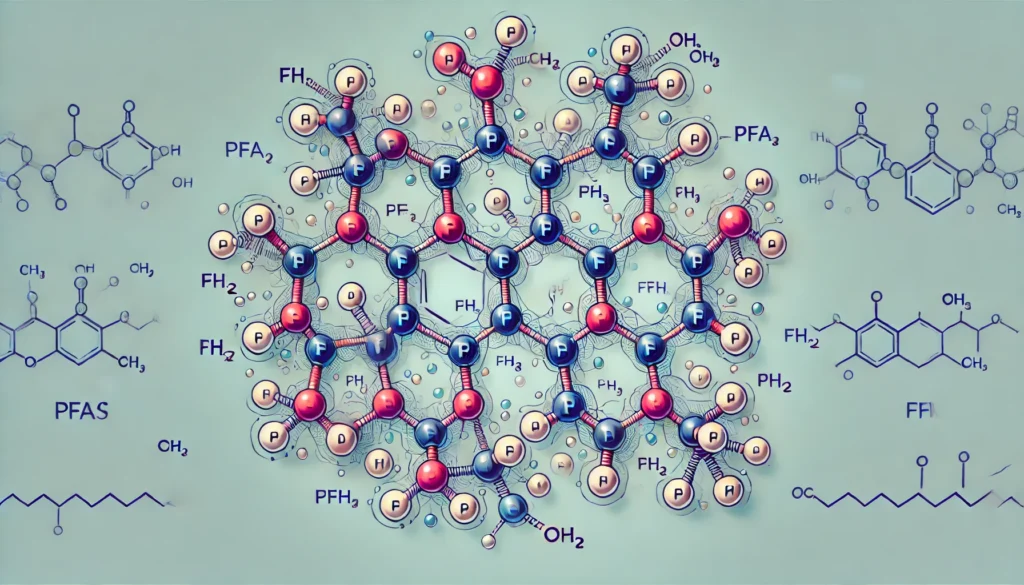
O que são PFAS?
PFAS are a family of over 7 million synthetic organofluorine compounds, each characterized by multiple fluorine atoms attached to an alkyl chain. These chemicals were first developed in the 1930s and gained widespread use in the 1950s due to their unique properties, which include:
- Water resistance
- Heat resistance
- Stain resistance
- Low friction
These properties made PFAS ideal for use in a wide range of consumer and industrial products. Non-stick cookware, firefighting foam, water-resistant clothing, and food packaging are just a few examples of products that rely on the stability and resistance offered by PFAS. These chemicals have enabled advancements in manufacturing but have also introduced significant challenges to human health and environmental sustainability.
Origin of PFAS
PFAS were initially discovered in the 1930s, and their industrial applications began shortly thereafter. Their resistance to heat, water, and oil made them indispensable in many applications, leading to their widespread use across various industries starting in the 1950s.
Características principais
- Water resistance: PFAS chemicals repel water, which makes them valuable in products like waterproof clothing, food packaging, and outdoor gear.
- Heat resistance: They are highly heat-resistant, which is why they are used in non-stick cookware and firefighting foam.
- Stain resistance: PFAS are used in fabrics, carpets, and upholstery to resist stains, which has made them popular in consumer goods.
- Low friction: PFAS chemicals create low friction surfaces, making them useful in coatings for industrial applications, as well as in consumer products like waterproof footwear.
Common Products Containing PFAS
- Non-stick cookware (e.g., Teflon)
- Waterproof fabrics and carpets
- Firefighting foam
- Cosmetics and personal care products
- Food packaging materials

Onde os PFAS são encontrados?
PFAS are present in numerous everyday items, many of which are commonly used and difficult to avoid. The widespread use of PFAS has led to contamination of air, water, soil, and even rainwater.
Consumer Products
O PFAS pode ser encontrado em vários produtos de consumo, incluindo:
- Non-stick cookware: Comumente usados para cozinhar, produtos como panelas revestidas de Teflon contêm PFAS.
- Tecidos resistentes à água: Muitas jaquetas, barracas e tapetes para atividades ao ar livre usam PFAS para fornecer resistência à água.
- Food packaging: Embalagens de fast-food, sacos de pipoca para micro-ondas e caixas de pizza costumam ser tratados com PFAS para torná-los resistentes a gordura e manchas.
- Cosmetics: Certos cosméticos, incluindo base e rímel, podem conter PFAS devido à sua capacidade de fornecer cobertura duradoura.
Contaminação Ambiental
A contaminação por PFAS não se limita aos produtos em que são encontrados. Esses produtos químicos contaminaram:
- Água potável: Os PFAS são frequentemente encontrados em fontes de água próximas a locais industriais, bases militares ou aeroportos onde foi usada espuma de combate a incêndios.
- Air and soil: Due to their persistence, PFAS chemicals can spread globally through air and water currents, accumulating in soil and entering food chains.
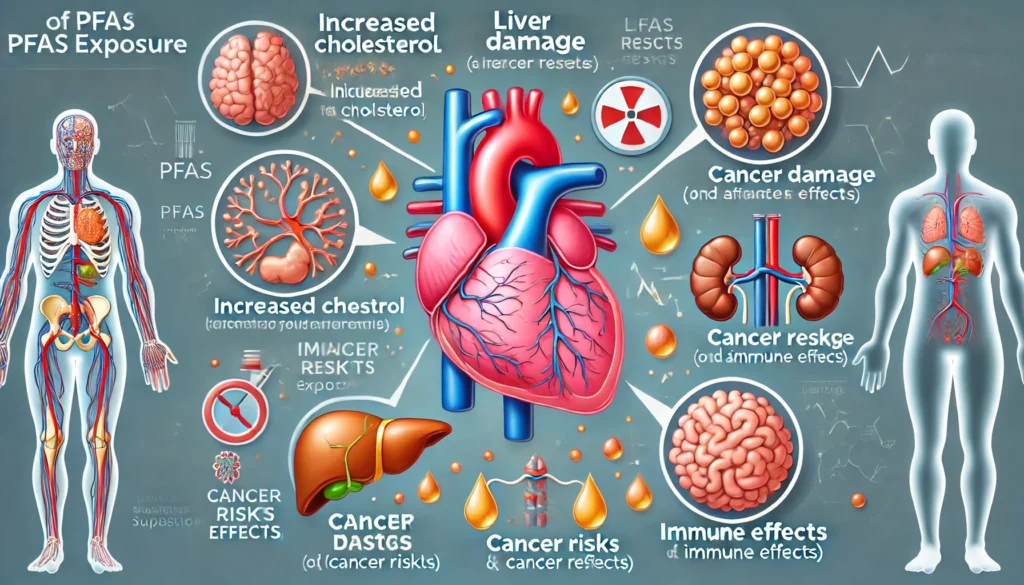
Preocupações com a saúde associadas à exposição ao PFAS
While the properties of PFAS make them useful in products, their persistence in the environment and human body makes them a significant health concern. Research has linked PFAS exposure to a range of health issues.
Health Issues
PFAS exposure has been linked to the following health problems:
- Increased cholesterol levels
- Decreased vaccine response in children
- Liver damage and changes in liver enzymes
- Increased risk of certain cancers, including kidney and testicular cancer
- Reproductive and developmental effects on children and fetuses
- Immune system effects, making individuals more susceptible to infections
Certain populations, such as children, pregnant women, and individuals living near contaminated sites, are particularly vulnerable to these health effects.

Impacto Ambiental do PFAS
PFAS are known as “forever chemicals” because they break down extremely slowly in the environment. This persistence allows them to:
- Accumulate in the food chain: PFAS can move up the food chain, contaminating wildlife and, eventually, humans who consume these animals.
- Contaminate drinking water sources: PFAS have been found in groundwater and surface water, posing risks to public health.
- Spread globally: Through air and water currents, PFAS can travel far from their original source, contaminating distant ecosystems and human populations.
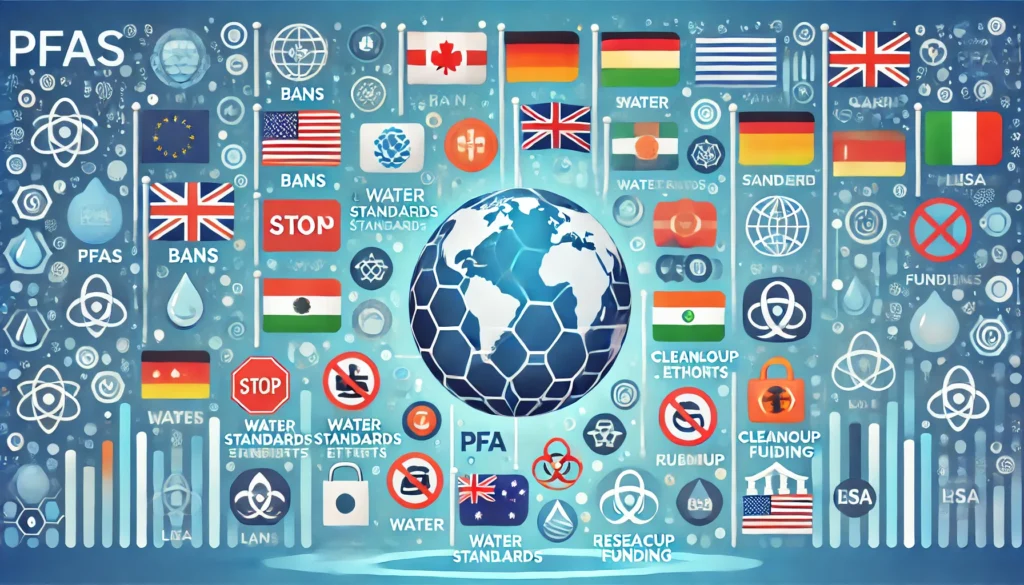
Tendências e ações regulatórias sobre PFAS
As the risks of PFAS chemicals become more widely recognized, governments around the world have begun to take action to regulate their use and mitigate their impact.
Regulations and Standards
- Restricting use in consumer products: Many countries are beginning to ban or restrict the use of PFAS in certain consumer products, such as food packaging and textiles.
- Setting drinking water standards: Regulatory bodies, such as the U.S. Environmental Protection Agency (EPA), have established guidelines for allowable PFAS levels in drinking water.
- Funding research and cleanup efforts: Governments are investing in research to better understand PFAS and develop technologies for remediation and cleanup of contaminated environments.
Global Efforts
Countries such as Sweden, Canada, and the European Union have been at the forefront of regulating PFAS, instituting stricter controls on their use and setting lower permissible levels in drinking water.
O que você pode fazer?
While it may be difficult to completely avoid PFAS, there are several steps you can take to minimize exposure.
For Consumers:
- Use PFAS-free cookware: Choose alternatives to non-stick cookware, such as stainless steel or cast-iron pans.
- Avoid stain-resistant treatments: Opt for natural fabrics and avoid furniture or carpets with stain-resistant coatings.
- Check labels: Be mindful of products like cosmetics and personal care items that may contain PFAS. Look for products labeled as PFAS-free.
- Filter your drinking water: If you live in an area where PFAS contamination has been detected, consider installing a water filtration system that can remove these chemicals.

Para empresas:
- Audite sua cadeia de suprimentos: Certifique-se de que os produtos utilizados nas suas operações, como embalagens ou têxteis, não contenham PFAS.
- Invista em alternativas: Sempre que possível, escolha materiais livres de PFAS em seus produtos e serviços.
- Eduque os funcionários: Conscientizar os funcionários sobre os riscos potenciais do PFAS e incentivar alternativas mais seguras.
Perguntas frequentes
- O que são produtos químicos PFAS? PFAS são um grande grupo de produtos químicos sintéticos que têm sido usados em produtos por suas propriedades de resistência à água, ao calor e a manchas.
- Por que os PFAS são chamados de “produtos químicos para sempre”? Os PFAS são chamados de “produtos químicos eternos” porque não se decompõem facilmente no meio ambiente e se acumulam ao longo do tempo, tanto no ecossistema quanto no corpo humano.
- Onde os PFAS são comumente encontrados em produtos de uso diário? Os PFAS são encontrados em panelas antiaderentes, roupas impermeáveis, embalagens de alimentos, espuma de combate a incêndios e alguns cosméticos.
- Quais problemas de saúde estão ligados à exposição ao PFAS? A exposição ao PFAS tem sido associada ao aumento do colesterol, danos ao fígado, riscos de câncer e problemas de desenvolvimento, especialmente em crianças.
- Como o PFAS impacta o meio ambiente? Os PFAS são persistentes no meio ambiente, contaminando as fontes de água, o solo e a cadeia alimentar, afetando a vida selvagem e as populações humanas.
- Que ações os governos estão tomando para regulamentar o PFAS? Os governos estão a restringir a utilização de PFAS em produtos de consumo, a estabelecer padrões para a água potável e a financiar esforços de investigação e limpeza.
- Posso evitar PFAS na minha vida diária? Sim, utilizando panelas sem PFAS, evitando tecidos resistentes a manchas, verificando rótulos de produtos de higiene pessoal e filtrando a água potável.
- Quais são as alternativas aos produtos que contêm PFAS? As alternativas sem PFAS incluem panelas de aço inoxidável ou ferro fundido, tecidos naturais para estofados e embalagens biodegradáveis para alimentos.
Conclusão
PFAS chemicals have become an integral part of modern life, but their persistence and potential health risks are causing growing concern. As research continues and regulations evolve, staying informed about PFAS is crucial for making safer choices for ourselves and the environment.