Material comparison for buyers
فوری جواب: both are plant-based single-use straws, and neither is universally better. Coffee-ground straws offer a distinctive coffee-brown look and a coffee-loop story but can transfer aroma or flavour and have composition that varies by binder; sugarcane-derived straws are more neutral in colour and taste and carry a broader agricultural-waste story. Choose by menu fit, brand narrative, sensory behaviour in your real drinks, and the specification, food-contact and claim evidence for the exact SKU – then test samples.
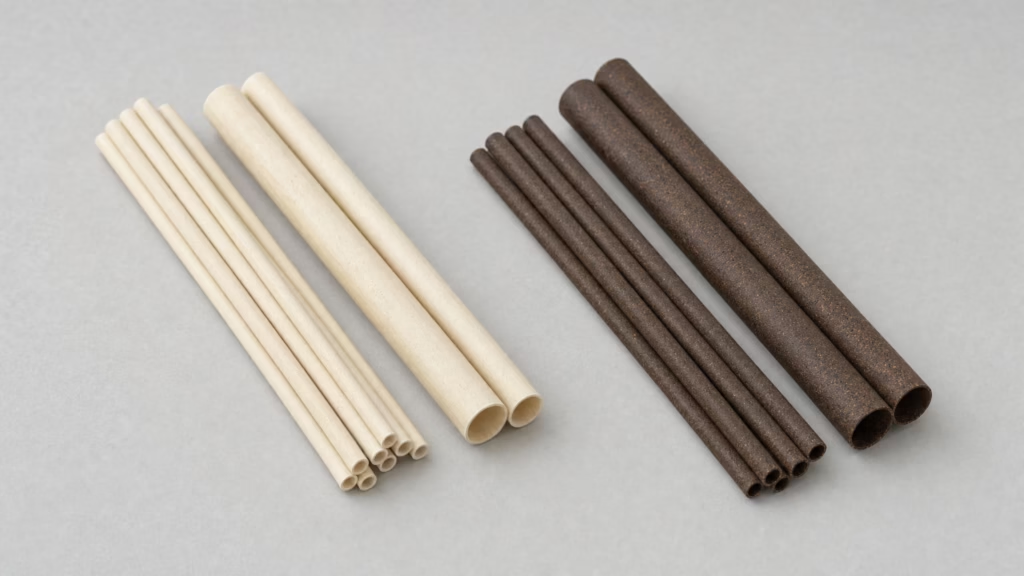
Buyers comparing these two materials often look for a single winner. The honest answer is that the winner depends on the outlet, the drinks, the brand story and the evidence. This guide puts the two materials side by side for cafes and hotels, then gives a decision checklist you can run with samples and documents.
For the full sourcing workflow, use the sugarcane straw buyer guide اور coffee-ground straw buyer guide; for what is inside a coffee-ground straw, use the composition guide.
What each material is
Sugarcane-derived
Made from sugarcane fibre and pulp residues. Neutral light colour, broad agricultural-waste story, available in regular, smoothie and wide formats.
Coffee-ground based
Made from spent coffee grounds combined with a binder such as PLA, starch or cellulose. Distinctive coffee-brown appearance with a coffee-loop narrative.
Both are single-use plant-based formats. Neither name is a specification: composition, binder, additives and documents must be verified per SKU.
Side-by-side at a glance
| فیکٹر | Sugarcane-derived | Coffee-ground |
|---|---|---|
| Appearance | Neutral, light colour | Distinctive coffee-brown |
| Source story | Broad agricultural waste and fibre story | Coffee-loop narrative, upcycled coffee |
| Composition variability | Lower; fibre and pulp-based | Higher; binder, coffee percentage and additives vary |
| Sensory behaviour | Generally neutral in taste and odour | Can transfer coffee aroma or flavour; test hot and cold |
| Common formats | 6mm, 8mm, 12mm wrapped and unwrapped | 6mm, 8mm, 12mm wrapped and unwrapped |
| Claim and document file | Same structure per SKU | Same structure per SKU |
This table is a starting point. Individual SKUs can differ, so treat it as a checklist, not a verdict.
| Cafe situation | What to consider |
|---|---|
| Iced coffee and espresso bars | Coffee-ground straws reinforce the coffee story; confirm the straw does not add unwanted flavour to the drink |
| Smoothie and juice bars | Neutral sugarcane-derived formats suit fruit-forward drinks; 8mm is a starting point |
| Self-serve counters | Wrapped formats in either material; wrapper print can carry the brand |
| Takeaway and delivery | Wrapped formats protect the straw in transit; brand wrapper in either material |
| Hot drinks | Confirm the material and binder behave in hot drinks; hot-drink boundaries are SKU-specific |
For the cafe workflow details, the iced-coffee cafe guide covers sizing and service; the boba guide covers inclusion drinks.
Hotels: match the material to the outlet
| Hotel outlet | What to consider |
|---|---|
| Room service | Wrapped formats; neutral or branded wrapper; either material works |
| Breakfast buffet | Wrapped formats at drink stations; neutral look often preferred |
| Pool bar | Coffee-ground straws add a distinctive look to coffee-based pool drinks; confirm sensory fit |
| Restaurant and events | Brand-led choice; wrapped formats for guest-facing service |
| Sustainability reporting | Choose the material whose story and evidence your property can document per SKU |
For the full hospitality sourcing method, use the ہوٹل سٹرا تھوک گائیڈ.
Composition and claims
The materials differ in composition risk and claims:
- Coffee-ground: ask for the binder identity, coffee percentage, additives and allergen or animal-origin declarations. The composition guide has the full question list.
- Sugarcane-derived: ask for the fibre source, binder and additives, and confirm the finished-article specification including wrapper and print.
- Claims: biodegradable, compostable and food-contact wording follow the exact SKU and environment. Use the دعوی کی توثیق گائیڈ اور food-contact checklist.
Sensory differences matter more than colour
The visible difference is colour, but the practical difference is sensory. Coffee-ground straws can release coffee aroma or flavour into drinks, especially hot or neutral-tasting beverages. Sugarcane-derived straws are usually more neutral. Because formulations vary, run a side-by-side sensory test on the production recipe at serving temperature, with still and carbonated drinks, and record taste, odour and residue over the full expected contact time.
Peer-reviewed research confirms that spent-coffee-ground straws are an active formulation area with food-grade biopolymers; that is exactly why the binder and sensory evidence matter per SKU. See the primary source below.
Cost and sourcing
There is no universal price gap between the two materials. Ask the supplier for per-1,000-unit pricing for the exact SKUs you are comparing, including wrapper material, carton economics, freight and disposal. Then add the service-model cost: wrapped for guest-facing outlets, unwrapped for controlled staff service.
The drinking straw RFQ template structures the side-by-side comparison.
Formats to compare
The links below connect this guide to current NatureBioEco SKUs in both materials. They are comparison candidates, not automatic fit declarations – confirm composition, wrapper and current documents with samples before approval.
| فارمیٹ | Sugarcane-derived (unwrapped / wrapped) | Coffee-ground (unwrapped / wrapped) |
|---|---|---|
| 6mm x 210mm | 6mm x 210mm بغیر لپیٹے گنے سے حاصل شدہ تنکے wrapped: 6mm x 210mm انفرادی طور پر لپیٹے ہوئے گنے سے حاصل شدہ تنکے |
6mm x 210mm بغیر لپیٹے ہوئے کافی-گراؤنڈ اسٹرا wrapped: 6mm x 210mm انفرادی طور پر لپیٹے ہوئے کافی گراؤنڈ اسٹرا |
| 8mm x 210mm | 8mm x 210mm بغیر لپیٹے گنے سے حاصل شدہ تنکے wrapped: 8mm x 210mm انفرادی طور پر لپیٹے ہوئے گنے سے حاصل شدہ تنکے |
8 ملی میٹر x 210 ملی میٹر بغیر لپیٹے ہوئے کافی گراؤنڈ اسٹرا wrapped: 12 ملی میٹر x 210 ملی میٹر انفرادی طور پر لپیٹے ہوئے کافی گراؤنڈ اسٹرا |
| 12mm x 210mm | 12mm x 210mm بغیر لپیٹے گنے سے حاصل شدہ تنکے wrapped: 12mm x 210mm انفرادی طور پر لپیٹے ہوئے گنے سے حاصل شدہ تنکے |
12 ملی میٹر x 210 ملی میٹر بغیر لپیٹے ہوئے کافی گراؤنڈ اسٹرا wrapped: 12 ملی میٹر x 210 ملی میٹر انفرادی طور پر لپیٹے ہوئے کافی گراؤنڈ اسٹرا |
A seven-question decision checklist
- Which outlets and drinks need straws, and what is the brand story?
- Does the material’s appearance fit the menu and property?
- Has the sensory test passed on the production recipe at serving temperature?
- Is the composition and binder documented for the exact SKU?
- Are the food-contact reports for the finished article (including wrapper and print) in place?
- Are compostability or biodegradable claims matched to the SKU and environment?
- Does the per-1,000 cost comparison include wrapper, carton, freight and disposal?
Run a side-by-side sample test
- Request paired samples. The same size and wrapper format from both materials, ideally from the same production batch.
- Test the production recipe. Serving temperature, still and carbonated drinks, and the full expected contact time.
- Run a blind sensory panel. Staff compare taste, odour and mouthfeel without knowing which material is which.
- Check handling. Ice, sealed-film lids, staff motion, storage and dispenser fit.
- Review the document file. Specification, composition, food-contact reports and claims per SKU.
- Freeze the decision. Record the winning material, SKU, wrapper and document versions in the purchase specification.
اکثر پوچھے گئے سوالات
Which is better, sugarcane or coffee-ground straws?
Neither is universally better. Both are plant-based single-use formats. The choice depends on the look and story you want (neutral sugarcane vs distinctive coffee-brown with a coffee-loop narrative), the menu and service model, sensory behaviour in your actual drinks, and the composition, food-contact and claim evidence for the exact SKU. Test samples and review documents before deciding.
Do coffee-ground straws make drinks taste like coffee?
Some formats transfer a coffee aroma or flavour, and the effect can differ between hot and cold drinks. Sugarcane-derived straws are generally more neutral. Because formulations vary, test the production recipe at serving temperature and record taste, odour and residue over the full expected contact time.
Are coffee-ground straws more expensive than sugarcane straws?
Pricing depends on composition, binder, wrapper, print and order volume, so there is no universal gap. Ask the supplier for per-1,000-unit pricing for the exact SKUs you are comparing, including wrapper material, carton economics and disposal.
Can I use the same sizes for both materials?
Yes. Both materials are available in the same nominal formats, for example 6mm, 8mm and 12mm at common lengths. Diameter and length are menu decisions; material is a separate decision. Confirm inner/outer diameter, tolerance and cup/lid fit per SKU.
Do sugarcane and coffee-ground straws need different documents?
No, the document file is the same type per SKU: specification, Declaration of Compliance or equivalent, food-contact test reports for the finished article, batch records and claim evidence. The composition differs, so the specification and reports must match the exact material, binder, wrapper and print.
Which material is better for hotels?
Both are used in hospitality. Wrapped formats suit guest-facing service in either material. The choice is usually brand-led: coffee-ground straws tell a coffee-loop story for coffee-heavy outlets, while sugarcane-derived straws give a neutral look across room service, buffets and events. Verify rules, guest expectations and evidence per property.
Primary sources
- Peer-reviewed research on biodegradable straws made from spent coffee grounds with food-grade biopolymers – Processes (MDPI), 2025
Decide with samples, not adjectives
Run the sensory test, review the composition sheet and the document file, and compare per-1,000 pricing for the exact SKUs. Coffee-ground and sugarcane-derived straws both have a place; the right one for your cafe or hotel is the one that fits the menu, the story and the evidence.
