Hospitality application guide
فوری جواب: hotels use straws across room service, breakfast buffets, pool bars, restaurants, minibars and events, and the sourcing decision is a menu-mapping exercise, not a single purchase. Map each drink outlet and format, choose individually wrapped straws for guest-facing service, connect the choice to your sustainability program and local rules, and verify the specification, food-contact documents and claims per SKU before approving samples.
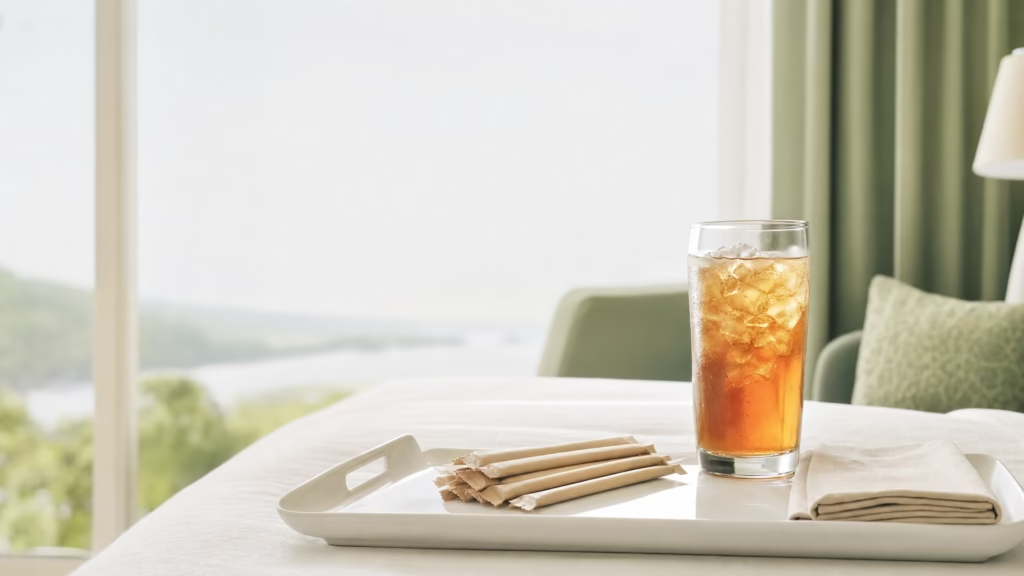
Hotel straw procurement looks different from a cafe order. The same property serves a breakfast buffet, room service trays, a pool bar, a restaurant, events and sometimes a minibar, each with different cups, lids, drinks and guest expectations. Add sustainability commitments, plastic-reduction targets and local single-use rules, and the straw decision becomes part of the property’s operating standards rather than a line item.
This guide walks through where straws are used, how to map sizes and formats, how wrapped and unwrapped fit hospitality, how sustainability programs and rules change the choice, and what to put in the procurement file.
Where hotels actually use straws
Guest-facing
Trays with wrapped straws, branded where possible, protected from handling between kitchen and room.
Self-serve
Wrapped straws at drink stations or single-straw dispensers; cups and lids vary by outlet.
Staff-served
Staff add straws to drinks or set them with place settings; event menus drive volume peaks.
Start by listing every outlet and every drink that needs a straw. A hotel rarely needs one size; it needs a small set of formats mapped to actual menu items, cups and lids.
| Menu area | Typical drinks | Starting format |
|---|---|---|
| Room service | Water, juice, soft drinks, iced tea | 6mm wrapped, length matched to cup |
| Breakfast buffet | Juice, water, smoothie bar | 6mm wrapped; 8mm wrapped for smoothies |
| Pool bar | Iced cocktails, smoothies, sodas | 6mm/8mm wrapped; 12mm for inclusions |
| Restaurant | Regular cold drinks, iced coffee | 6mm wrapped for self-serve; unwrapped for staff service where controlled |
| Events and banquets | Bar service, mocktails, branded drinks | Wrapped formats, branded wrappers optional |
| Minibar and wellness | Water, juice, small formats | Short wrapped formats if straws are included |
Confirm inner and outer diameter, length, wall thickness and tolerance with the actual cup and lid used in each outlet. The 6mm vs 8mm vs 12mm size guide covers the selection method and approval test.
Wrapped vs unwrapped for hospitality
Guest-facing service in hotels is predominantly wrapped: the wrapper is a handling barrier on trays, buffets and event tables, and printed wrappers carry the property’s brand and sustainability message. Unwrapped formats can be efficient in staff-served outlets where straws are placed into drinks under controlled handling, or at a single-straw dispenser.
The wrapped vs unwrapped packaging guide covers the decision factors, cost questions and specification fields. For hotels, add the tray and storage flow: how many straws travel per room-service tray, how the buffet station restocks, and how events scale.
Sustainability programs and single-use rules
Major hotel groups have publicly committed to reducing single-use plastic straws, and many jurisdictions restrict or ban plastic straws, with hospitality often a focus. Practical implications for buyers:
- Check the current rules for each destination: the EU Single-Use Plastics framework, national bans and local ordinances can differ by market and straw type.
- Connect straw evidence to your property’s plastic-reduction and ESG reporting: record the straw type, the waste stream and the supporting documents per SKU.
- Move from open self-serve straws to an on-request policy where that fits guest expectations and local rules, with clear staff training and signage.
- Keep the claim file separate: compostability, biodegradable and food-contact wording each need their own evidence. The دعوی کی توثیق گائیڈ اور EU importer guide cover the review.
Published examples show hotel groups and resorts replacing plastic straws with paper, plant-based or reusable alternatives and reporting the reduction. None of those examples applies to a specific NatureBioEco SKU; every property should verify its own evidence.
On-request policies done well
An on-request policy is a service decision, not just a cost cut. Hotels that implement it well usually combine three things:
- Signage and staff language. Guests learn that straws are available on request, in a positive and clear tone.
- A consistent supply point. Wrapped straws stocked at the same place in each outlet, so staff can find them quickly.
- Guests with specific needs. Accessibility and children’s menus are handled by the same on-request path without friction.
Measure the result: straw usage before and after the policy, guest feedback and waste volume. Keep the data for your sustainability report.
Cost and waste measurement
Compare straw cost the way a hotel actually buys it: per-1,000-unit pricing for the exact SKU wrapped and unwrapped, including wrapper material, carton economics, freight and disposal. Add the labour and guest-experience cost of each service model rather than comparing a single unit price.
Also track the waste stream. A wrapped straw adds one wrapper per unit; a buffet that switches to single-straw dispensers changes packaging and disposal. The drinking straw RFQ template structures the commercial comparison.
Procurement checklist for hotel buyers
- Outlet and drink map with sizes, cups and lids.
- Wrapped or unwrapped decision per outlet, with dispenser notes where relevant.
- Material choice: sugarcane-derived or coffee-ground, with the composition questions answered.
- Specification: inner/outer diameter, length, wall thickness, tolerance, wrapper material and print.
- Documents: specification, Declaration of Compliance or equivalent, food-contact reports for the finished straw, batch records, change notice.
- Claim evidence: compostability or biodegradable wording matched to the exact SKU and environment.
- Commercial comparison: per-1,000 pricing, MOQ, carton, freight and disposal per format.
- Sample plan: wrapped and unwrapped samples from the same batch, tested in real outlets.
For the document review, use the food-contact document checklist; for the material decision, the sugarcane buyer guide، coffee-ground buyer guide اور composition guide.
Hospitality formats to compare
The links below connect this guide to current NatureBioEco wrapped SKUs. They are comparison candidates, not automatic fit declarations – confirm wrapper material, print and current documents with samples before approval.
| Current format | Suggested first use |
|---|---|
| 6mm x 210mm انفرادی طور پر لپیٹے ہوئے گنے سے حاصل شدہ تنکے | 6mm wrapped – regular drinks, takeaway |
| 8mm x 210mm انفرادی طور پر لپیٹے ہوئے گنے سے حاصل شدہ تنکے | 8mm wrapped – smoothies and thicker drinks |
| 12mm x 210mm انفرادی طور پر لپیٹے ہوئے گنے سے حاصل شدہ تنکے | 12mm wrapped – cocktails and inclusions |
| 6mm x 210mm انفرادی طور پر لپیٹے ہوئے کافی گراؤنڈ اسٹرا | 6mm wrapped coffee-ground – coffee programs |
| 12 ملی میٹر x 210 ملی میٹر انفرادی طور پر لپیٹے ہوئے کافی گراؤنڈ اسٹرا | 12mm wrapped coffee-ground – boba and events |
اکثر پوچھے گئے سوالات
Should hotels use wrapped or unwrapped straws?
Individually wrapped straws are the common choice for guest-facing service: room service trays, breakfast buffets, pool bars, minibars and events, because the wrapper is a handling barrier and carries the hotel brand. Unwrapped straws can work where staff place straws into drinks under controlled handling. The wrapped vs unwrapped guide explains the trade-offs.
Do hotels need different straw sizes?
Yes. Map the menu first: 6mm for regular cold drinks and room-service water/juice, 8mm for smoothies and thicker drinks, 12mm for boba, jellies or drinks with inclusions. Confirm inner and outer diameter, length and tolerance with the actual cup and lid.
How do hotels handle ‘straws on request’ policies?
Many properties move from open self-serve straws to an on-request policy: staff ask guests whether a straw is needed, or straws are placed with drinks only on request. Signage, staff training and a consistent supply point are part of the policy. Check local rules and guest expectations for your market.
What documents should a hotel buyer request for straws?
Request the current specification, a Declaration of Compliance or equivalent statement, food-contact test reports for the finished straw (material, wrapper, ink, coating), batch records and a change-notice process, matched to the exact SKU. The food-contact checklist covers the full review.
Do straw bans apply to hotels?
Many jurisdictions restrict single-use plastic straws, and hospitality is often explicitly covered or a major target. The EU Single-Use Plastics rules and various national and local bans apply to certain straw types and formats. Verify the current rules for each destination and keep the evidence file for each straw SKU.
How should hotels compare straw cost?
Compare per-1,000-unit pricing for the exact SKU wrapped and unwrapped, including wrapper material, carton economics and disposal. Add the labour and guest-experience cost of your service model rather than comparing a single unit price.
Primary sources
- Hotel industry reporting on plastic-straw phase-outs – Green Lodging News
- Hotel group example of replacing designated plastic amenities and straws – Miyako Hotels SDGs
Ask, test, then standardise
Map the outlets, choose formats by menu and service model, connect the evidence to your sustainability program, and freeze the specification, wrapper and documents in the property standard. Hotel straw sourcing is a system decision; the samples, documents and cost comparison are how you make it defensible.