I. Introduzione
Immagina questo: sei in un bar alla moda e ti senti eco-consapevole mentre sorseggi il tuo latte ghiacciato con una cannuccia "verde". Ma è davvero biodegradabile? O compostabile? E aspetta: non sono la stessa cosa? Se sei perplesso, non sei solo.
Nel 2023, uno sconcertante 76% dei consumatori credeva erroneamente che tutte le cannucce biodegradabili fossero compostabili (Global Packaging Insights Report, 2024). Questa confusione non è solo semantica: sta portando a milioni di cannucce nelle discariche che non si decompongono come previsto.
Oggi stiamo tagliando il marketing green-washed per rivelare la verità sulle cannucce biodegradabili e compostabili. Alla fine, sarai in grado di fare scelte veramente ecologiche e magari anche di istruire il tuo barista locale.

II. Definizione dei termini chiave
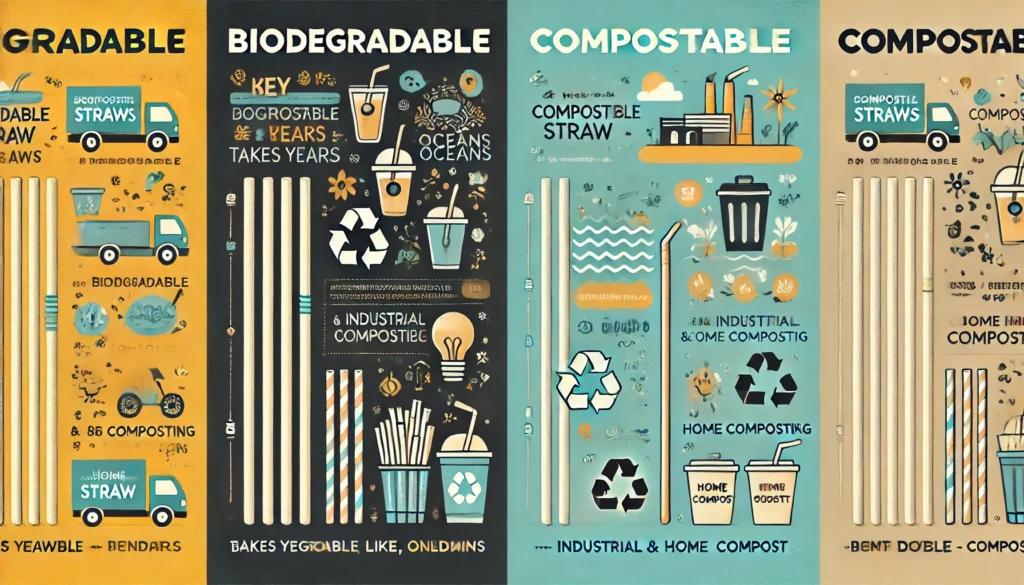
Biodegradabile: riciclaggio naturale (molto lento).
Definizione: Materiali che possono essere scomposti da microrganismi (batteri o funghi) in acqua, anidride carbonica e biomassa.
La cattura: Nessun periodo di tempo prestabilito. Una cannuccia “biodegradabile” potrebbe impiegare da 3 mesi a oltre 100 anni per decomporsi.
Compostabile: la corsia preferenziale di Madre Natura
Definizione: Materiali che si decompongono in componenti non tossici (acqua, anidride carbonica, biomassa) in circa 90 giorni in condizioni di compostaggio commerciale.
Differenza chiave: Gli articoli compostabili sono sempre biodegradabili, ma gli articoli biodegradabili non sono sempre compostabili.
La certificazione è importante
- Cercare:
- Logo del Biodegradable Products Institute (BPI).
- Etichette TÜV Austria “OK compost HOME” o “OK compost INDUSTRIAL”.
Approfondimento degli esperti: La dottoressa Jane Foster, scienziata ambientale a Stanford, avverte: "Molte etichette "biodegradabili" sono essenzialmente un greenwashing. Senza certificazioni specifiche, queste affermazioni sono spesso prive di significato in termini pratici. "

III. Processi di decomposizione: una storia di due cannucce
| Condizione | Cannuccia biodegradabile | Cannuccia compostabile certificata |
|---|---|---|
| Discarica | 100+ anni | 100+ anni |
| Compost da cortile | 1-5 anni | 6-12 mesi (se certificato compostabile domestico) |
| Compost industriale | 6 mesi – 5 anni | 90 giorni o meno |
| Oceano | 2-5 anni | 6 mesi – 2 anni |
Caso di studio: Il rapporto del 2024 di Ocean Conservancy ha rilevato che le cannucce di plastica “biodegradabili” sono intatte dopo 3 anni in ambienti marini, mentre le opzioni compostabili certificate hanno mostrato un degrado significativo entro 18 mesi.

IV. Prestazioni e certificazione nel mondo reale
Il problema del PLA
Le cannucce di acido polilattico (PLA) sono spesso etichettate come "biodegradabili", creando confusione:
- Controllo della realtà: Il PLA richiede che gli impianti di compostaggio industriale (che raggiungono i 60°C/140°F) si rompano in un lasso di tempo ragionevole.
- Problema di disponibilità: Solo il 27% delle famiglie statunitensi ha accesso al compostaggio industriale (US Composting Council, 2024).
Storia di successo della canna da zucchero
Le cannucce a base di canna da zucchero di produttori rinomati spesso portano sia certificazioni di compostaggio domestico che industriale:
- Green Sip Co. Esempio: Le loro cannucce si decompongono in 90 giorni negli impianti industriali e in 180 giorni nei contenitori per il compost domestico.
- Verificato da terze parti: La certificazione TÜV Austria garantisce che le prestazioni nel mondo reale corrispondano a quelle dichiarate.
V. Implicazioni per i consumatori: fare scelte informate
Come individuare le cannucce veramente ecologiche:
- Cerca le certificazioni: BPI, TÜV Austria o altre verifiche riconosciute di terze parti.
- Controlla le condizioni di decomposizione: Richiede strutture industriali o si decomporrà in un contenitore per il compost domestico?
- Considera l'infrastruttura locale: Se nella tua zona non è presente il compostaggio industriale, opta per le opzioni compostabili domestiche.
- Attenzione alle affermazioni vaghe: “Eco-friendly” e “Verde” sono termini di marketing, non standard.
Impatto ambientale
- Biodegradabile (non certificato): Spesso finiscono nelle discariche, rilasciando potenzialmente metano mentre si decompongono lentamente.
- Compostabile certificato: Può essere trasformato in terreno ricco di sostanze nutritive se smaltito correttamente, chiudendo il ciclo dei rifiuti.
VI. Conclusione: un sorso verso la sostenibilità
Il punto? “Biodegradabile” e “compostabile” non sono termini intercambiabili. Le cannucce veramente compostabili, supportate da certificazioni adeguate, offrono una soluzione di fine vita molto più rapida e più rispettosa dell'ambiente.
Punti chiave:
- Cerca sempre certificazioni specifiche per il compostaggio.
- Considera le opzioni locali di gestione dei rifiuti quando scegli le cannucce.
- Ricorda: la cannuccia più ecologica è quella che riutilizzi o non usi affatto.
La tua missione verde: La prossima volta che ti viene offerta una cannuccia “biodegradabile”, chiedi informazioni sulle sue certificazioni. Condividi ciò che hai imparato, perché un consumatore informato è l’arma migliore contro il greenwashing.
Partecipa alla conversazione: Hai riscontrato etichette fuorvianti sulle cannucce? Condividi le tue esperienze nei commenti qui sotto!
Domande frequenti
- Qual è la differenza tra compostaggio industriale e domestico?
- Il compostaggio industriale avviene in ambienti controllati con elevati livelli di calore e ossigeno, scomponendo i materiali compostabili entro 90 giorni. Il compostaggio domestico è un processo più lento che dipende dalle condizioni locali e potrebbe non degradare efficacemente alcune plastiche compostabili.
- Come si confrontano le cannucce di canna da zucchero con altre opzioni ecologiche?
- Le cannucce di canna da zucchero sono durevoli, naturalmente biodegradabili e compostabili sia in ambienti domestici che industriali. A differenza delle cannucce di carta, durano più a lungo nei liquidi e, a differenza del PLA, non richiedono strutture di compostaggio specializzate.
- Le cannucce in PLA sono davvero migliori per l'ambiente rispetto alla plastica normale?
- Sebbene le cannucce in PLA provengano da fonti vegetali, necessitano comunque di compostaggio industriale per degradarsi correttamente. Se smaltiti nelle discariche o negli oceani, possono persistere per anni, rendendoli non migliori della plastica tradizionale.
- Come posso compostare le cannucce a casa?
- Solo le cannucce certificate compostabili in casa si decompongono nei contenitori per il compost del cortile. Tagliateli in pezzi più piccoli e assicurate un'adeguata aerazione e un equilibrio di umidità nel cumulo di compost per una decomposizione efficiente.
- Cosa succede alle cannucce compostabili nell’oceano?
- Le cannucce compostabili richiedono condizioni controllate per decomporsi. Negli ambienti marini si degradano molto più lentamente, durando potenzialmente per anni e comportando comunque rischi per la vita marina.
- Quali ristoranti sono all’avanguardia nell’uso della paglia veramente compostabile?
- Molti ristoranti e catene di caffè attenti all’ambiente sono passati alle cannucce compostabili certificate. Marchi come Starbucks, Pret A Manger e i caffè locali focalizzati sulla sostenibilità stanno facendo il cambiamento.
- Come leggo e comprendo le certificazioni di compostaggio?
- Cerca certificazioni come BPI (Biodegradable Products Institute) per la compostabilità industriale e OK Compost HOME di TÜV Austria per la compostabilità domestica. Questi indicano che le cannucce soddisfano rigorosi criteri di degradazione.
- Qual è il confronto dell'impronta di carbonio tra cannucce biodegradabili e compostabili?
- Le cannucce compostabili realizzate con materiali naturali come la canna da zucchero hanno un'impronta di carbonio inferiore rispetto al PLA o alla plastica biodegradabile, poiché si basano su risorse rinnovabili e si decompongono naturalmente.
Fonti:
- Rapporto Global Packaging Insights, 2024
- Consiglio statunitense sul compostaggio, 2024
- Rapporto annuale sulla tutela dell'oceano, 2024
- Standard del Biodegradable Products Institute (BPI), 2023
- Linee guida per la certificazione TÜV Austria, 2024