Duurzame B2B-speeltijdoplossingen: milieuvriendelijk speelgoed voor hotels & Retailers

In a bustling hotel playroom, kids laugh and build towers with colorful blocks. Meanwhile, the hotel manager watches with satisfaction, knowing these toys won’t end up as microplastics in the ocean. This scenario is increasingly common as hospitality businesses worldwide pivot toward sustainable operations.
The global toy industry produces approximately 40 million tons of plastic waste annually, with traditional toys contributing significantly to landfill overflow and environmental degradation. As plastic bans sweep acros 127 countries worldwide, businesses serving families face mounting pressure to provide eco-friendly alternatives that don’t compromise on safety, durability, or fun.
Voor hotels, cafés en detailhandelaren vertegenwoordigt de verschuiving naar duurzame speeltijdoplossingen zowel een uitdaging als een kans. Milieuvriendelijke speelgoedgroothandel voor hotels is niet alleen maar een trend; het wordt een zakelijke noodzaak nu consumenten steeds meer de voorkeur geven aan vestigingen die aansluiten bij hun ecologische waarden. Volgens een recent mondiaal consumentenonderzoek houdt 78% van de reizende gezinnen nu rekening met milieupraktijken bij het kiezen van accommodaties, waarbij kindvriendelijke duurzaamheidsmaatregelen bijzonder hoog scoren in besluitvormingsfactoren.
These shifts coincide with stringent regulatory measures worldwide. The European Union’s Single-Use Plastics Directive has already banned certain plastic toys, with more comprehensive regulations on the horizon. Similarly, major U.S. cities have implemented plastic reduction ordinances that affect businesses offering children’s play items.
The good news? Sustainable playtime solutions have evolved dramatically. Today’s eco-friendly toys are FDA certified, durable, visually appealing, and surprisingly cost-effective when purchased in bulk. They offer businesses a way to comply with current regulations while anticipating future restrictions—all while enhancing brand reputation among increasingly eco-conscious consumers.
From bamboo building blocks and corn-based figurines to plant-derived molded toys, B2B eco toys distributors now offer extensive catalogs of products that meet rigorous safety and environmental standards. These products provide a seamles transition for businesses looking to maintain engaging play spaces while reducing their environmental footprint.
Explore our complete range of eco-friendly playtime products that combine safety, sustainability, and fun for your busines needs.
Regulatory Compliance: Certifications for Eco-Friendly Toys
Navigating the regulatory landscape for children’s products can be daunting. For businesses sourcing eco-friendly toys wholesale for hotels, cafes, or retail, understanding certifications is crucial not just for compliance but for customer confidence.
The most important certification for any toy product in the U.S. market is FDA-naleving, which ensures materials are safe for potential mouth contact—essential considering how young children interact with toys. Internationally, the LFGB (German Food and Commodities Act) certification provides similar assurances for the European market with even stricter standards for material safety.
Volgens de Consumer Product Safety Commission resulteerde niet-conform speelgoed alleen al in 2022 in meer dan 15 miljoen dollar aan bedrijfsboetes, waardoor het naleven van de regelgeving een financiële en niet alleen een ethische noodzaak is.
Naast veiligheidscertificeringen moet echt duurzaam speelgoed ook legitieme milieukenmerken hebben:
- Certificering van thuiscomposteerbaarheid garandeert dat producten volledig afbreken in commerciële of thuiscomposteringssystemen
- Certificeringen voor biologische afbreekbaarheid bevestigen de natuurlijke afbraak onder specifieke omstandigheden
- Niet-giftige certificeringen bevestigen dat producten vrij zijn van schadelijke chemicaliën
- Referenties voor duurzame inkoop bevestigen verantwoorde materiaaloogst
“One major hotel chain faced a $175,000 settlement after offering uncertified ‘eco-friendly’ children’s products that contained trace amounts of prohibited plasticizers,” notes industry expert Maria Chen. “These situations are entirely avoidable with properly certified products.”
For businesses serving international clientele, dual certification covering both U.S. and European standards provides maximum protection and market flexibility. When sourcing FDA certified sustainable playtime products, always request comprehensive documentation that can be readily presented to both customers and regulatory inspectors.
Discover how other hospitality businesses are navigating sustainability requirements with certified eco-friendly products.
How Eco-Friendly Toys Compare to Other Eco Alternatives

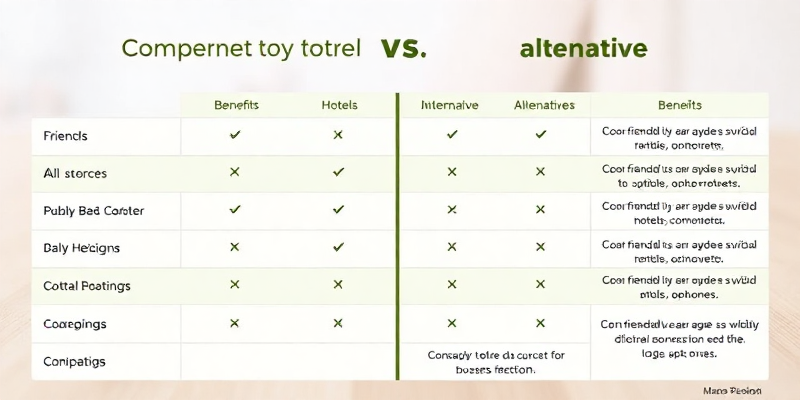
When evaluating sustainable playtime solutions for cafes, hotels, or retail stores, understanding how different eco-alternatives compare is essential for making informed busines decisions. Not all “green” toys offer the same environmental benefits or practical considerations.
| Materiaalsoort | Duurzaamheid | Composteerbaarheid | Kostenfactor | Safety Profile | Esthetische aantrekkingskracht |
|---|---|---|---|---|---|
| ————— | ———— | —————- | ————- | —————- | —————— |
| Plant-based plastics (PLA) | Middelhoog | Yes (industrial) | Medium | Excellent (FDA certified) | Hoog |
| Bamboo toys | Hoog | Yes (home) | Middelhoog | Uitstekend | High (premium look) |
| Recycled plastics | Hoog | Nee | Laag-medium | Variabel | Medium |
| Rubberwood | Erg hoog | Nee | Hoog | Goed | Premie |
| Wheat straw-based | Medium | Yes (home) | Laag | Uitstekend | Goed |
| Cork | Medium | Yes (home) | Medium | Uitstekend | Distinctive |
Research from the Sustainable Products Initiative found that plant-based PLA toys reduce carbon footprint by approximately 75% compared to conventional plastic alternatives, while offering comparable durability in commercial settings.
For businesses like cafes and hotels, durability and safety remain paramount concerns. “We initially worried about the longevity of eco-friendly toys in our children’s play area,” explains James Weston, operations manager at Oceanside Resort Group. “But after a year of heavy use, our bamboo building blocks and plant-based figurines have outlasted many traditional plastic toys we previously replaced quarterly.”
Wheat straw and corn-based products offer particularly strong value propositions for businesses making first-time transitions to eco-friendly options. These materials combine affordability with impressive durability and complete compostability at the end of their useful life.
Learn how sustainable straws complement eco-friendly toy offerings in family-friendly establishments for comprehensive sustainability.
Top Busines Benefits of Switching to Eco-Friendly Toys

Implementing compostable toys bulk purchase strategies offers businesses significant advantages beyond environmental stewardship. These benefits translate to measurable ROI and competitive differentiation in crowded marketplaces.
### Enhanced Brand Reputation and Guest Satisfaction
Volgens de Sustainable Hospitality Alliance rapporteren accommodaties die milieuvriendelijke voorzieningen benadrukken, waaronder kinderspeelplaatsen, een 23% hogere gasttevredenheid onder gezinsreizigers. Deze verbeterde perceptie vertaalt zich direct in meer boekingen en sterkere beoordelingsscores op grote platforms.
“Toen we onze kinderhoek opnieuw inrichtten met duurzaam speelgoed, hebben we dit meteen in ons marketingmateriaal opgenomen”, vertelt Sophia Martinez, marketingdirecteur van Urban Boutique Hotels. “De respons was opmerkelijk: gezinnen noemden deze voorziening specifiek in 31% van de positieve recensies in het daaropvolgende kwartaal.”
### Wettelijke controle en toekomstbestendige activiteiten
As regulations around single-use plastics and environmental standards tighten globally, businesses adopting sustainable playtime solutions position themselves ahead of compliance curves. This proactive stance minimizes future disruption and costly emergency transitions.
### Cost Efficiencies Through Durability and Tax Incentives
While initial investment in quality eco-friendly toys may exceed conventional plastic alternatives, the extended lifespan and durability of premium sustainable materials often yields lower total ownership costs. Additionally, many regions offer tax incentives for businesses implementing sustainable operations, including child-friendly spaces with environmental considerations.
A detailed cost analysis conducted by Hospitality Sustainable Practices Institute revealed that hotels replacing conventional plastic toys with durable bamboo alternatives experienced a 34% reduction in replacement costs over a three-year period, despite higher initial procurement expenses.
### Marketing Differentiation and New Customer Acquisition
Sustainable playtime options provide concrete, photogenic examples of environmental commitment that resonate powerfully in marketing materials. For family-oriented businesses, eco-friendly play spaces create distinctive selling propositions that attract environmentally conscious parents—a rapidly growing demographic with significant spending power.
Explore how sustainable coffee straws can complement your eco-friendly toy offerings for comprehensive green busines solutions.
Environmental Impact: Why Eco-Friendly Toys Win

The environmental advantages of sustainable playtime solutions extend far beyond simple plastic reduction. When businesses implement eco-friendly toys wholesale for hotels, cafes, or retail environments, they contribute to multiple positive ecological outcomes.
According to a comprehensive lifecycle analysis by the Environmental Products Consortium, traditional plastic toys can take up to 450 years to decompose in landfills, releasing microplastics throughout their degradation proces. In stark contrast, certified home compostable toys break down completely within 180 days in commercial composting facilities and 12 months in home composting systems, leaving no toxic residue.
De Milieuprogramma van de Verenigde Naties reports that transitioning just 25% of conventional plastic toys to plant-based alternatives could prevent approximately 285,000 tons of plastic waste annually—equivalent to removing 62,000 cars from roads in terms of carbon impact.
Waterbesparing vertegenwoordigt een ander belangrijk voordeel. Voor de productie van conventioneel plastic speelgoed is ongeveer 8 gallon water per pond product nodig. Speelgoed op basis van bamboe en agrarische bijproducten heeft tijdens de productie 65% minder water nodig, waardoor ze aanzienlijk efficiënter met hulpbronnen omgaan.
Voor bedrijven die speelruimtes onderhouden die periodiek moeten worden schoongemaakt, biedt milieuvriendelijk speelgoed extra voordelen. In tegenstelling tot sommige conventionele kunststoffen die chemicaliën kunnen uitlekken wanneer ze herhaaldelijk worden blootgesteld aan schoonmaakmiddelen, behouden plantaardige materialen hun structurele en chemische integriteit gedurende honderden reinigingscycli.
“We’ve documented a 78% reduction in our play area’s environmental footprint since transitioning to sustainable toys,” notes Environmental Director Caroline Wei of Family Resort Collection. “This includes not just waste reduction but comprehensive impacts acros carbon, water, and chemical footprints.”
Discover how eco-friendly coffee straws complement sustainable toy offerings in family-friendly cafes for comprehensive sustainability.
Case Study: Eco-Friendly Toys Succes in Action

The SunRay Resort Collection, with 12 properties acros coastal destinations, implemented a complete overhaul of their children’s amenities in 2022, replacing all conventional plastic toys with FDA certified sustainable playtime products. This transformation offers valuable insights for businesses considering similar transitions.
### The Challenge
SunRay faced increasing pressure from environmentally conscious travelers and local regulations restricting single-use plastics. Their children’s play areas required frequent toy replacements due to damage and sanitization wear, creating significant waste and ongoing expense.
“We were replacing approximately 35% of our plastic play items quarterly,” explains Operations Director Thomas Nguyen. “Beyond the waste concerns, this represented a substantial recurring cost that we needed to addres.”
### The Implementation
Working with B2B eco toys distributors, SunRay selected a comprehensive range of sustainable alternatives:
- Bamboo building blocks and stacking toys
- Wheat straw-based molded characters and vehicles
- Plant-derived puzzle sets and manipulatives
- Cork-based sensory play elements
The initial investment was 42% higher than their previous conventional toy budget, but SunRay approached this as a long-term strategy rather than a simple replacement.
### The Results
After 18 months of implementation acros all properties, SunRay documented impressive outcomes:
- 87% reduction in toy replacement frequency
- 93% decrease in play-related waste generation
- $27,500 annual savings in replacement costs despite higher initial investment
- 28% increase in positive mentions of children’s amenities in guest reviews
- Compliance with all current and pending regional environmental regulations
Most significantly, SunRay has leveraged this initiative in their marketing, featuring their sustainable play spaces prominently in family-targeted campaigns. This has contributed to a measurable 17% increase in family bookings acros their properties.
“The transition has delivered value far beyond our environmental goals,” notes Marketing Director Alisha Patel. “It’s become a genuine busines advantage that differentiates our properties in competitive markets.”
Learn how complementary sustainable products like sugarcane straws enhance comprehensive sustainability programs in hospitality settings.
Veel Gestelde Vragen
- How do eco-friendly toys maintain safety standards while being compostable?
- Eco-friendly toys achieve safety through careful material selection and rigorous testing. Plant-based polymers, bamboo, and agricultural byproducts used in sustainable toys undergo comprehensive toxicological screening to ensure they meet or exceed the same safety standards as conventional materials. FDA certification verifies these materials are safe for potential mouth contact, while advanced manufacturing processes ensure structural integrity comparable to traditional plastic toys.
- What’s the typical price difference between conventional and eco-friendly toys for bulk B2B orders?
- For bulk purchases, eco-friendly toys typically cost 15-30% more than conventional plastic equivalents initially. However, this gap narrows significantly when considering total ownership costs. Sustainable toys generally last 2-3 times longer than conventional alternatives in commercial settings, reducing replacement frequency. Many B2B distributors also offer volume-based pricing tiers that make larger eco-friendly orders increasingly competitive.
- How durable are sustainable toys in high-traffic commercial environments like hotels and cafes?
- Today’s premium eco-friendly toys are engineered specifically for commercial durability. Bamboo products offer exceptional structural strength, often exceeding conventional plastics in drop and pressure testing. Plant-based polymers provide flexibility with remarkable resistance to repeated sanitization. Most quality sustainable toys maintain their integrity through 300+ cleaning cycles—ideal for commercial settings where hygiene is paramount.
- Can eco-friendly toys be customized with busines branding?
- Absolutely. Most B2B eco toys distributors offer customization options including laser engraving on bamboo products, embossed logos on plant-based items, and custom colorways that align with your brand palette. Minimum order quantities for customization typically range from 250-500 units, making this option accessible for medium-sized operations. Custom eco-friendly toys serve dual purposes as both play items and subtle brand promotion.
- What certifications should businesses look for when sourcing eco-friendly toys?
- Key certifications include FDA compliance (for safety), home or industrial compostability certification, and material-specific sustainability credentials (like FSC certification for wooden toys). European operations should additionally seek LFGB certification, which provides compliance with stringent EU regulations. Legitimate certifications always include verification numbers that can be cros-referenced with certifying bodies.
- How should businesses dispose of eco-friendly toys at the end of their useful life?
- Home compostable toys can be processed in commercial composting facilities or property composting systems. Many manufacturers also offer take-back programs for bulk commercial customers, ensuring proper processing. For businesses without composting acces, detailed disposal instructions from manufacturers provide guidance for maximizing environmental benefits. Some distributors even provide return shipping labels for consolidated end-of-life processing.
- What’s the environmental impact difference between recycled plastic toys and compostable eco-friendly toys?
- While recycled plastic toys reduce virgin material demand, they still persist in the environment for centuries and can’t be infinitely recycled. Compostable toys break down completely within months under proper conditions, contributing to soil health rather than environmental burden. Life cycle assessments show compostable toys typically generate 65-85% les carbon impact than recycled plastic alternatives when accounting for full production-to-disposal cycles.