Nachhaltige B2B-Playtime-Lösungen: umweltfreundliches Spielzeug für Hotels & Einzelhändler

In einem belebten Hotelspielzimmer lachen Kinder und bauen Türme aus bunten Blöcken. Währenddessen schaut der Hotelmanager zufrieden zu, denn er weiß, dass diese Spielzeuge nicht als Mikroplastik im Meer landen. Dieses Szenario tritt immer häufiger auf, da Hotelunternehmen weltweit auf nachhaltige Abläufe umsteigen.
Die weltweite Spielzeugindustrie produziert jährlich etwa 40 Millionen Tonnen Plastikmüll, wobei traditionelles Spielzeug erheblich zur Überflutung von Mülldeponien und zur Umweltzerstörung beiträgt. Da in 127 Ländern weltweit Plastikverbote gelten, stehen Unternehmen, die Familien betreuen, zunehmend unter Druck, umweltfreundliche Alternativen anzubieten, die keine Kompromisse bei Sicherheit, Haltbarkeit oder Spaß eingehen.
Für Hotels, Cafés und Einzelhändler stellt der Wandel hin zu nachhaltigen Spiellösungen sowohl eine Herausforderung als auch eine Chance dar. Der Großhandel mit umweltfreundlichem Spielzeug für Hotels ist nicht nur ein Trend, sondern wird zu einer geschäftlichen Notwendigkeit, da Verbraucher zunehmend Betriebe bevorzugen, die sich an ihren Umweltwerten orientieren. Laut einer aktuellen weltweiten Verbraucherumfrage berücksichtigen mittlerweile 78 % der reisenden Familien bei der Wahl ihrer Unterkunft Umweltpraktiken, wobei kinderfreundliche Nachhaltigkeitsmaßnahmen bei den Entscheidungsfaktoren einen besonders hohen Stellenwert haben.
Diese Verschiebungen fallen mit strengen Regulierungsmaßnahmen weltweit zusammen. Die Einwegkunststoffrichtlinie der Europäischen Union hat bestimmte Plastikspielzeuge bereits verboten, umfassendere Vorschriften sind in Planung. In ähnlicher Weise haben große US-Städte Verordnungen zur Reduzierung von Kunststoffen erlassen, die sich auf Unternehmen auswirken, die Spielartikel für Kinder anbieten.
Die gute Nachricht? Nachhaltige Spielzeitlösungen haben sich dramatisch weiterentwickelt. Die heutigen umweltfreundlichen Spielzeuge sind FDA-zertifiziert, langlebig, optisch ansprechend und überraschend kostengünstig, wenn sie in großen Mengen gekauft werden. Sie bieten Unternehmen die Möglichkeit, aktuelle Vorschriften einzuhalten und gleichzeitig künftige Beschränkungen zu antizipieren – und gleichzeitig den Ruf der Marke bei zunehmend umweltbewussten Verbrauchern zu verbessern.
Von Bambusbausteinen und Figuren auf Maisbasis bis hin zu aus Pflanzen gewonnenen geformten Spielzeugen bieten B2B-Ökospielzeughändler jetzt umfangreiche Produktkataloge an, die strenge Sicherheits- und Umweltstandards erfüllen. Diese Produkte bieten einen nahtlosen Übergang für Unternehmen, die ansprechende Spielräume beibehalten und gleichzeitig ihren ökologischen Fußabdruck reduzieren möchten.
Entdecken Sie unser komplettes Sortiment an umweltfreundlichen Spielprodukten die Sicherheit, Nachhaltigkeit und Spaß für die Anforderungen Ihres Unternehmens vereinen.
Einhaltung gesetzlicher Vorschriften: Zertifizierungen für umweltfreundliches Spielzeug
Sich in der Regulierungslandschaft für Kinderprodukte zurechtzufinden, kann entmutigend sein. Für Unternehmen, die umweltfreundliche Spielzeuge im Großhandel für Hotels, Cafés oder den Einzelhandel beschaffen, ist das Verständnis von Zertifizierungen nicht nur für die Einhaltung der Vorschriften, sondern auch für das Vertrauen der Kunden von entscheidender Bedeutung.
Die wichtigste Zertifizierung für jedes Spielzeugprodukt auf dem US-Markt ist FDA-KonformitätDadurch wird sichergestellt, dass die Materialien sicher für potenziellen Mundkontakt sind – wichtig, wenn man bedenkt, wie kleine Kinder mit Spielzeug interagieren. International bietet die LFGB-Zertifizierung (Lebensmittel- und Bedarfsgegenständegesetz) ähnliche Garantien für den europäischen Markt mit noch strengeren Standards für die Materialsicherheit.
Nach Angaben der Consumer Product Safety Commission führten nicht konforme Spielzeuge allein im Jahr 2022 zu Bußgeldern in Höhe von über 15 Millionen US-Dollar, was die Einhaltung gesetzlicher Vorschriften zu einer finanziellen und nicht nur ethischen Notwendigkeit macht.
Über Sicherheitszertifizierungen hinaus sollten wirklich nachhaltige Spielzeuge legitime Umwelteigenschaften aufweisen:
- Die Zertifizierung der Heimkompostierbarkeit stellt sicher, dass Produkte in gewerblichen oder privaten Kompostierungssystemen vollständig zerfallen
- Zertifizierungen zur biologischen Abbaubarkeit bestätigen die natürliche Zersetzung unter bestimmten Bedingungen
- Ungiftige Zertifizierungen bestätigen, dass die Produkte frei von schädlichen Chemikalien sind
- Referenzen zur nachhaltigen Beschaffung zeugen von einer verantwortungsvollen Materialernte
„Eine große Hotelkette musste mit einer Abfindung in Höhe von 175.000 US-Dollar rechnen, nachdem sie nicht zertifizierte ‚umweltfreundliche‘ Kinderprodukte angeboten hatte, die Spuren verbotener Weichmacher enthielten“, bemerkt Branchenexpertin Maria Chen. „Diese Situationen sind mit ordnungsgemäß zertifizierten Produkten völlig vermeidbar.“
Für Unternehmen, die internationale Kunden bedienen, bietet die Doppelzertifizierung, die sowohl US-amerikanische als auch europäische Standards abdeckt, maximalen Schutz und Marktflexibilität. Fordern Sie bei der Beschaffung von FDA-zertifizierten nachhaltigen Spielprodukten immer eine umfassende Dokumentation an, die sowohl Kunden als auch Aufsichtsbehörden problemlos vorgelegt werden kann.
Entdecken Sie, wie andere Hotelunternehmen mit Nachhaltigkeitsanforderungen umgehen mit zertifizierten umweltfreundlichen Produkten.
Wie umweltfreundliche Spielzeuge im Vergleich zu anderen Öko-Alternativen verglichen werden

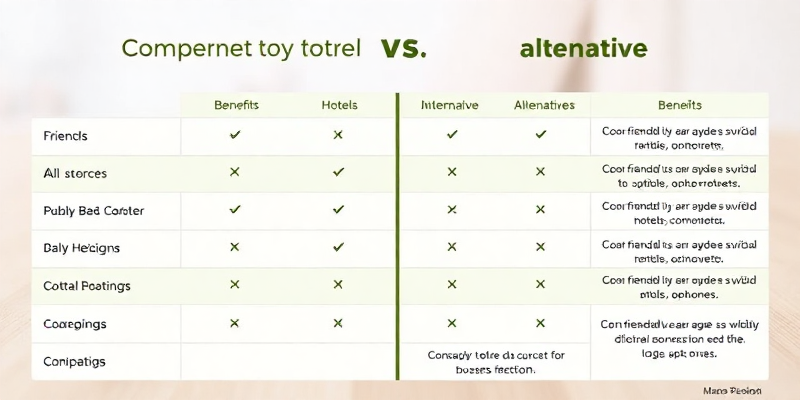
Bei der Bewertung nachhaltiger Spiellösungen für Cafés, Hotels oder Einzelhandelsgeschäfte ist es wichtig zu verstehen, wie verschiedene Öko-Alternativen im Vergleich abschneiden, um fundierte Geschäftsentscheidungen treffen zu können. Nicht alle „grünen“ Spielzeuge bieten die gleichen Umweltvorteile oder praktischen Überlegungen.
| Materialtyp | Haltbarkeit | Kompostabilität | Kostenfaktor | Sicherheitsprofil | Ästhetischer Anreiz |
|---|---|---|---|---|---|
| ——————St | —————St | —————- | —————- | —————- | ———————St |
| Pflanzenbasierte Kunststoffe (PLA) | Mittelhoch | Ja (industriell) | Medium | Ausgezeichnet (FDA-zertifiziert) | Hoch |
| Bambusspielzeug | Hoch | Ja (Zuhause) | Mittelhoch | Exzellent | Hoch (Premium-Look) |
| Recycelte Kunststoffe | Hoch | NEIN | Niedrig-Mittel | Variable | Medium |
| Gummibaum | Sehr hoch | NEIN | Hoch | Gut | Prämie |
| Auf Weizenstrohbasis | Medium | Ja (Zuhause) | Niedrig | Exzellent | Gut |
| Kork | Medium | Ja (Zuhause) | Medium | Exzellent | Unverwechselbar |
Untersuchungen der Sustainable Products Initiative ergaben, dass pflanzliches PLA-Spielzeug den CO2-Fußabdruck im Vergleich zu herkömmlichen Kunststoffalternativen um etwa 75 % reduziert und gleichzeitig eine vergleichbare Haltbarkeit in kommerziellen Umgebungen bietet.
Für Unternehmen wie Cafés und Hotels bleiben Haltbarkeit und Sicherheit oberste Priorität. „Anfangs machten wir uns Sorgen um die Langlebigkeit umweltfreundlicher Spielzeuge in unserem Kinderspielbereich“, erklärt James Weston, Betriebsleiter der Oceanside Resort Group. „Aber nach einem Jahr starker Beanspruchung haben unsere Bambusbausteine und Figuren auf Pflanzenbasis viele traditionelle Plastikspielzeuge überdauert, die wir zuvor vierteljährlich ausgetauscht haben.“
Produkte auf Weizenstroh- und Maisbasis bieten besonders starke Wertversprechen für Unternehmen, die zum ersten Mal auf umweltfreundliche Optionen umsteigen. Diese Materialien vereinen Erschwinglichkeit mit beeindruckender Haltbarkeit und vollständiger Kompostierbarkeit am Ende ihrer Nutzungsdauer.
Erfahren Sie, wie nachhaltige Strohhalme das umweltfreundliche Spielzeugangebot in familienfreundlichen Einrichtungen ergänzen für umfassende Nachhaltigkeit.
Die wichtigsten Geschäftsvorteile der Umstellung auf umweltfreundliches Spielzeug

Die Umsetzung von Großkaufstrategien für kompostierbares Spielzeug bietet Unternehmen erhebliche Vorteile, die über den Umweltschutz hinausgehen. Diese Vorteile führen zu einem messbaren ROI und einer Wettbewerbsdifferenzierung auf überfüllten Marktplätzen.
### Erhöhter Markenruf und Gästezufriedenheit
Nach Angaben der Sustainable Hospitality Alliance verzeichnen Unterkünfte, die umweltfreundliche Annehmlichkeiten, darunter Spielbereiche für Kinder, hervorheben, eine um 23 % höhere Gästezufriedenheitsrate bei Familienreisenden. Diese verbesserte Wahrnehmung führt direkt zu mehr Buchungen und besseren Bewertungsergebnissen auf wichtigen Plattformen.
„Als wir unsere Kinderecke mit nachhaltigem Spielzeug umgestaltet haben, haben wir es sofort in unseren Marketingmaterialien erwähnt“, erzählt Sophia Martinez, Marketingleiterin von Urban Boutique Hotels. „Die Resonanz war bemerkenswert – Familien erwähnten diese Annehmlichkeit im darauffolgenden Quartal in 31 % der positiven Bewertungen ausdrücklich.“
### Regulatorische Prüfung und zukunftssicherer Betrieb
Da sich die Vorschriften für Einwegkunststoffe und die Umweltstandards weltweit verschärfen, sind Unternehmen, die nachhaltige Spiellösungen einführen, der Einhaltung von Vorschriften immer einen Schritt voraus. Diese proaktive Haltung minimiert zukünftige Störungen und kostspielige Notübergänge.
### Kosteneffizienz durch Haltbarkeit und Steueranreize
Während die anfängliche Investition in hochwertiges, umweltfreundliches Spielzeug die Kosten für herkömmliche Kunststoffalternativen übersteigen kann, führt die längere Lebensdauer und Haltbarkeit hochwertiger nachhaltiger Materialien häufig zu niedrigeren Gesamtbetriebskosten. Darüber hinaus bieten viele Regionen steuerliche Anreize für Unternehmen, die eine nachhaltige Geschäftstätigkeit umsetzen, einschließlich kinderfreundlicher Räume mit Umweltaspekten.
Eine detaillierte Kostenanalyse des Hospitality Sustainable Practices Institute ergab, dass Hotels, die herkömmliches Plastikspielzeug durch langlebige Bambusalternativen ersetzen, trotz höherer anfänglicher Beschaffungskosten über einen Zeitraum von drei Jahren eine Reduzierung der Wiederbeschaffungskosten um 34 % verzeichneten.
### Marketingdifferenzierung und Neukundengewinnung
Nachhaltige Spielmöglichkeiten bieten konkrete, fotogene Beispiele für Umweltengagement, die in Marketingmaterialien starke Resonanz finden. Für familienorientierte Unternehmen schaffen umweltfreundliche Spielbereiche einzigartige Verkaufsargumente, die umweltbewusste Eltern anziehen – eine schnell wachsende Bevölkerungsgruppe mit erheblicher Kaufkraft.
Entdecken Sie, wie nachhaltige Kaffeestrohhalme Ihr Angebot an umweltfreundlichen Spielzeugen ergänzen können für umfassende grüne Geschäftslösungen.
Umweltauswirkungen: Warum umweltfreundliche Spielzeuge gewinnen

Die Umweltvorteile nachhaltiger Spiellösungen gehen weit über die einfache Reduzierung von Plastik hinaus. Wenn Unternehmen umweltfreundliche Spielzeuge im Großhandel für Hotels, Cafés oder Einzelhandelsumgebungen einführen, tragen sie zu mehreren positiven ökologischen Ergebnissen bei.
Laut einer umfassenden Lebenszyklusanalyse des Environmental Products Consortium kann es bis zu 450 Jahre dauern, bis herkömmliches Plastikspielzeug auf Mülldeponien zersetzt wird und dabei Mikroplastik freisetzt. Im krassen Gegensatz dazu zerfallen zertifizierte heimkompostierbare Spielzeuge in kommerziellen Kompostieranlagen innerhalb von 180 Tagen und in Heimkompostierungssystemen innerhalb von 12 Monaten vollständig und hinterlassen keine giftigen Rückstände.
Der Umweltprogramm der Vereinten Nationen berichtet, dass durch die Umstellung von nur 25 % des herkömmlichen Plastikspielzeugs auf pflanzliche Alternativen etwa 285.000 Tonnen Plastikmüll pro Jahr vermieden werden könnten – was gemessen an der CO2-Bilanz der Entfernung von 62.000 Autos von den Straßen entspricht.
Ein weiterer wesentlicher Vorteil ist die Wassereinsparung. Für die Herstellung herkömmlicher Plastikspielzeuge werden etwa 8 Gallonen Wasser pro Pfund Produkt benötigt. Spielzeug aus Bambus und landwirtschaftlichen Nebenprodukten benötigt bei der Herstellung 65 % weniger Wasser und ist damit deutlich ressourcenschonender.
Für Unternehmen, die Spielbereiche unterhalten, die regelmäßig desinfiziert werden müssen, bieten umweltfreundliche Spielzeuge zusätzliche Vorteile. Im Gegensatz zu einigen herkömmlichen Kunststoffen, die bei wiederholtem Kontakt mit Reinigungsmitteln Chemikalien auslaugen können, behalten pflanzliche Materialien ihre strukturelle und chemische Integrität über Hunderte von Reinigungszyklen hinweg.
„Seit der Umstellung auf nachhaltiges Spielzeug haben wir eine Reduzierung des ökologischen Fußabdrucks unseres Spielbereichs um 78 % dokumentiert“, bemerkt Umweltdirektorin Caroline Wei von Family Resort Collection. „Dazu gehört nicht nur die Abfallreduzierung, sondern auch umfassende Auswirkungen auf den CO2-, Wasser- und Chemikalien-Fußabdruck.“
Entdecken Sie, wie umweltfreundliche Kaffeestrohhalme das nachhaltige Spielzeugangebot in familienfreundlichen Cafés ergänzen für umfassende Nachhaltigkeit.
Fallstudie: Umweltfreundliches Spielzeug in der Praxis erfolgreich

Die SunRay Resort Collection mit 12 Unterkünften an Küstenzielen führte im Jahr 2022 eine komplette Überarbeitung der Annehmlichkeiten für Kinder durch und ersetzte alle herkömmlichen Plastikspielzeuge durch FDA-zertifizierte nachhaltige Spielprodukte. Diese Transformation bietet wertvolle Erkenntnisse für Unternehmen, die ähnliche Umstellungen in Betracht ziehen.
### Die Herausforderung
SunRay sah sich zunehmendem Druck durch umweltbewusste Reisende und lokale Vorschriften ausgesetzt, die Einwegkunststoffe einschränken. Die Spielbereiche ihrer Kinder mussten aufgrund von Beschädigungen und Abnutzungserscheinungen bei der Desinfektion häufig ausgetauscht werden, was zu erheblichen Abfallmengen und laufenden Kosten führte.
„Wir haben vierteljährlich etwa 35 % unserer Plastikspielgeräte ausgetauscht“, erklärt Betriebsleiter Thomas Nguyen. „Abgesehen von den Abfallproblemen stellte dies erhebliche wiederkehrende Kosten dar, die wir angehen mussten.“
### Die Umsetzung
In Zusammenarbeit mit B2B-Ökospielzeughändlern hat SunRay ein umfassendes Sortiment an nachhaltigen Alternativen ausgewählt:
- Bambusbausteine und Stapelspielzeuge
- Geformte Charaktere und Fahrzeuge auf Weizenstrohbasis
- Aus Pflanzen gewonnene Puzzle-Sets und Manipulative
- Sinnesspielelemente auf Korkbasis
Die Anfangsinvestition war 42 % höher als das bisherige Budget für herkömmliche Spielzeuge, aber SunRay betrachtete dies als eine langfristige Strategie und nicht als einfachen Ersatz.
### Die Ergebnisse
Nach 18 Monaten Implementierung in allen Objekten dokumentierte SunRay beeindruckende Ergebnisse:
- Reduzierung der Spielzeugaustauschhäufigkeit um 87 %
- 93 % weniger Abfall beim Spielen
- 27.500 $ jährliche Ersparnis bei den Ersatzkosten trotz höherer Anfangsinvestition
- 28 % mehr positive Erwähnungen von Annehmlichkeiten für Kinder in Gästebewertungen
- Einhaltung aller aktuellen und bevorstehenden regionalen Umweltvorschriften
Vor allem hat SunRay diese Initiative in seinem Marketing genutzt und seine nachhaltigen Spielplätze in familienorientierten Kampagnen prominent hervorgehoben. Dies hat zu einem messbaren Anstieg der Familienbuchungen in ihren Unterkünften um 17 % beigetragen.
„Der Übergang hat einen Mehrwert geschaffen, der weit über unsere Umweltziele hinausgeht“, bemerkt Marketingleiterin Alisha Patel. „Es ist zu einem echten Geschäftsvorteil geworden, der unsere Immobilien in wettbewerbsintensiven Märkten von der Konkurrenz abhebt.“
Erfahren Sie, wie ergänzende nachhaltige Produkte wie Zuckerrohrstrohhalme umfassende Nachhaltigkeitsprogramme verbessern im Gastgewerbe.
Häufig gestellte Fragen
- Wie halten umweltfreundliche Spielzeuge die Sicherheitsstandards ein und sind gleichzeitig kompostierbar?
- Eco-friendly toys achieve safety through careful material selection and rigorous testing. Plant-based polymers, bamboo, and agricultural byproducts used in sustainable toys undergo comprehensive toxicological screening to ensure they meet or exceed the same safety standards as conventional materials. FDA certification verifies these materials are safe for potential mouth contact, while advanced manufacturing processes ensure structural integrity comparable to traditional plastic toys.
- What’s the typical price difference between conventional and eco-friendly toys for bulk B2B orders?
- Bei Großeinkäufen kosten umweltfreundliche Spielzeuge in der Regel zunächst 15–30 % mehr als herkömmliche Plastikspielzeuge. Diese Lücke verringert sich jedoch erheblich, wenn man die Gesamtbetriebskosten berücksichtigt. Nachhaltiges Spielzeug hält im gewerblichen Bereich im Allgemeinen zwei- bis dreimal länger als herkömmliche Alternativen, wodurch die Austauschhäufigkeit verringert wird. Viele B2B-Händler bieten auch volumenbasierte Preisstufen an, die größere umweltfreundliche Bestellungen zunehmend wettbewerbsfähig machen.
- Wie langlebig sind nachhaltige Spielzeuge in stark frequentierten kommerziellen Umgebungen wie Hotels und Cafés?
- Die heutigen umweltfreundlichen Premium-Spielzeuge sind speziell auf kommerzielle Haltbarkeit ausgelegt. Bambusprodukte bieten eine außergewöhnliche strukturelle Festigkeit und übertreffen bei Fall- und Drucktests häufig herkömmliche Kunststoffe. Pflanzliche Polymere bieten Flexibilität bei bemerkenswerter Beständigkeit gegenüber wiederholter Desinfektion. Die meisten hochwertigen, nachhaltigen Spielzeuge behalten ihre Integrität über mehr als 300 Reinigungszyklen – ideal für gewerbliche Umgebungen, in denen Hygiene oberste Priorität hat.
- Können umweltfreundliche Spielzeuge mit Unternehmensbranding individualisiert werden?
- Absolut. Die meisten B2B-Händler für Ökospielzeug bieten Anpassungsoptionen an, darunter Lasergravur auf Bambusprodukten, geprägte Logos auf pflanzlichen Artikeln und individuelle Farbgebungen, die zu Ihrer Markenpalette passen. Die Mindestbestellmengen für die Individualisierung liegen in der Regel zwischen 250 und 500 Einheiten, sodass diese Option auch für mittelgroße Betriebe zugänglich ist. Maßgeschneiderte umweltfreundliche Spielzeuge dienen sowohl als Spielartikel als auch als subtile Markenwerbung.
- Auf welche Zertifizierungen sollten Unternehmen bei der Beschaffung von umweltfreundlichem Spielzeug achten?
- Zu den wichtigsten Zertifizierungen gehören die FDA-Konformität (für Sicherheit), die Zertifizierung der Kompostierbarkeit zu Hause oder in der Industrie sowie materialspezifische Nachhaltigkeitsnachweise (wie die FSC-Zertifizierung für Holzspielzeug). Europäische Betriebe sollten zusätzlich eine LFGB-Zertifizierung anstreben, die die Einhaltung strenger EU-Vorschriften gewährleistet. Zu legitimen Zertifizierungen gehören immer Verifizierungsnummern, die mit Zertifizierungsstellen abgeglichen werden können.
- Wie sollten Unternehmen umweltfreundliches Spielzeug am Ende seiner Nutzungsdauer entsorgen?
- Heimkompostierbares Spielzeug kann in kommerziellen Kompostieranlagen oder Grundstückskompostierungssystemen verarbeitet werden. Viele Hersteller bieten auch für gewerbliche Großkunden Rücknahmeprogramme an, um eine ordnungsgemäße Abwicklung zu gewährleisten. Für Unternehmen ohne Zugang zur Kompostierung bieten detaillierte Entsorgungsanweisungen der Hersteller Hinweise zur Maximierung der Umweltvorteile. Einige Händler bieten sogar Rücksendeetiketten für die konsolidierte Abwicklung am Ende der Lebensdauer an.
- Was ist der Unterschied in der Umweltbelastung zwischen recyceltem Plastikspielzeug und kompostierbarem, umweltfreundlichem Spielzeug?
- Obwohl Spielzeug aus recyceltem Kunststoff den Bedarf an Neumaterial senkt, verbleibt es dennoch jahrhundertelang in der Umwelt und kann nicht unbegrenzt recycelt werden. Kompostierbares Spielzeug zerfällt unter geeigneten Bedingungen innerhalb von Monaten vollständig und trägt so zur Bodengesundheit und nicht zur Umweltbelastung bei. Lebenszyklusanalysen zeigen, dass kompostierbares Spielzeug in der Regel 65–85 % weniger CO2-Ausstoß verursacht als Alternativen aus recyceltem Kunststoff, wenn man den gesamten Zyklus von der Produktion bis zur Entsorgung berücksichtigt.